Followers

Showing posts with label Sonia LeRoy. Show all posts

Friday, December 1, 2023

Suxali


Candidates for Bourse Suxali

My daughter, Rowan has big plans for this year’s trip to Senegal. Last year she planned for and helped establish a new communications position for Maison de la Gare, a local Senegalese to take over some of the communications work we, and in particular my Dad, do from Canada. How would she top that this year? 


Rowan studied international development in university, developing many ideas herself about what NOT to do. During her degree she had extensively researched and written about the talibé system in Senegal, its causes, and levers, and possible solutions. She has also been here fourteen times before, and had visited the bush region of M’Baye Aw in the desert twice. She had a theory. Education should help change social norms and diminish modern forms of slavery - for girls as well as boys, for some interesting reasons.


The newest school, built this year.

The remote villages had few or no schools. Young boys were often sent to the city to be talibés, and they rarely returned, emptying the villages of much male youth. For many families the prospect of learning the Quran in a daara was the only educational opportunity their boys would have. The girls married polygamously and young. Forced marriage at the age of twelve is common in these villages. It had a certain sad logic. No young boys, way more remaining females than males, poverty, no schools for the girls anyways, and the begging daaras are only for boys…


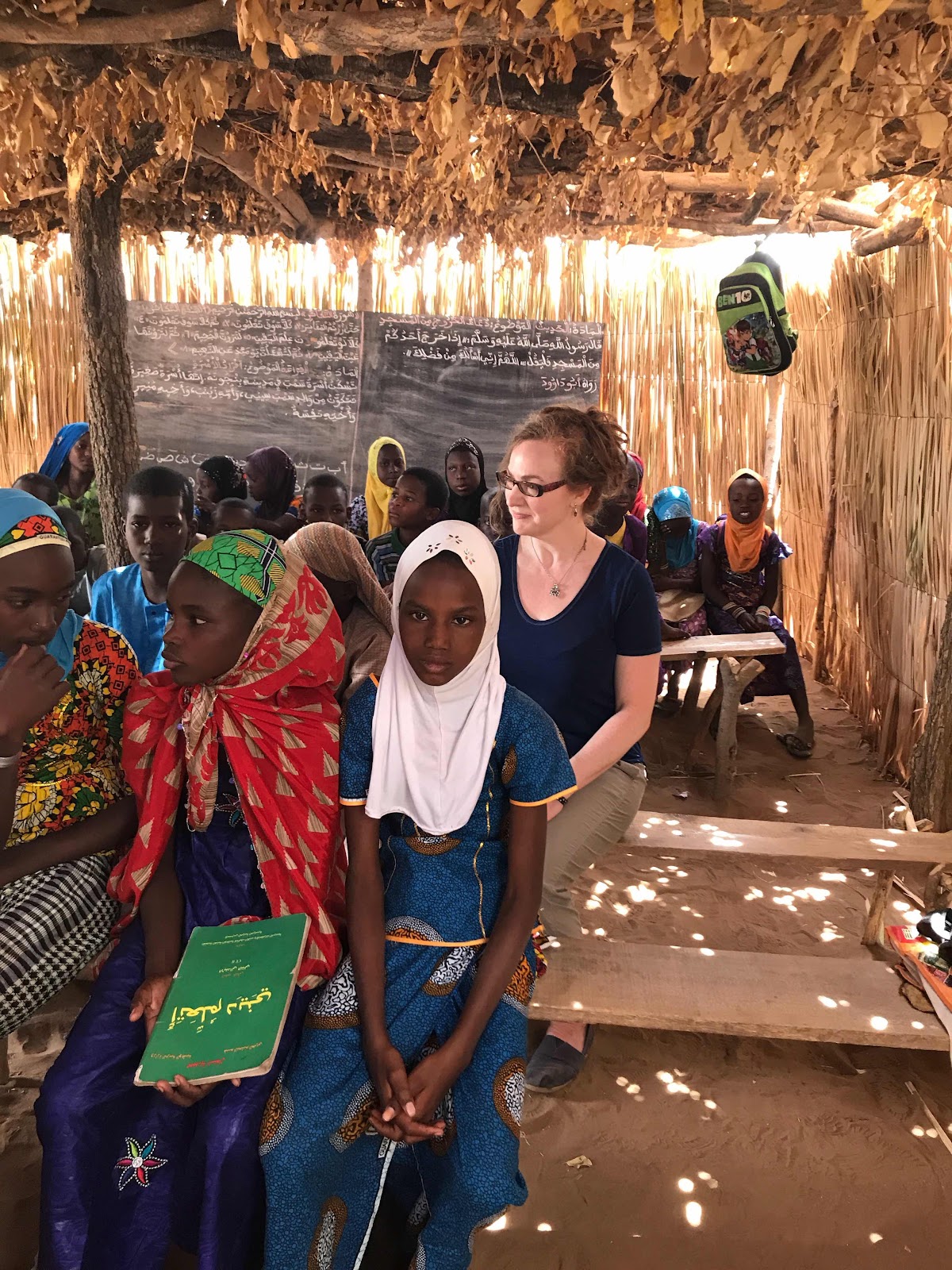
We have been involved for some time with a project of helping build and reinforce schools and financing teachers in several remote village schools. This was the idea and project of a friend of ours from the area, and we supported his dream for his region over the years, and linked the project with Maison de la Gare. Amazing things began to happen after the first school was built. Parents stopped sending their boys to the city to be talibés. Girls started to attend school too. Talibés in the city from the region were identified, rescued and returned home. After many years of this schools project there are now over 560 students, almost half are girls. And, no more talibés from these particular villages that have access to schools! Although classes in the villages end at age fourteen, some intrepid students who want to continue their studies into high school move to town, about three hours drive away, and billet with relatives. Some girls even, despite the unimaginable challenges they face, have extended their studies in this way. Once a passion for learning is lit, it burns.
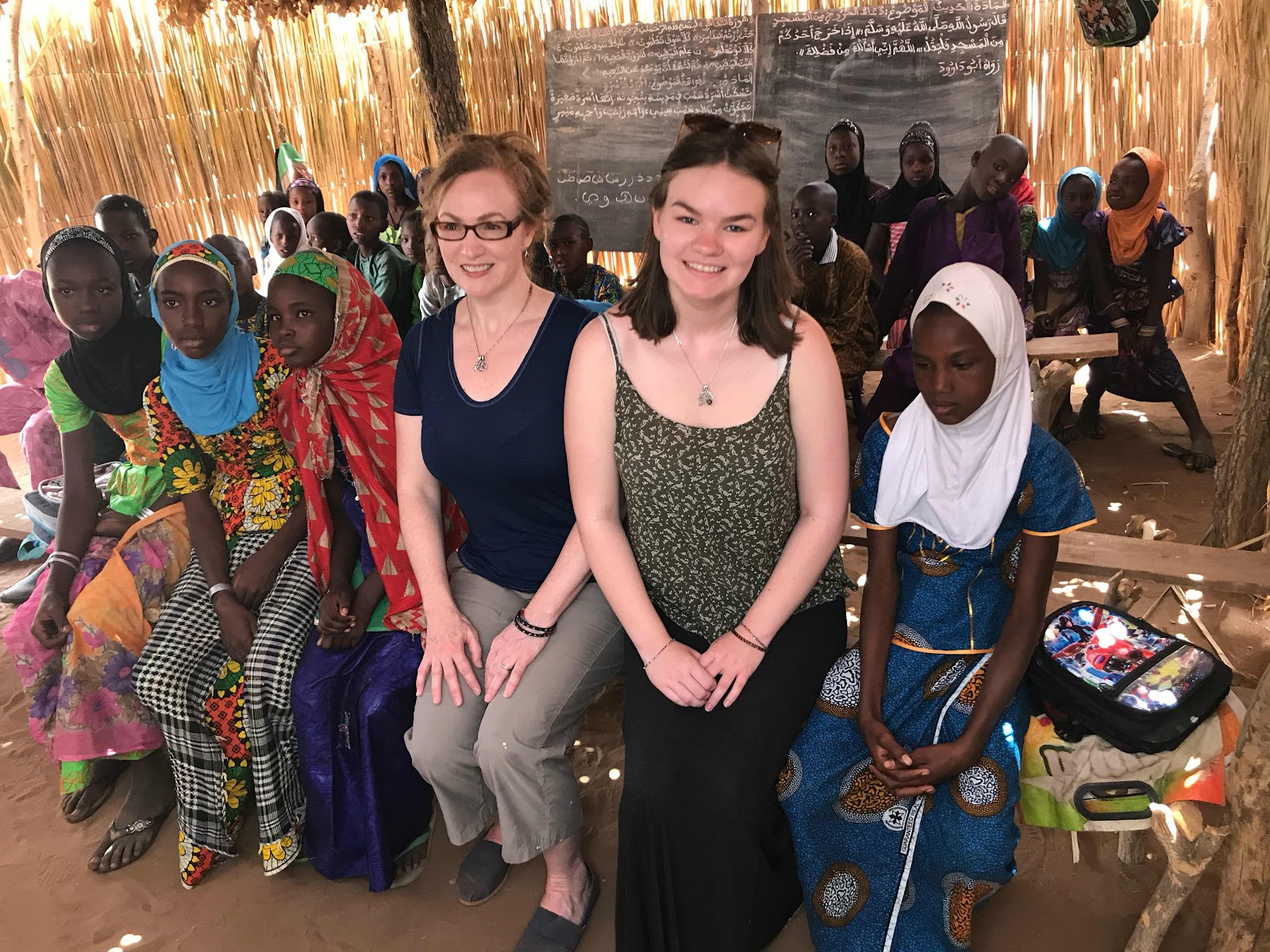


Rowan and I visiting one of the schools several years ago

Last year when I visited the region with Rowan and also my son Robbie, something new appeared to be happening. When meeting the students from the villages that had travelled to the nearest town, Dahra Diollof to write government year end exams, we were met multiple young girls who were being pressured to marry. The age seemed to be increasing, though. Previously it had been age twelve, and now it they told us age fourteen was becoming more typical. But social norms take time to change. The reasons that caused this problem may no longer be in place. But customs and tradition remain.  Some girls told us they would soon be forced to marry by their parents. They begged for our help because they wanted to continue to study and not marry.


And so, we are establishing a “full ride” scholarship, Bourse Suxali: For Women at the Heart of Development of their Communities. We have set it up through the Canadian charitable foundation, C.F. Johnston.  The first Bourse Suxali offered is for the 2023-2024 academic year. For a girl in her final year of high school. A girl from the M’Baye Aw villages region. On condition she receives her high school diploma. To study post secondary health sciences of some kind (the idea of our friend, physiotherapist Vicki Chase who travelled with us). For up to three years- the time required to earn health credentials. Preference for an unmarried girl. For someone who wants to then return to help her village continue to develop and improve, and provide an example to other girls, and boys also, that education leads to better things not just for oneself, but for the community as a whole.
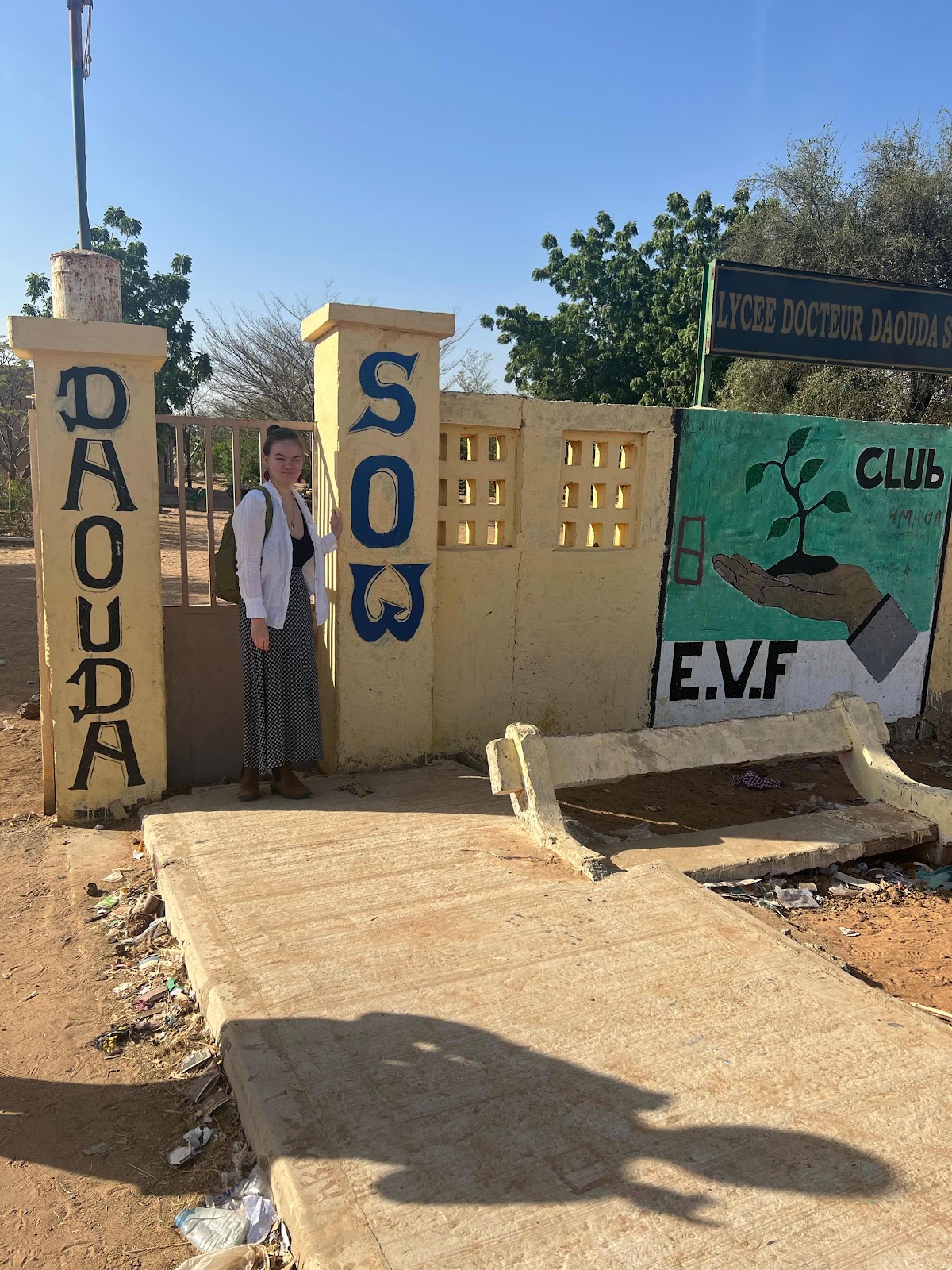


Rowan in front of a Dahra Diollof high school

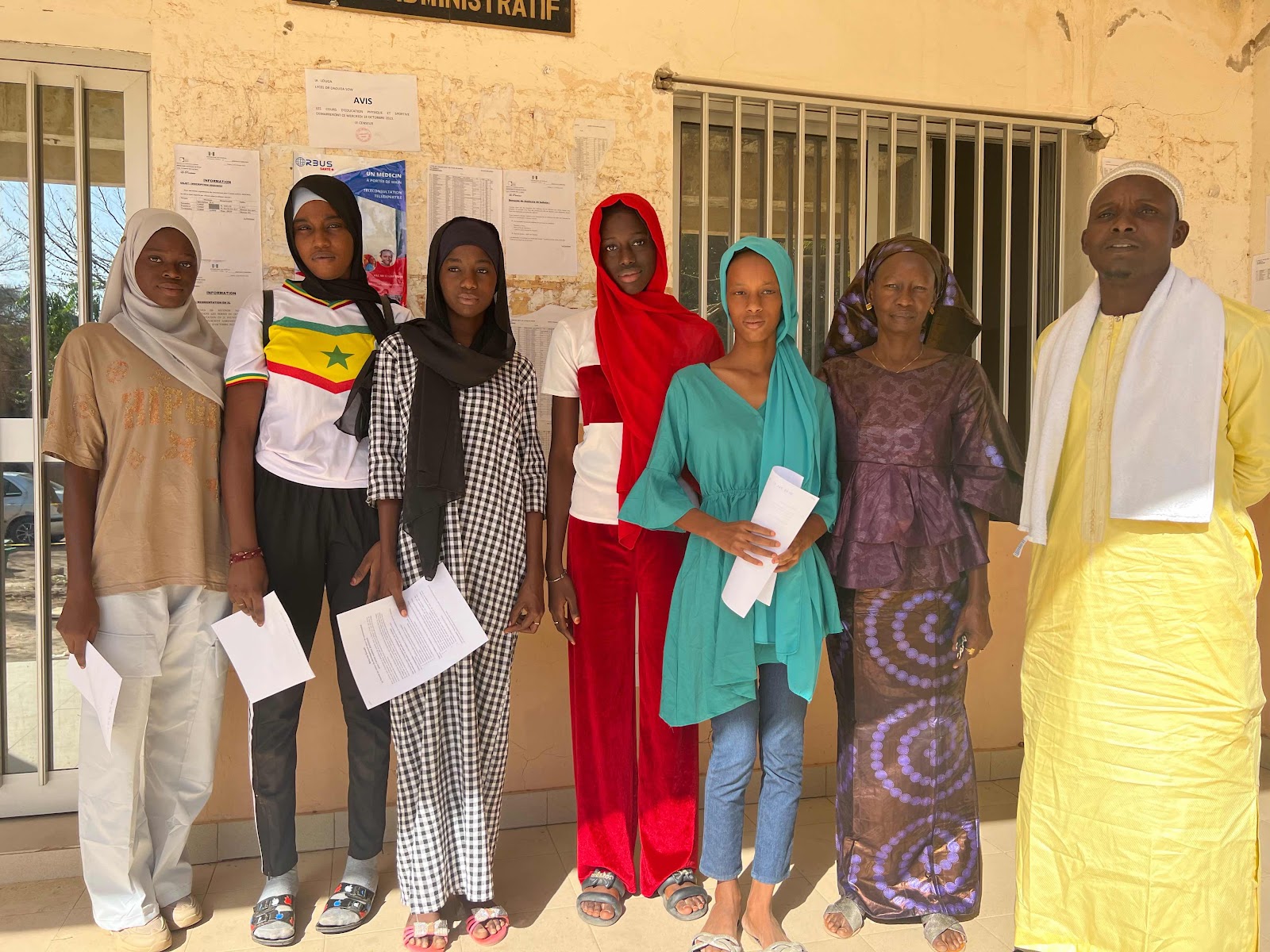
During this week’s trip to the villages, Rowan, Vicki and I met the president of a Dahra Diollof high school where five of the eleven girls from the region in their final year are currently studying. And we met with the girls themselves to ask about their hopes and dreams, to deliver the scholarship information and inform them of next steps. Two want to be lawyers, one an architect or geographer, one wants to join the army, and another dreams of health care. We also met one girl in Saint Louis who had run away from her village to pursue her education. She is in her final year and is an eligible candidate for Suxali. She wants to become a nurse. The president of the high school will take responsibility for informing the other five eligible girls from the other schools, as well as those now two and three years away from graduation, so they will be inspired to work harder and also spread the word, should this first scholarship and funding go well and we can offer more.
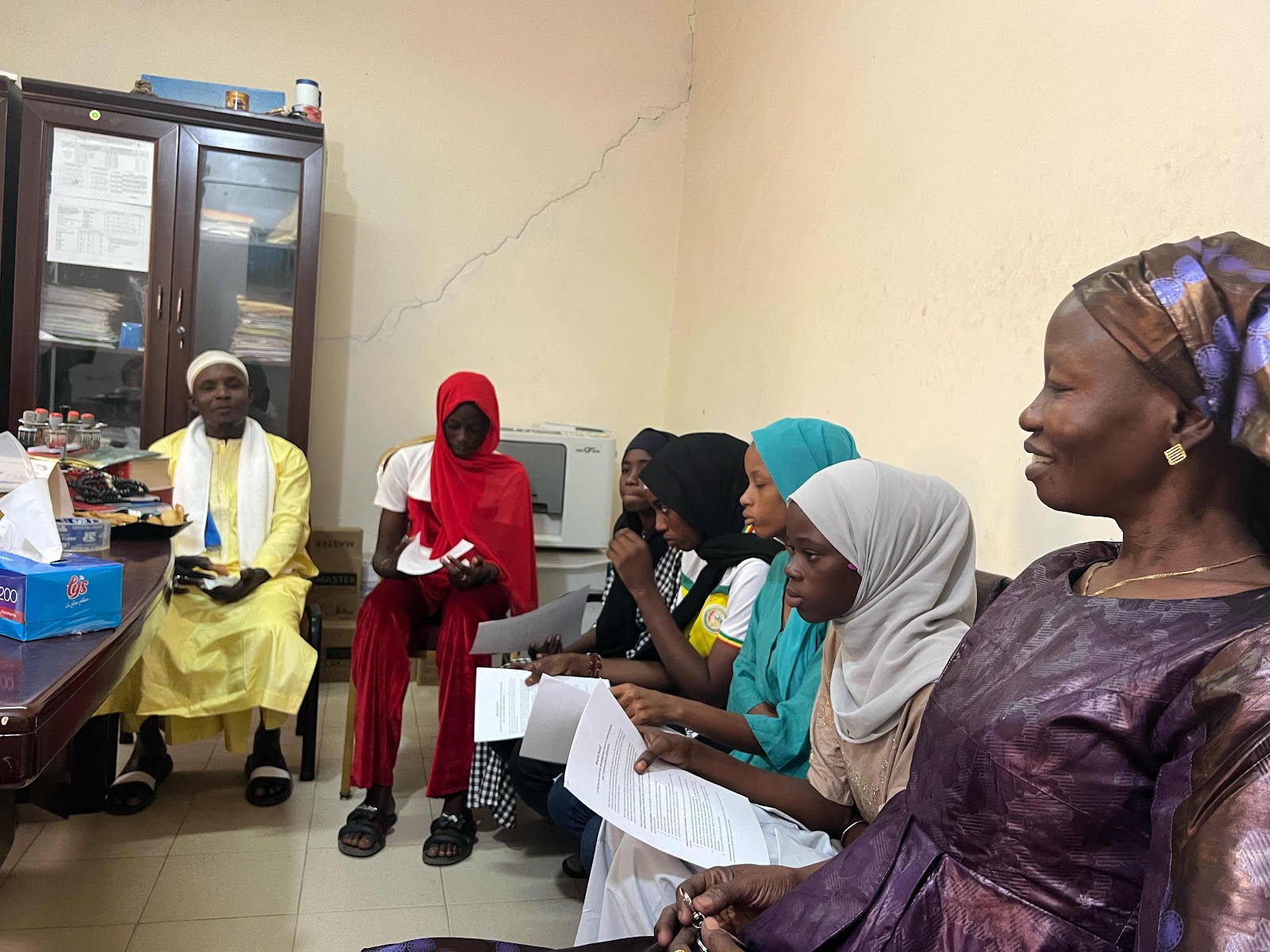


Cheikh, and administrator and some of the candidates sharing their education dreams.

Our friend Cheikh, the president of the village schools association, l’Association pour la rétention  des enfants en village et la diminution du mariage précoce, is certain the existence of Bourse Suxali will incentivize more parents to allow, even encourage their daughters to continue to study into high school and help relieve the pressure of forced early marriage. Rowan planned and is leading the execution of this scholarship. Vicki helped us define and refine it. We have funded the first year of Bourse Suxali, and there is time enough to fund the rest. It is Rowan’s and our great hope that we can fundraise sufficiently to enable a new Bourse Suxali to be offered every academic year to a new graduating student. And we would love to eventually offer a scholarship for boys as well, as they face terrible, albeit different challenges. Education is saving them from the fate of being forced begging talibés, and offering hope. Pas a pas, s’avance. Education changes everything. 


Preparing for the Big Day

For many talibés of Maison de la Gare karate is everything. It is something for them alone, when their world takes everything from them. It is confidence. It is strength, it is respect. It is passion. It is perseverance. It is family. It is hope.


Usually when we visit Maison de la Gare my son, Robbie and I and sometimes some other Canadian karate friends sponsor a karate tournament for the talibé karatekas of MDG. Since Robbie did not accompany me on this trip I was going to postpone until the next time he could be here. But Robbie insisted we go ahead, as it has been 16 months since his last visit and the last tournament, and it is such a wonderful event for these kids. Even better, he insisted on sponsoring the event to be sure it went ahead. (There is no budget at MDG for tournaments, gis, or even the membership fees - charitable grants are scarce these days. Everything depends on donations.)


Robbie with last year’s winners

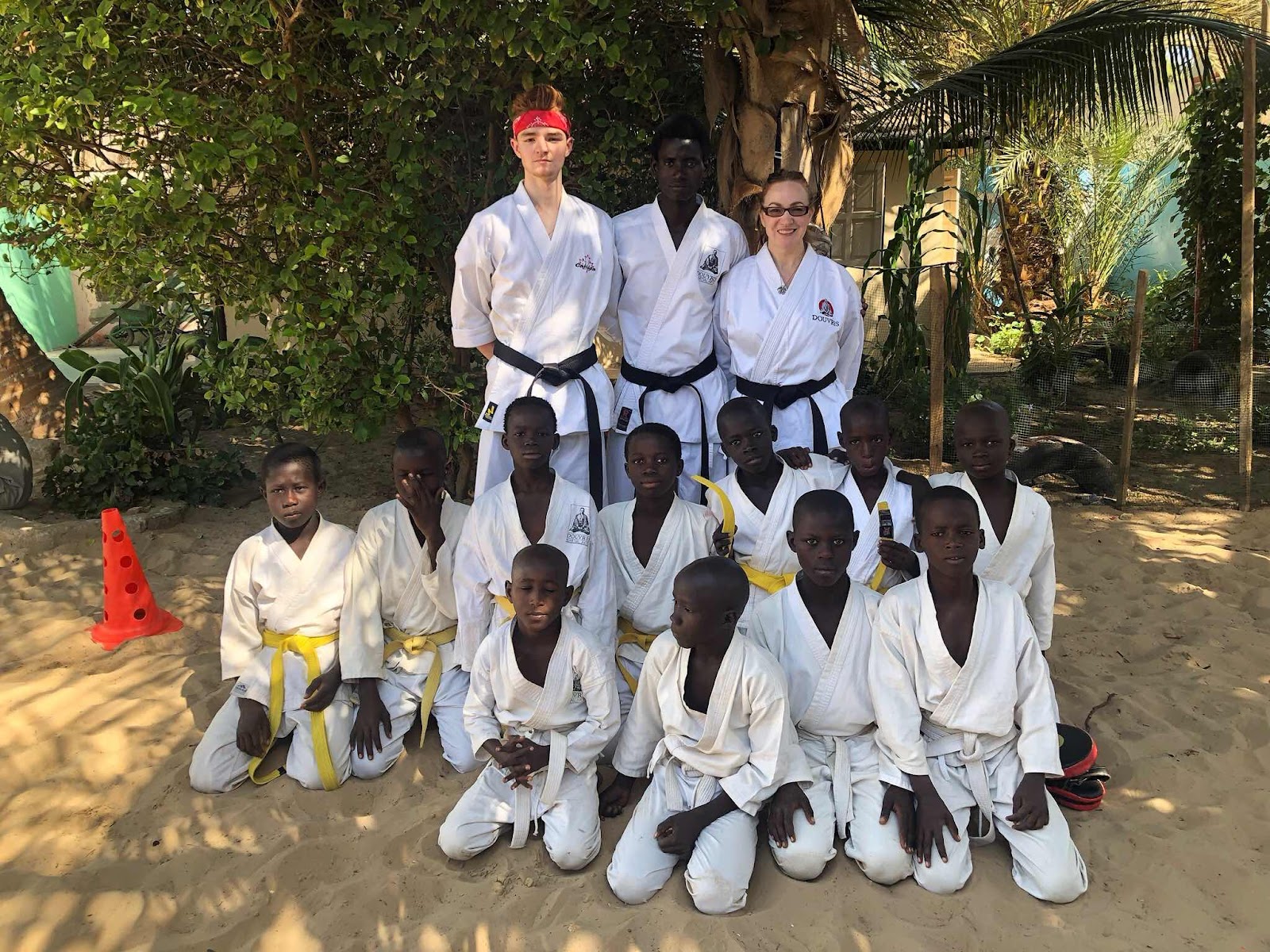
We informed Sensei Ignéty Ba of Sor Karate in advance of my arrival so he could prepare a list of karatekas who would be invited to compete, and inform them of the impending opportunity. There are two groups of Maison de la Gare karate students. About 30 young ones practice at the MDG centre Thursday and Friday mornings, and 34 older, more experienced ones who are sponsored by donors in Canada and www.Globalgiving.org to be members at the Sor dojo. When I arrived at the centre last week Sensei let me know that in preparing the competition list he realized eleven of the young students at the centre had been practicing karate diligently and passionately for at least a year, in some cases several. He felt that despite being too young to be permitted by their marabouts  (the person who controls them in the daaras they live in and forces them to beg for quotas of money) to join the dojo as members, they deserved WKF licenses and to test for yellow. Of course Robbie and I agreed!

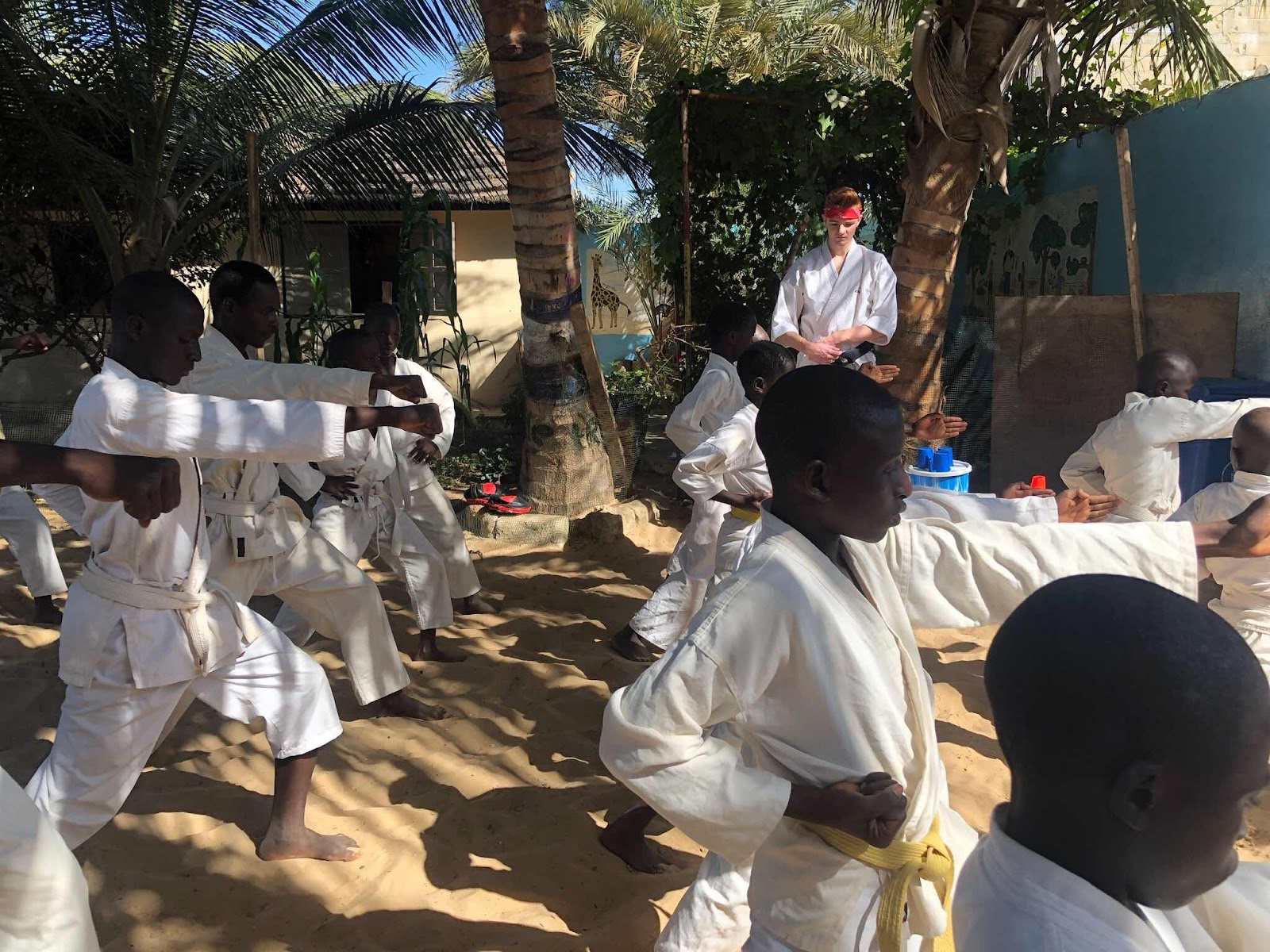
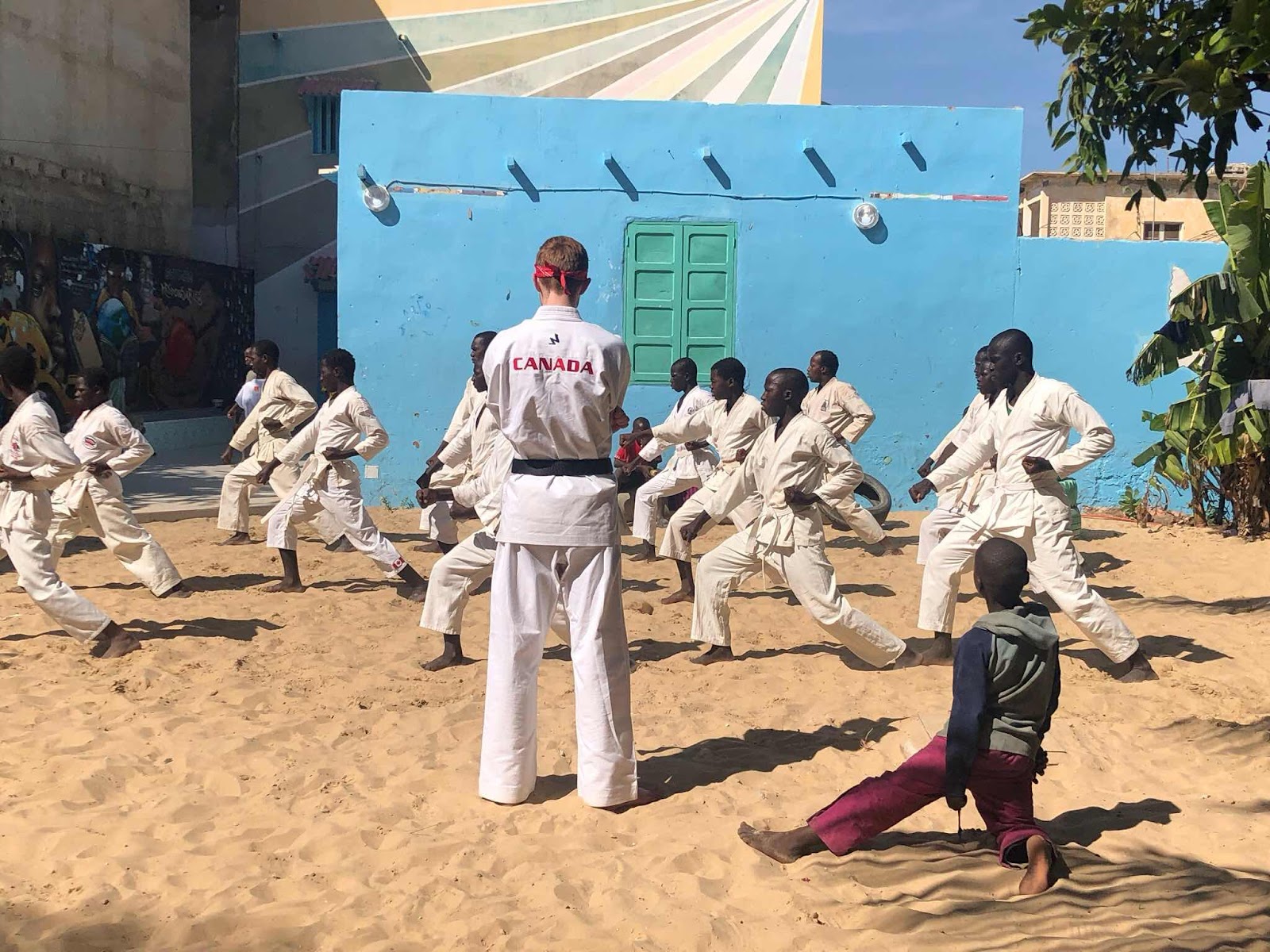
morning training

My first Thursday at the centre we announced to the young ones the eleven names of those who would be invited to test for yellow. Nine of them were present, and very excited about the prospect. The word would be spread to the other two. And all 29 were invited to participate in the tournament the following week. The next day I donned my gi and helped the kids prepare for the competition as well as for the rigorous grading test that awaited them. From past gradings Robbie and I have been invited to attend, I knew the pass rate to be about 60-70%. And we knew the main issue to be mixing up the Japanese names of different forms and stances and strikes and blocks. So I knew exactly what to help them practice. Interestingly, these kids has been passionate white belts for so long, they did not have the usual issues. The knew cold their Oisuki, Gyakusuki, adusuki, sotouki, garambarai, maegeri, their katas, and which was shodan, nidan, godan…and the kihon kumités looked good too. They all knew exactly when to Kia and how and when to salute. I had high hopes for grading day.


That night I also visited the dojo Sor Club to see the older MDG kids. They were also informed of the competition, and were very happy about the prospect for experience and the prizes. The Club Sor Demo team also planned a demonstration at the event. A visiting Karate Master from France was teaching a seminar that night, a great opportunity for the students. The President of the Regional WKF Association also attended the session, to greet the visiting Master. After. class, Sensei Ignety introduced all three of us, and thanked us for our long term engagement and love and support of the sport of karate. He also thanked Robbie indicating the MDG program and the hundreds of children it hasdeveloped in karate would not have been possible  without him. The Federation President similarly proceeded to thank us and discus the importance of karate to all martial artists and in particular to the talibés. I left the dojo that night feeling very humbled and honoured to be part of this amazing karate journey in Senegal. And…very proud of Robbie Hughes.


I arranged to meet the karateka hopefuls for the grading the following week at the center. We would distribute the donated gis I had brought from Canada, then walk to the dojo together for grading. The following day would be the tournament and the announcement of those who had successfully ascended to yellow. 


On grading day, some very worn out gis were exchanged, other very much too small ones were replaced. A final run-through of how to approach the ring, enter the ring, salute, and exit was reviewed for those who had only ever experience karate on the sand and never on a mat. Then we all set off together to walk from Maison de la Gare to the Sor Club dojo. We made our way through the streets, past vendors, down alleys, all at a brisk pace so as to arrive on time. I felt a bit like the pied piper for the 20 minute walk.


grading

After arriving at the dojo the kids donned their gis and lined up. Ten. Finally the eleventh, a yellow going for orange arrived. This was not his first time here, but for the others it was. Sensei would allow them to all remain in the dojo together, although they would be graded one at a time. This was a kindness, as usually all candidates wait outside and are invited in to grade one by one. For the candidates, nerves were understandably on edge. Expectations were high. Everything felt like it was on the line. The first name was called and I held my breath.


He began, and I let out my breath. He had this. And so did the next. And the next. I settled back and began to relax. But then, a very nervous boy turned the wrong way during taekyoku shodan. So hard to recover from that. He was thrown completely off. My heart broke as he was invited to step aside. There were no more mistakes from the remaining candidates. I was impressed! 


After grading the older karatekas arrived to help prepare the mats to be transported to the MDG center for the tournament. A horse-drawn cart arrived and the mats were loaded on. Night had descended, and the lights in the dojo had failed. But the cart was duly loaded up, and off it went to deliver the load.


The next day would be tournament day, souba. The successful grading candidates would be belted. And everyone would have their shot at glory! So much still to look forward to.

Friday, May 13, 2022

A Talibé’s Hard Road Led him to Education


It has been over two and a half years since I have been in Senegal, due to the pandemic. But, my connection with the children and my friends who I travel to support has not wavered. Throughout the pandemic I have continued to mentor Sulayman, a former talibé, and support his tutoring, as he continued his high school education. He has now completed his secondary school studies and is about to write his final exams, with hopes to carry on to university. This is why I volunteer in Senegal!  Sulayman’s story, told in his own words, describes a typical talibé’s life and hopelessness. It is nearly unbearable to read, let alone to live. Most talibé stories do not end in hope and education, or lead to new beginnings, as Sulayman’s is, unfortunately. But, this one does. Please read from Sulayman’s own pen…


My name is Sulayman Ba. I was born in Gambia, West Africa. I have six siblings and I am the third son of my mother. I spent much of my childhood and youth as a modern slave, first as a slave labouring then a forced begging talibé. But education was all I ever wanted. Eventually I finally took some control over my own life and found a way to go to school.


The way I became a talibé is tragically a bit funny actually.  I  and my elder brother would always be arguing about who is going to be a school teacher and who is going to be a marabout (Islamic teacher). I was the one that would always say I want to be a marabout and my brother would say he wants to be a teacher, but I was not really being too serious. One fateful day, my late father called me and my brother and asked if we were sure of what we were claiming we wanted to become and we said of course! I was very optimistic about it at the time, I was not familiar with the system of slavery that many West African marabouts practiced. So my father sent my brother to school and he took me to one of his friends who was a marabout, to teach me the Quran. 


Although I was learning the Quran, the teacher was extremely strict. He would not even allow me to go to see my parents. Sometimes I would go to visit my parents house when I really missed them.  When this was discovered by my marabout, he would beat me up. I can still remember those beatings. I lived with him this way until he persuaded my parents to send me to another village in Gambia. When I arrived in this village I was given over to another man, left alone with him. I remember on the second day my shoes disappeared. At this time I started crying, realizing my life was to be real hardship. I was so young at that time that I can't even remember what my age was. 


This village was composed of many "talibés". In this village we talibés were the labourers. We were forced to work on huge farmlands. We grew groundnuts and maize. We consumed half and the other half was taken for sale. We also took care of gardens for the son of our marabout in that village. We mainly cultivated bananas and onions. Our marabout had more than 400 talibés and there were only a few rooms for us to sleep in. It was like a prison inside our rooms, there was not even space to step or walk. There was a long time that I only had the clothes I was wearing and no shoes on my feet while I had to do this hard work every day. The life in the village was like a hell for me, particularly in my first year before I got somewhat used to the situation. We did not have electricity so we would go to the forest everyday to fetch firewood. We would burn that wood for our light at night and when we had to wake up 4:00 in the morning to learn the Quran until 7:00 am. Then we would be sent to work all day. 


There I was until my father passed away. I wanted to go home and my mum visited me there in the village only twice and I would cry whenever she was leaving. But she always told me “I have no choice Sulayman, your Dad wanted you to learn the Quran and become a marabout and he always reminded me of this” my mum said. So there I remained until I was finished the Quran. But then my marabout in that village decided to take me to Senegal to continue studying. This was how my journey to Saint Louis came about. 


I was taken to Saint Louis, Senegal with one of my daara- mates, who  was also a Gambian. When we arrived in the city around 8pm we were supposed to be taken to the "ville". But we were not allowed to stay in the place we were sent. Instead we were sent to a different marabout. We eventually arrived at this other daara later that night and it was full also. But the marabout let us stay there with some of his talibés despite it  being overcrowded. I remember it was so dramatic that night! 


My first morning in Saint Louis, I woke up and was sitting waiting for breakfast. We were extremely famished after our long journey and the the chaos of the previous day without food.  One guy came and told us boys “I know you boys are new comers, but here in this daara you have to go out beg for food or look for job in order to survive.” We of course had no money, so we went to the market with some of the other talibés to try to get jobs carrying people's stuff. We were paid very small amounts actually, not enough to even buy food. That was how we were living for several more years. 


I was forced to do many tedious jobs in Saint Louis just for survival to take care of myself, and also to give my marabout money. No one else cared about taking care of me even though I was a child. I can remember my first job apart from going to that market was sweeping. There was a very wicked woman named Aja that I was working for, she was very mean to me. I did not understand the money, and I would wake up every morning and clean everywhere in the house up and down everyday, with no days off. For this I was paid 2000cfa a week (about US$3.25). But this woman often would not even pay me that small amount so I left there and I returned to the market to earn what I could.  


In 2015 I learned about some centres helping talibés like me. I started going to the centres and found Maison de la Gare. Whenever we were returning from working in the market we would pass by Maison de la Gare to take a shower and sometimes watch films and play. We would also come back in the afternoon and eat free food they gave us. I joined karate classes too. I started falling love with it. Maison de la Gare was a break from my very hard life. I spent as much time as I could at Maison de la Gare. I started getting used to the people at Maison de la Gare, and trusting them, especially the teacher, Abdou Soumaré. He always would advise me go to the classes and learn French or English, that it may help a lot in my life. 

Sulayman and Abdou


At that time I could not understand anything in either English or French so I found it pointless to sit in the class room. I could not tolerate my life in the daara any longer, so I was eager to escape to Europe, through Libya or Morocco. Four of my friends had gone on that journey, and I wanted to do it too. That was the year I left the daara and went to Mauritania to try to find a job and then make my way to Europe. But Mauritania was even a worse nightmare for me. Even more terrible than living in the daara. I returned to Saint Louis and finally took Abdou Soumaré’s advice. He had always been telling me I should try to go to classes and at least learn to understand one official language that could help me in life. So I started learning English with some of the volunteers at the centre. I remained at the centre until I started speaking a bit of English. I even joined the karate dojo and earned my yellow belt.

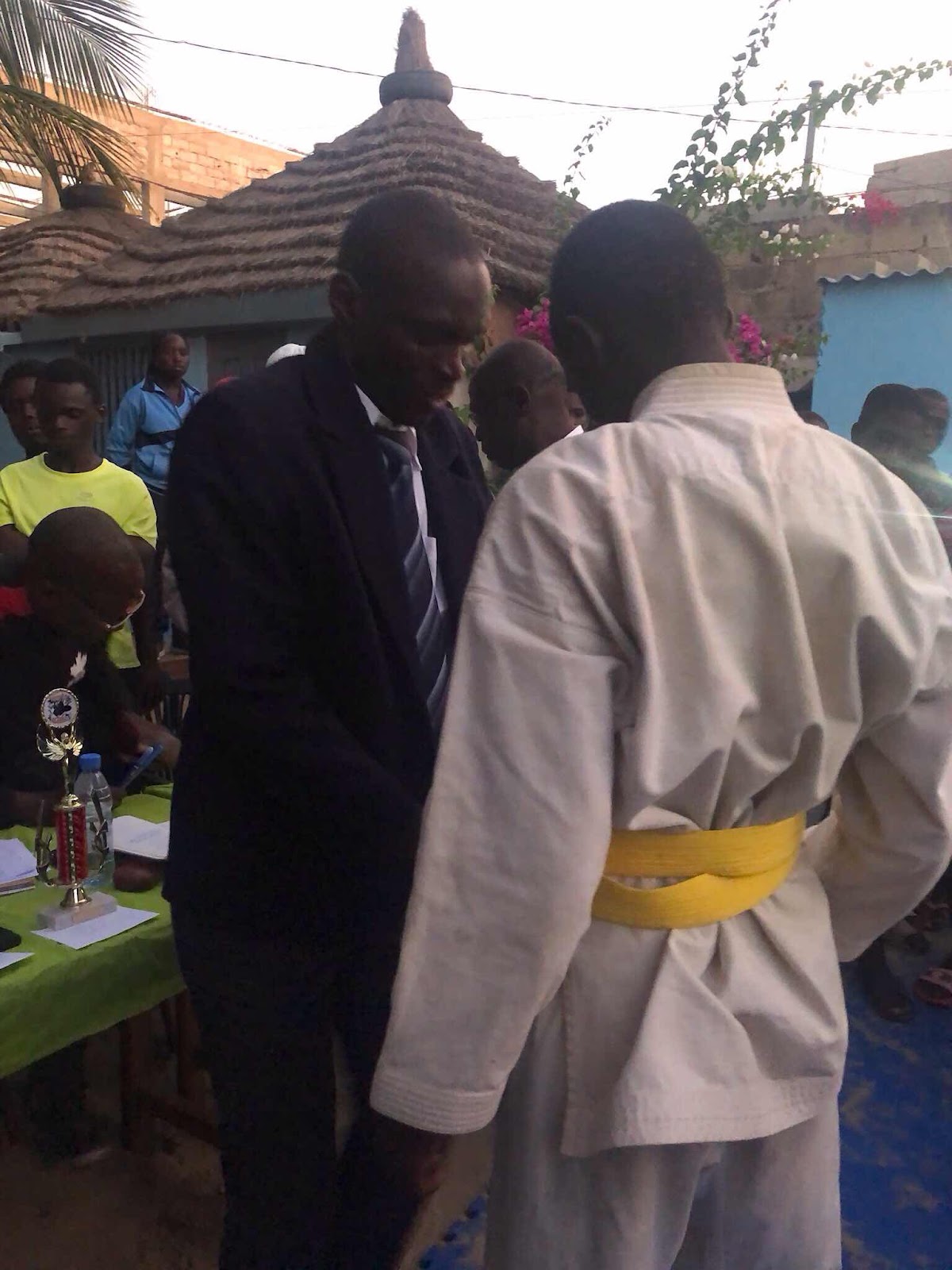
Robbie granting Sulayman his yellow belt


I returned to Gambia in late 2018, but I found my mum had a heart attack and my elder brother was not working. My uncle was the one taking care of this whole family and I had the feeling that I needed to make a change. I was wondering how I could make my way through my entire life with only having learned the Quran. I refused to treat other children the way I had been treated, as slaves, so being a marabout was not for me. I felt quite useless in my family. I went back to Saint Louis, and my main objective was to try to support myself, enrol myself to school, get my certificate, and then start working to become the bread winner of my family. I refused to return to the hell of the daara so I lived sometimes on the streets, sometimes at friends’ rooms, and sometimes at Maison de la Gare’s dortoir (emergency shelter). I continued to go to the Maison de la Gare classes.


I explained my situation and my desire to go to a real school to some of my friends. One friend who motivated me the most to find a way to go to school was my friend Tijan, also from Gambia. Tijan and I almost have similar stories. He was the one who would tell me “Sulayman stop thinking about this back way of going to Europe. You can make it in your own country.” He had returned to Gambia to go to school a few years before and he was going to graduate from high school! He was at that time in Senegal only briefly to visit Maison de la Gare. Tijan convinced and inspired me to return again to Gambia, this time to go to school. Abdou Soumaré and Issa Kouyaté, the president of Maison de la Gare gave us both some advice and wished us well. Tijan and I returned to Gambia together. 


Today I believe that everything in life is possible. You just have to believe in yourself and give it a try. If I didn't believe in myself so strongly at this point, and already been through so much hardship, I would have dropped out of school the very first week that I enrolled. I will never forget this in my life: my very first test in school I earned zero out of one hundred. The teacher called me in front of the class room and embarrassed me in front of everybody. But, I didn't give up or think “well, I am stupid  and I can't do this” instead I was like “ahhh, this is my first time in school, so it's not the end of the world. I’ll do better next time after I learn something.”  I thank God now, Alhamdulillah!! that I stuck with it. I have learned much and improved a lot, advancing through all my high school grades. I am not bothered that I am of such an older age compared to my classmates and I am now at the last stage of high schooling. I have completed my high school studies with the help of tutors to help me get caught up for all the education I missed as a child. I have qualified to write the WASSCE, the West African Senior School Certificate examination, which I will be attempting this spring.


My hope for the future is to get good results in my upcoming exams. My high school diploma and good exam results will open the door for me to further my education. I hope my hard work and perseverance will give me the chance to go to university, to continue my education. I want to do it for myself and for my family. I believe education can brighten my life, it is the way.


Thursday, November 28, 2019

The Future is Bright in Saint Louis


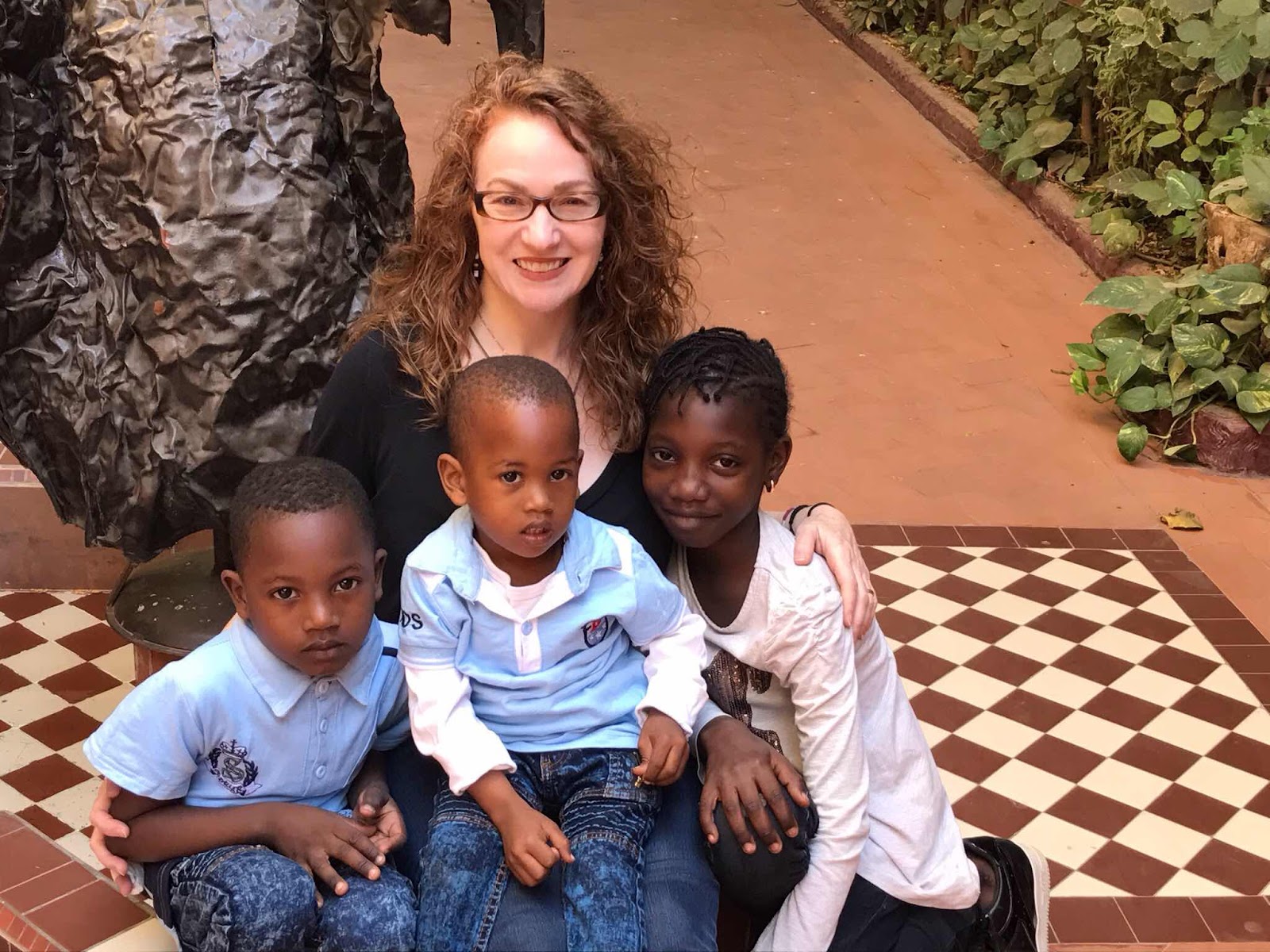
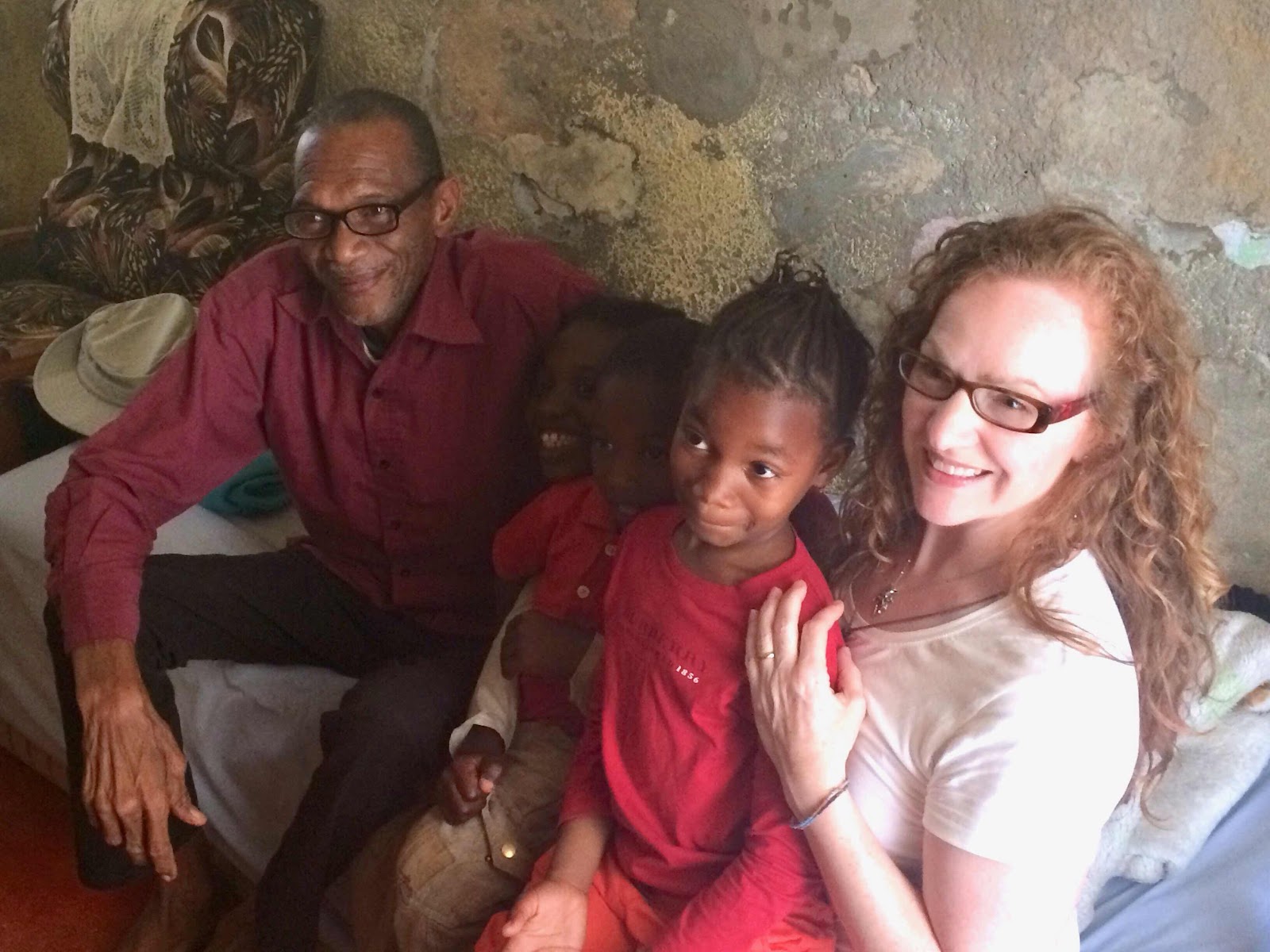
Saturday night a very special family joined us for dinner. I had been looking forward to seeing Oumou's six beautiful children  again.  Many years ago, long before the youngest, Mohammed had been born, we had visited  their home when our friend Samir welcomed us as guests. 

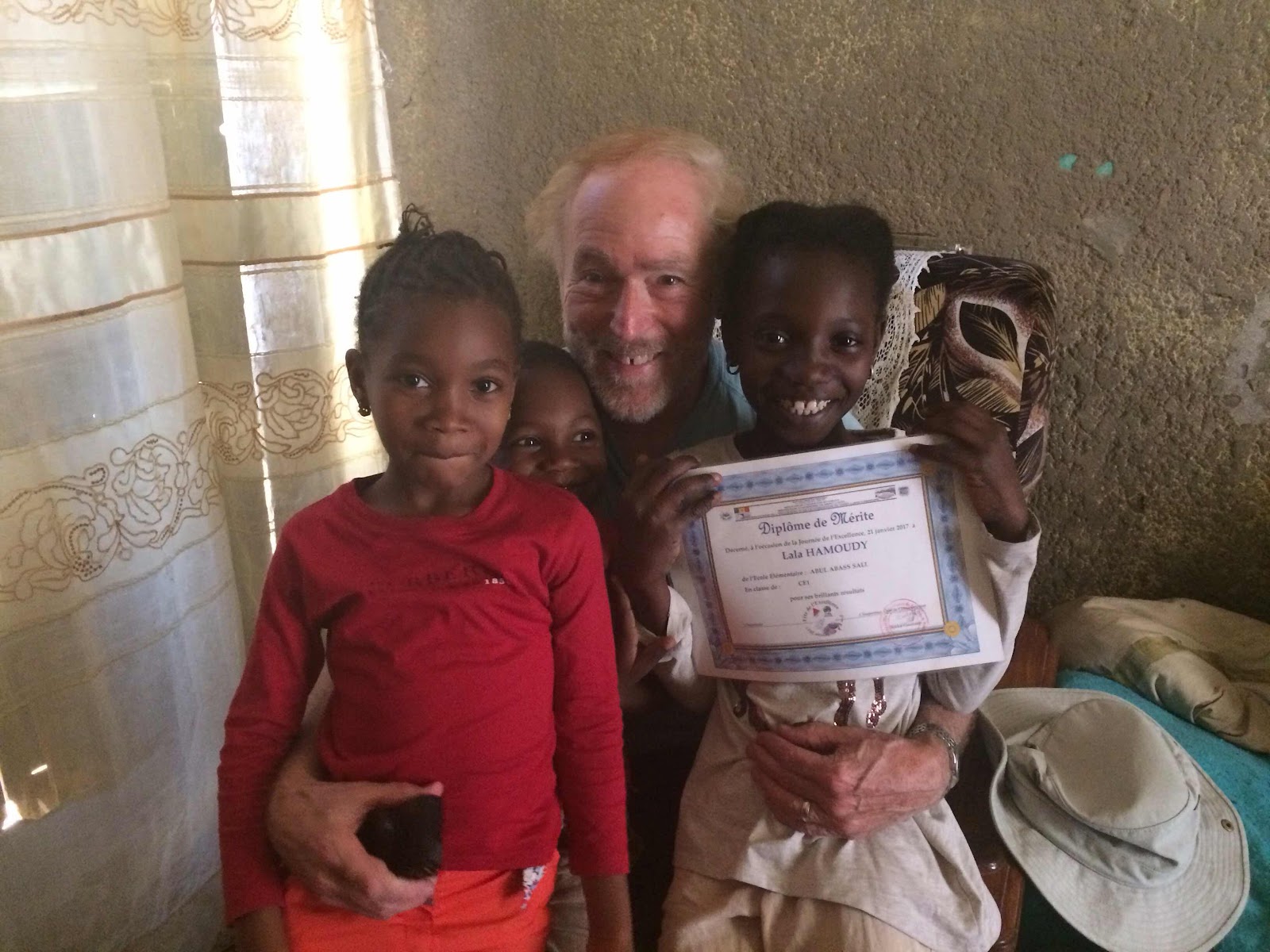
Samir had worked at our hotel in Saint Louis. He had been the first to welcome us on our very first trip. Each day I went for an early morning run around the island Samir would watch out for me. We had many talks about his pride for his children. The family was committed to the education of their children as their first priority. Lala is always at the top of her class, and Fadel usually is first or second in his. When ever we visited their home, all the children were proud to show us their exercise books and test results.


They chose to live in a very small, rudimentary two room house with a small sand courtyard in order to afford private school fees. Private school is not as what we would think of in Canada, but it does usually assure that the teachers show up and when they do that they do not spend much of their time on their smart phones. If one wants to advance to high school and succeed there, private school is nearly a necessity. It is not expensive, but for Samir, with fees to pay for three  children, it was a considerable burden. When the youngest at the time became old enough to be registered in school and Samir was not sure how he would cope, I began to help them out at registration time.

Two years ago Samir tragically passed away. His wife, Oumou, is not educated, and five of the children were under the age of twelve. The director of the school at first waived the fees for the older children. Due to their brilliance and promise, he did not want them to have to drop out of school. Extended family and Samir's former employer also helped out for a time. Working reselling charcoal and consumer goods, and cooking for neighbours, Oumou could earn enough to pay the rent or feed the family, but not both. Evntually the assistance trickled to a halt. Tragic stories such as this one are not uncommon here. Life, its hopes and dreams, can shatter in a heartbeat. Families adapt: children drop out of school, go to work, or the family breaks up to get parcelled out to live with and possibly serve distant relatives. This is the accepted way of things. 

But Oumou is different. She and Samir had sacrificed so much already for their children's' education. And, she is a fierce, determined mother with a will of steel.  She confided to me that her family would be separated over her dead body. So far, thanks to Oumou's perseverance and creativity and some help from Canada, all of her children continue to thrive in school and their happy family life persists, the children sheltered and protected lovingly by their mother from knowledge of the precariousness of their future.

Indeed, the optimism. and gratitude  in this family is almost shocking. When I presented the family with a Quran, gifted from a compassionate friend in Canada, Oumou was overwhelmed with happiness and expressed her belief that God has been so good to her family. So many in her situation would have a very different perspective.

The next afternoon, our dear friend Cheikh bounded joyfully to our hotel door to inform us of the birth of his second child. His wife was not due for several weeks yet and he had been anxiously preparing to return to his remote village in the bush. Their son came early, but both mother and child were healthy. Cheikh was over-whelmed with joy and gratitude, and hopes and dreams for his family.


 Cheikh works as a street-side cobbler in Saint Louis. And, just like Oumou,  he is the type of person who is optimistically willing to move mountains for his family and his community. From the example of Maison de la Gare Cheikh had the idea to build schools in the region of his village to offer local families  with little means an alternative to fulfil their wish to give their sons an education rather than send them to a daara in a distant city. The schools have become a Maison de la Gare supported pilot project to end forced begging. Most of the villages in the region have stopped sending their boys to the city to be talibés.  And, Chekh has found and returned many of the talibés from his area who were in Saint Louis back home. A happy effect of the schools is that now, for the first time,  girls are benefitting from an education  too, along side the boys.  Cheikh even thinks that with the return of young boys it will be less likely in future for girls to be  polygamously married off to older men. In fact, he is so optimistic for girls that Cheikh had hoped for a girl this time. But, of course he was just as grateful and over joyed to have another boy instead.

Despite the ever present reminder of the harshness of fate and the precariousness of happiness in the oppressive and abusive forced begging talibé system, optimism and ingenuity are alive and well in Saint Louis.


Sunday, November 24, 2019

A Time to Shine


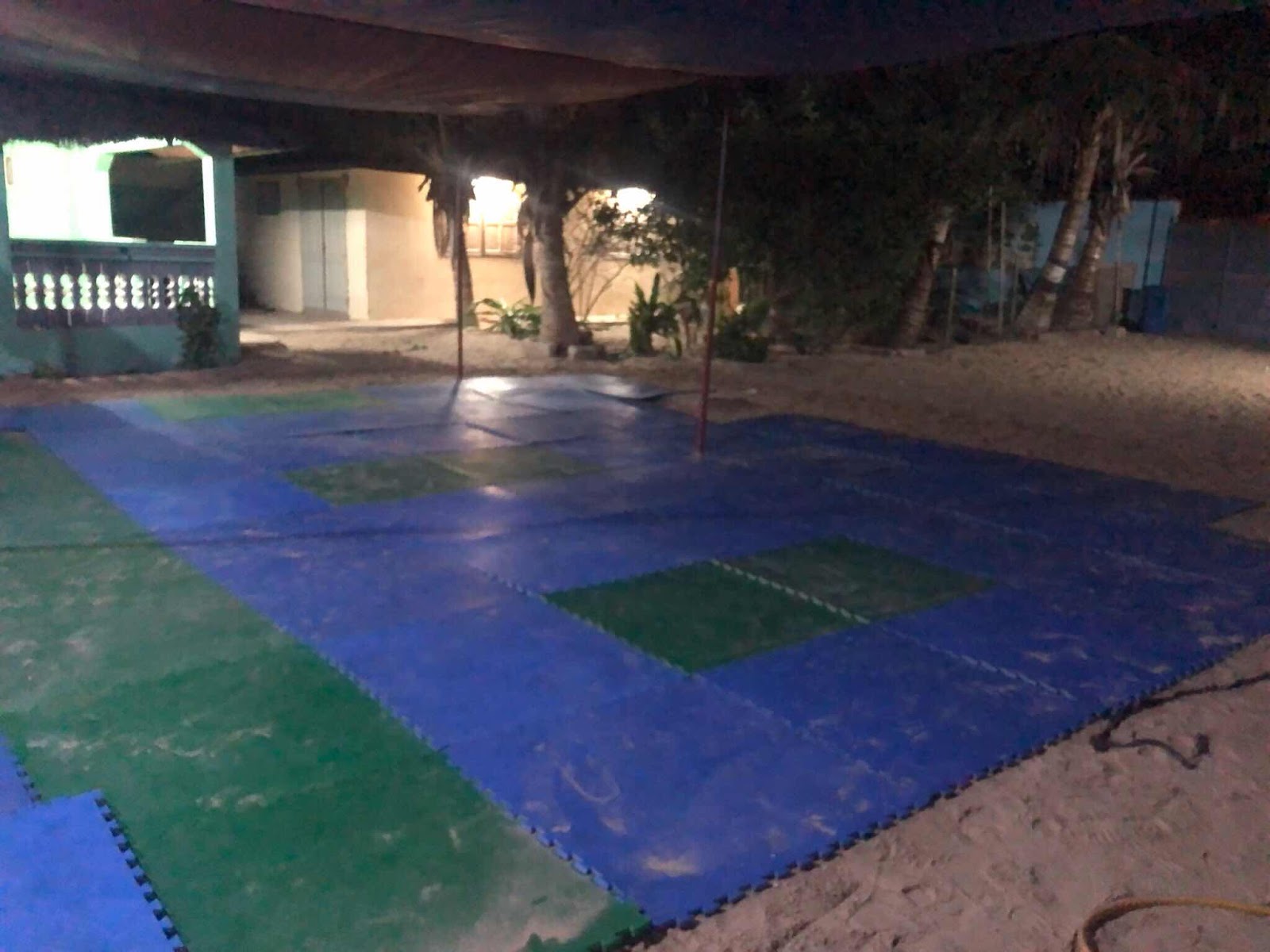
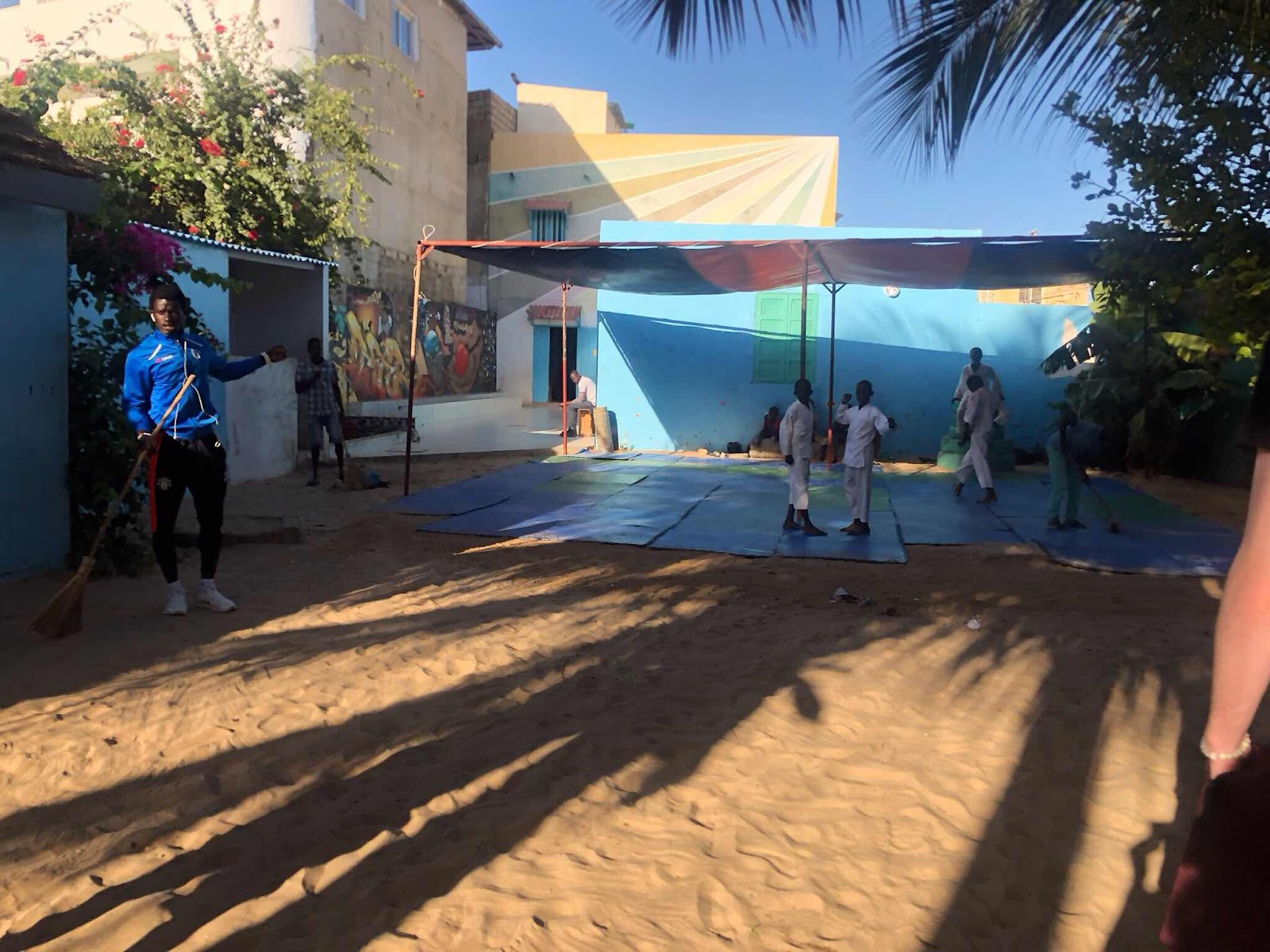
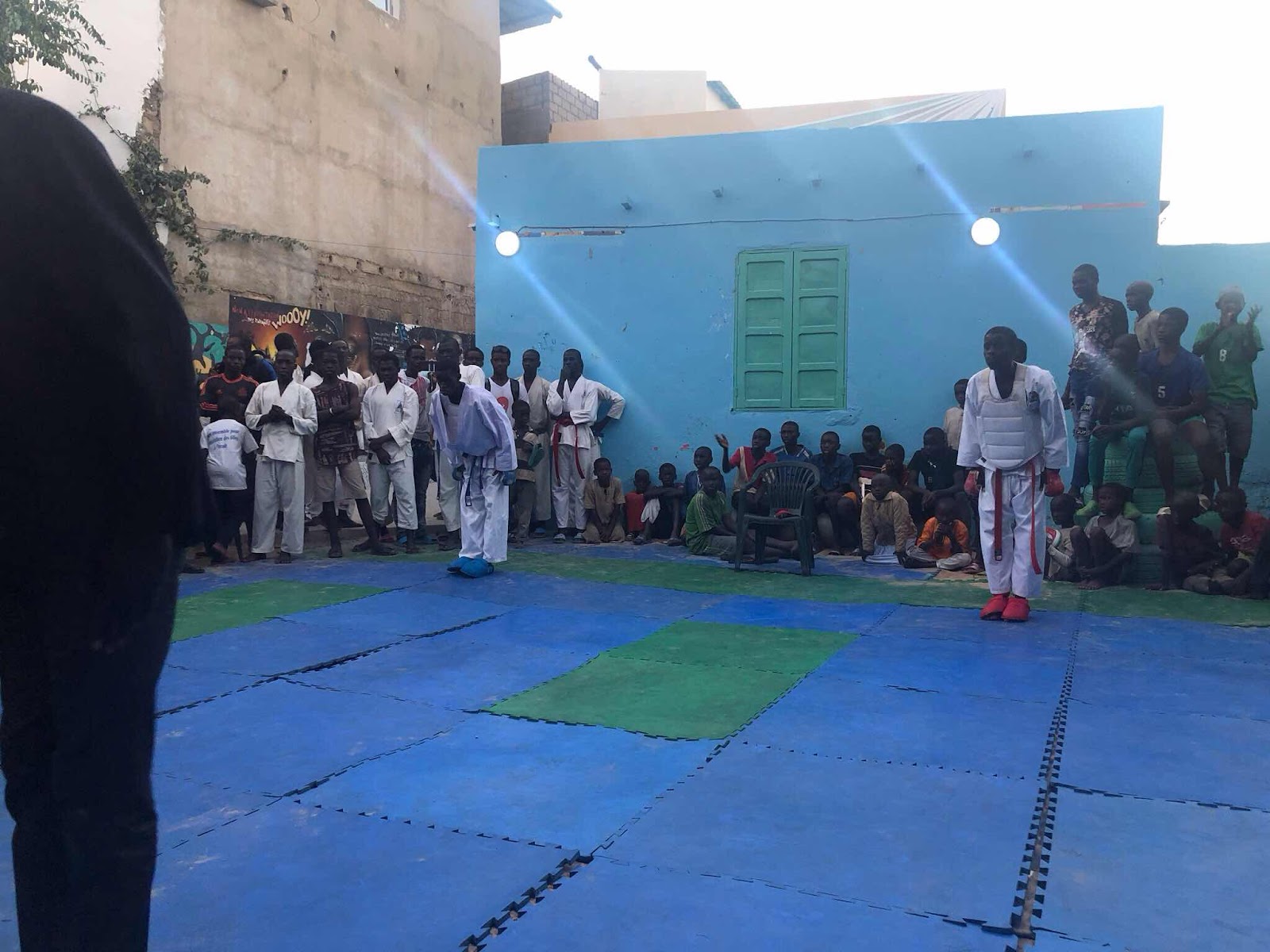
As the sun set before tournament day the Maison de la Gare-Sor karate kids set up the mats in preparation for the highly anticipated third Douvris Cup Classic. They had been delivered earlier that evening by horse drawn cart. Bouaro and I had compiled the lists of competitors earlier in the day, of the first four divisions planned for the morning. 20 young kids, white and yellow belts for kata and kihon. And, 11 older white belts also for kata and kihon. We were not sure who would be competing in the afternoon kata and kumite from among the more advanced dojo kids, and would need to wait to see who presented themselves to register. Bouro estimated perhaps 15.


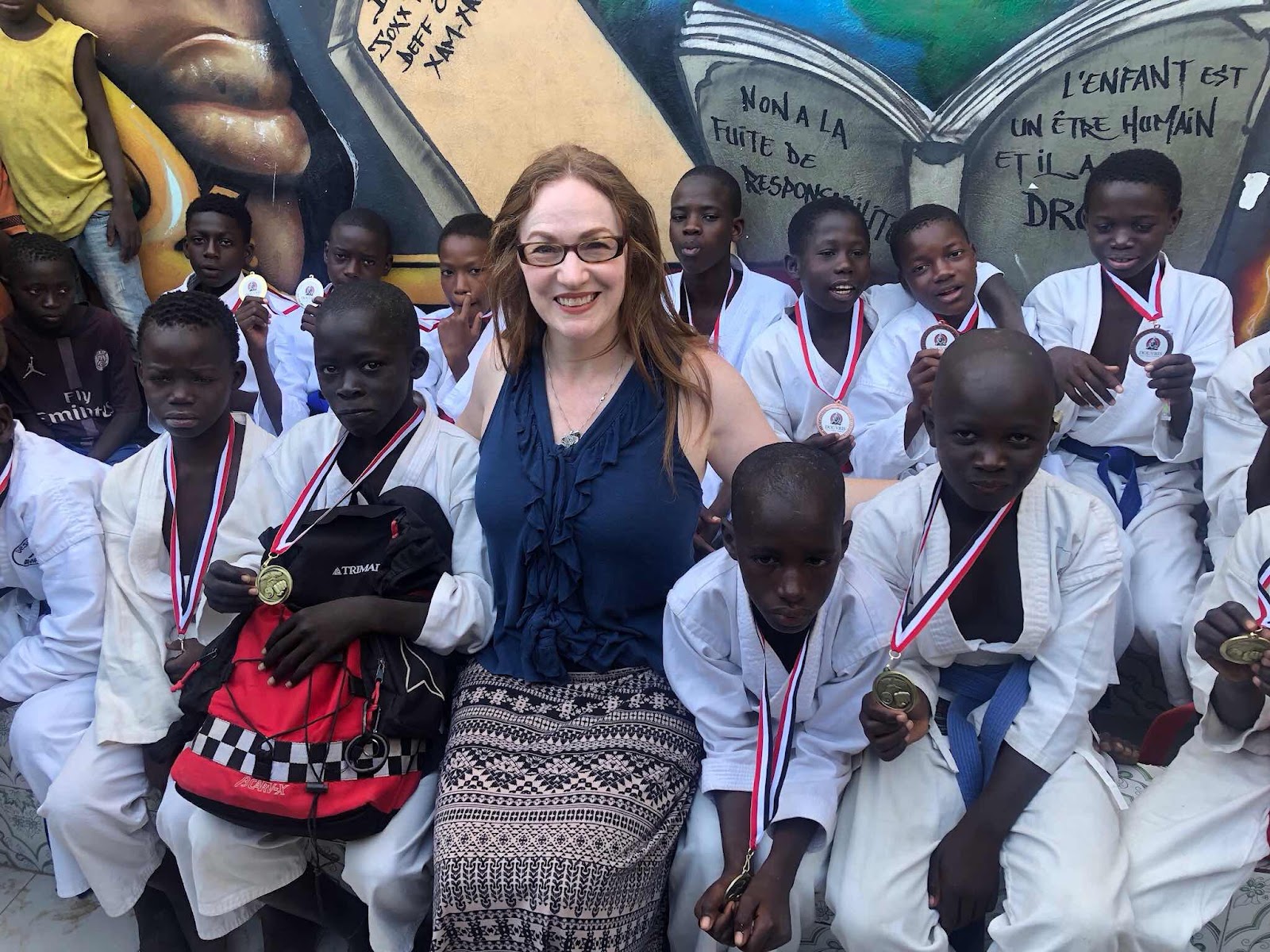
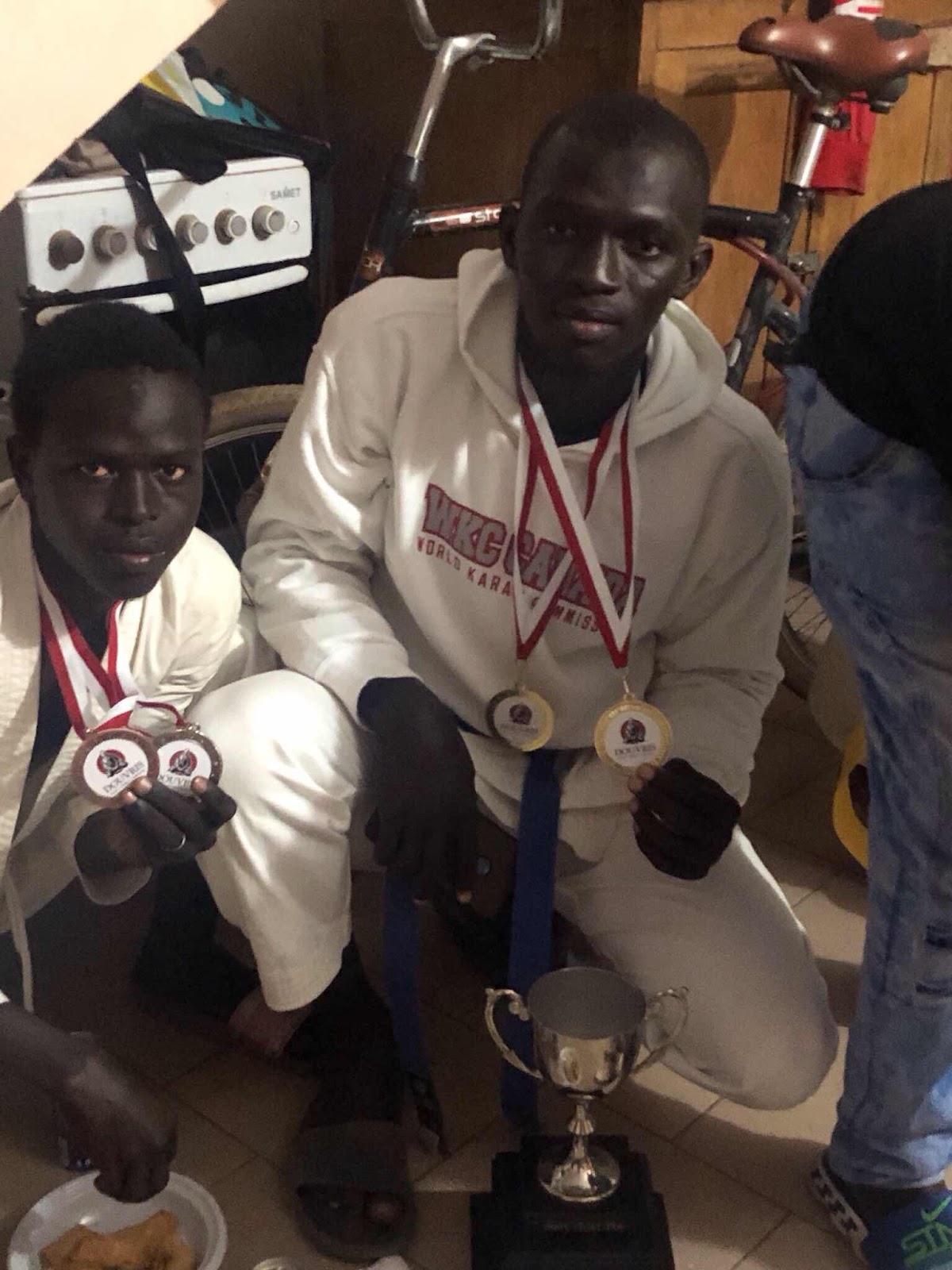
Douvris Martial Arts in Ottawa had donated enough medals for all the participants. And, I had brought with me the names engraved on plaques of the previous Douvris Cup winners to add to the trophies. Robbie's final two WKC Championship sweaters would be given as Grand Championship prizes, and Douvris t-shirts for the runners up. 


As the sun rose on tournament day I could almost feel the nervous excitement of all those talibé boys. About half of them had competed in previous Douvris Cup Classics. For the rest, it would their first time ever being in a positive spotlight, with an opportunity to shine and be rewarded for it. To show they are individuals with the ability to persevere and excel at an activity of their own choosing, based on their own hard work and determination. For the gold medalists and 2 grand champions, true glory awaited.

Robbie and I arrived at the center around 8:30am. The person with the keys to the room where the gis are kept and the classroom where the tables and benches were had not yet arrived. The kids set to compete in the first divisions were present and were busy sweeping sand off the mats and setting up a tent in anticipation of the full burning sun later in the day. 

Eventually the keys were found. As the boys donned their gis, Robbie and I set up the prize tables and laid out the medals and the Douvris Young Guns Cup. The Douvris Cup for the older dojo kids was in Dakar, where the previous two time winner, Ahmadou Diallo had proudly taken it to his family. I knew there would be a chance he had not yet returned it so we brought a temporary stand-in trophy donated from a Douvris student to replace it. Talibés helped set up benches for spectators, happy to be part of what was about to happen. The WKF sanctioned referees began to arrive, professionally sporting suits and ties. The chairs were delivered in the nick of time, a referee was positioned in each corner. Sensei Ignéty Bâ of Sor Karate presided at the head table, score sheets ready. The referees bowed in the competitors. The first pair of kihon competitors was ready to begin.


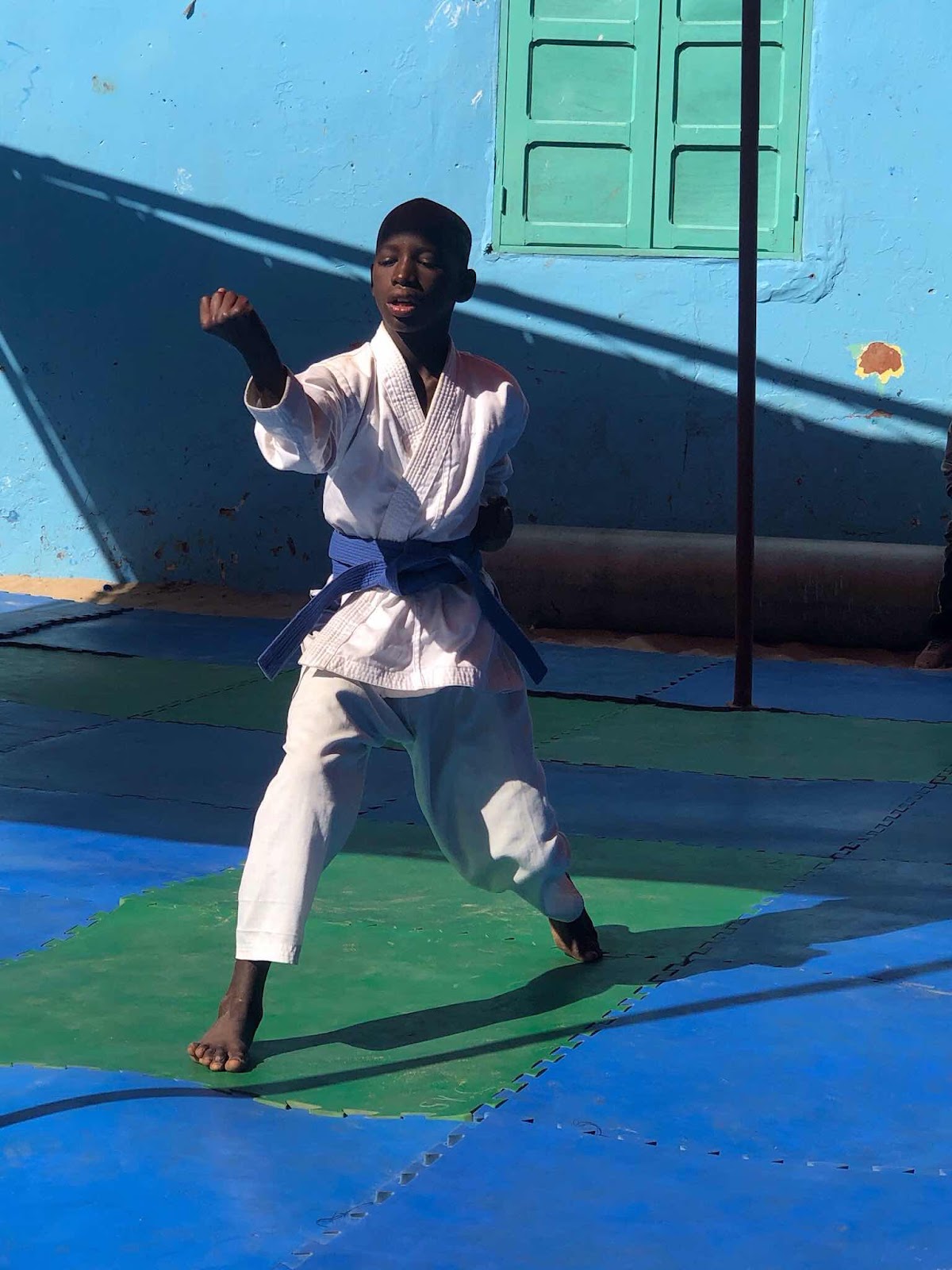
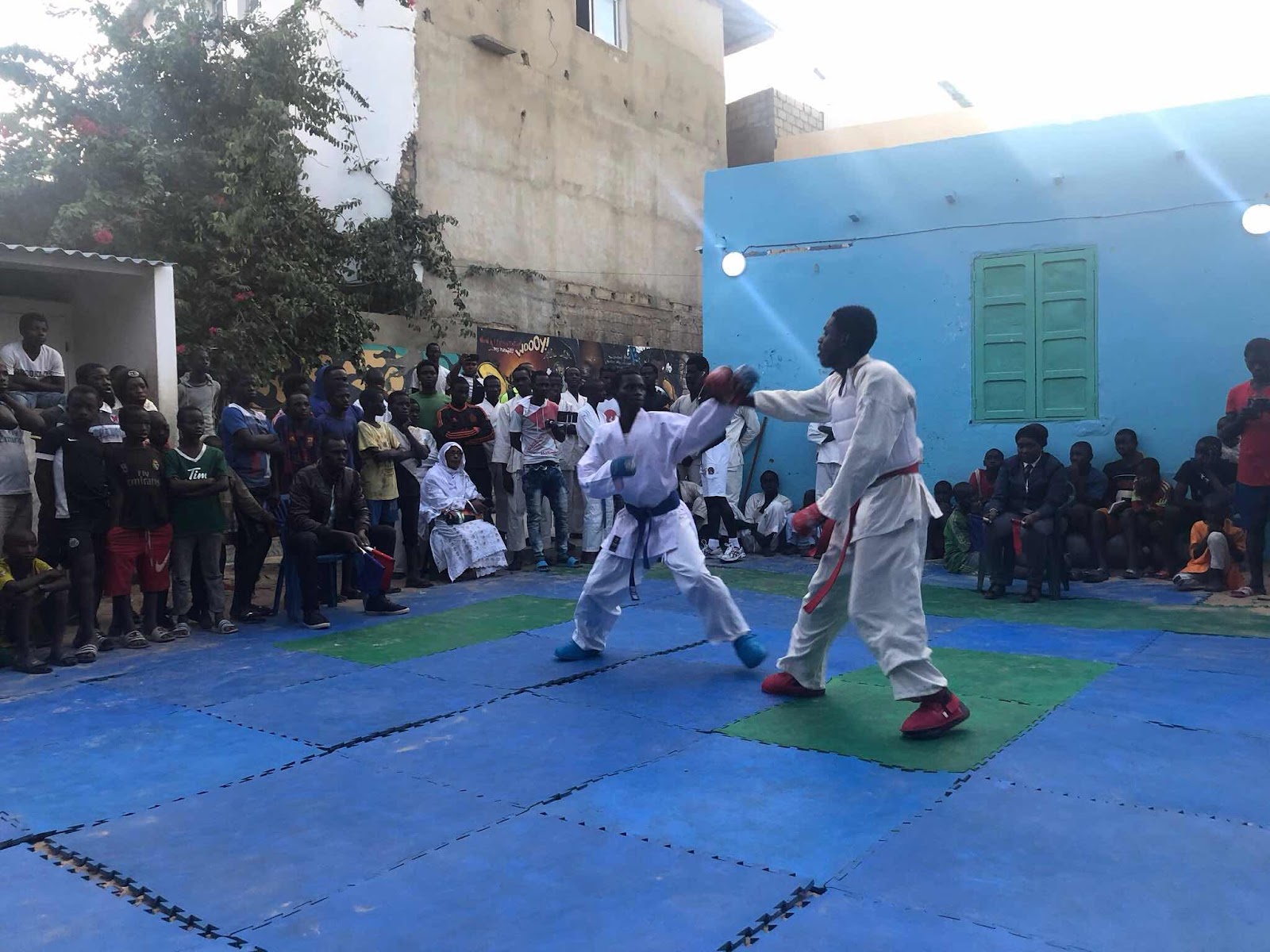
As each person stepped on the mat for his turn to compete, their expressions ranged from palpable excitement to anxious anticipation to deep, focused concentration to steely determination. The kihon instructions were called out in Japanese. All the boys correctly recognized the instructions. None mixed up soto-uki with uchi-uki or oisuki with jatsuki. Each time the flags were raised, either blue or red, the expressions changed: in each pair one deflated and the other became exuberant.

Eventually fourth, third, second and first were determined. Then, the process was repeated for kata. At the end of the first two divisions we awarded the placing and participation medals. But, the presentation of the Douvris Young Guns Cup would have to wait. The next two divisions of Young Guns, the older white belts who practice at the Center in the morning (and are not registered in the dojo at night) were not all present. Apparently some had been told they would not be competing until the afternoon or had responsibilities at their daaras they could not escape. So, we broke for a mid-day break and prayers (Friday is the day most visit the mosqué). 

Ahmadou Diallo arrived to watch the tournament (without the Douvris Cup). Upon presenting himself to Sensei Ignéty Bâ, Sensei insisted he compete. Ahmadou had not prepared diligently to his own high standard and had already decided not to attempt to defend his title. But, out of respect for his Sensei, Ahmadou put on his gi and prepared himself to compete for the third time. Robbie took Ahmadou aside to help him warm up and advise him on his kata choice and execution. After a few run throughs and adjustments, Ahmadou's confidence and determination seemed to have been restored and he was ready.

At 4 pm we reconvened. The second two divisions of Young Guns were dressed and ready to go. 9 of the anticipated competitors competed. Maybe the nerve of the other two had failed. Maybe their marabouts had detained them, it was impossible to know. 

I was astonished at the skill and focus of these white belts. This competition clearly meant so much to them. During the competition for third and fourth place one of the missing karateka presented himself, out of breath. His marabout had given him many jobs to do and he had not been able to get away until completing his extra assigned labour. Unfortunately, at this late hour there was no way to fit him in. He would have to continue dreaming of his next opportunity for now.


The same candidate won gold for kihon and kata. He would be the Grand Champion of the Young Guns, supplanting the morning winner of one gold and one silver. But, none of them realized this yet. First, the two divisions of dojo kids would have to compete.


There were 17 dojo talibés competing. The katas were beautiful to watch, each one a triumph to me. After the finalists were determined we moved onto kumité. By this time the crowd of spectators had grown to several hundred. The cheers that accompanied every hit were sometimes deafening. For both the kata and kumité finals it came down to Yaya and and Ahmadou. Yaya, whose membership has been sponsored by Douvris Barrhaven since nearly the beginning, has devoted himself to karate and he had markedly improved since the last Douvris Cup Classic. Yaya won gold in kumité and Ahmadou won gold in kata. Once again, the competitors would have to await the presentation of The Douvris Cup to know who the Grand Champion would be.

But first, the presentation of certificates and belts to the successful candidates of the last grading. several yellow belts were awarded, Ahmadou received his blue belt!


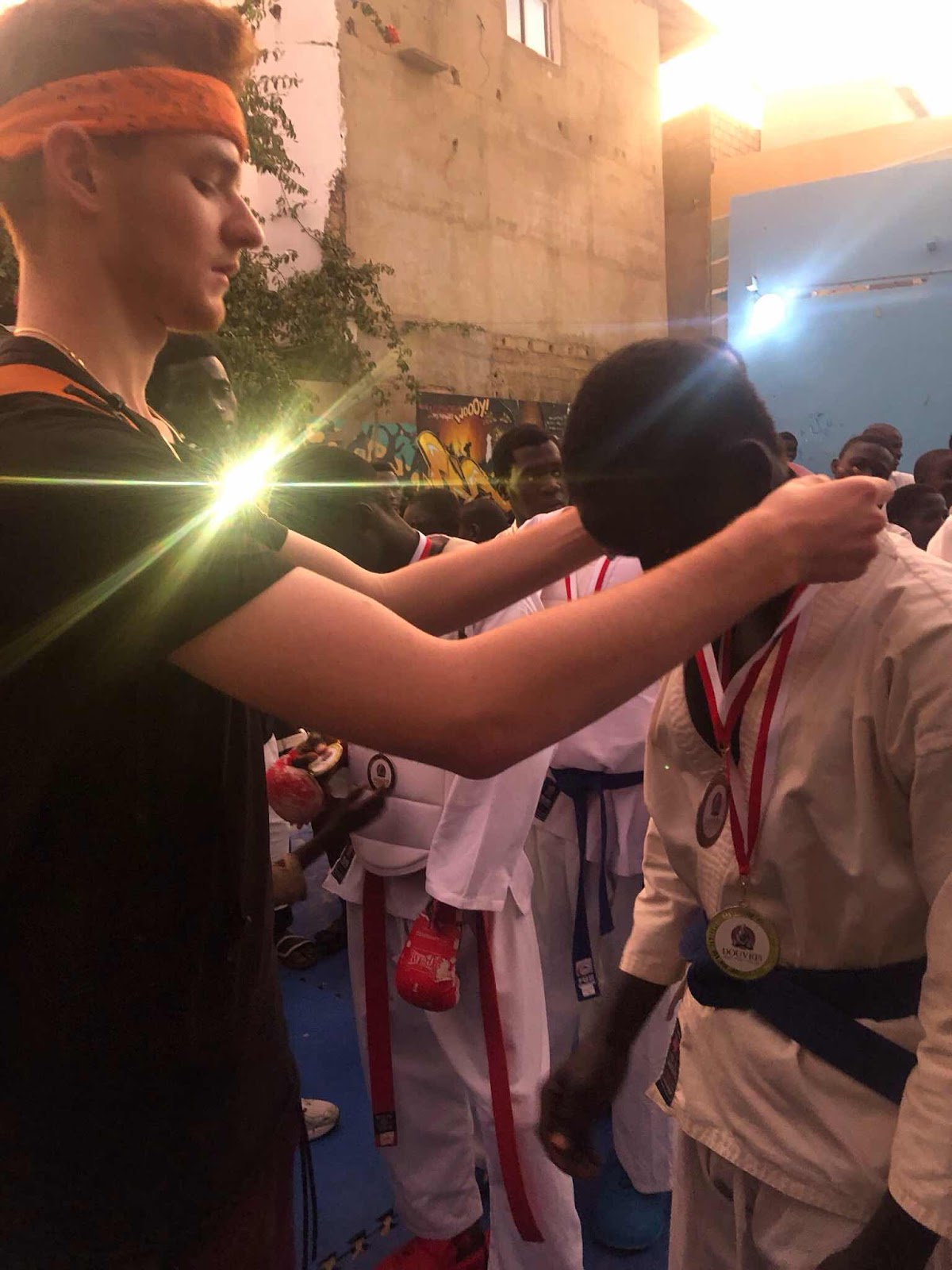
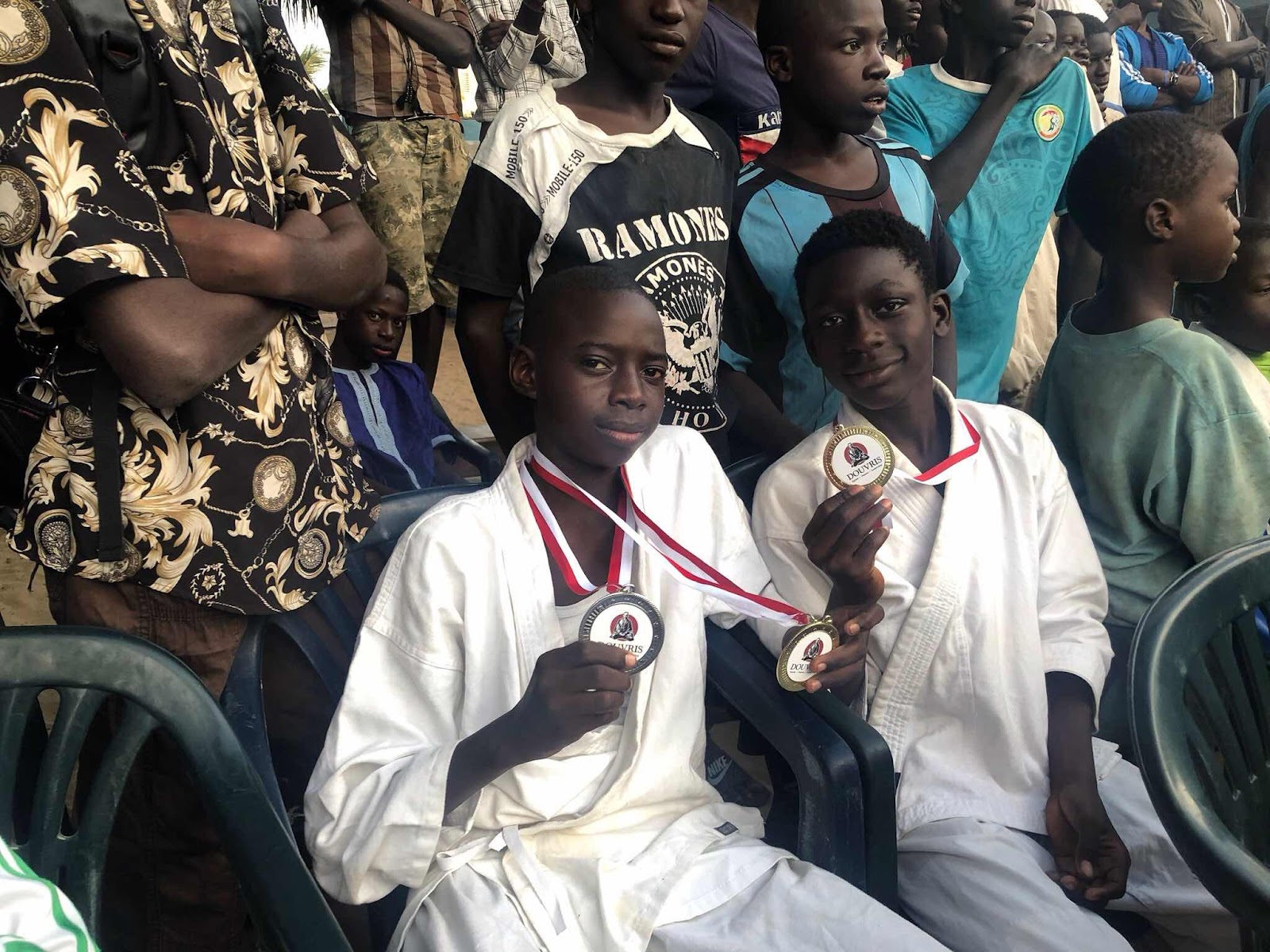
By now dusk had fallen. The head of the Regional WKF Karate Federation assisted in awarding the medals. He respectfully asked Robbie to present the gold medals. Finally, it was time for the Douvris Cup and Douvris Young Guns Cup presentation. Adama Drammeh was the new Young Gun Champion. When we return next time, his name will be engraved on the cup beside the previous winners, Seydou Ba and Omar Sow. This clearly was the first tine Adama had experienced a triumph such as this or won a prize. Despite the 32C temperature, he would not remove his new WKC sweater. And, I expect he is still wearing his two gold medals. Ahmadou Diallo was exhilarated to receive the Douvris Cup title once more. I showed him the two name plates to put on the Cup for his previous wins and explained he had now earned a third, which I would bring next time I returned. He promised to bring the Douvris Cup back to reside at MDG well before the next Douvris Cup Classic. I told him he would be able to keep the other temporary trophy permanently in exchange.

A feast for the tournament competitors was presented. It seemed the rewards and the accolades would never end. Surely in the hearts of these boys, this day and these feelings will be permanently imprinted.


The courage, confidence and self assurance of these talibés has been uncovered and locked down thanks to karate. Even if due to circumstances they cannot control, any of them are unable to continue in the MDG-Sor karate program, they have learned what they can control. They will never lose the gifts karate has given them. Each of these boys has been forever changed for the better.


Saturday, November 23, 2019

Like Coming Home


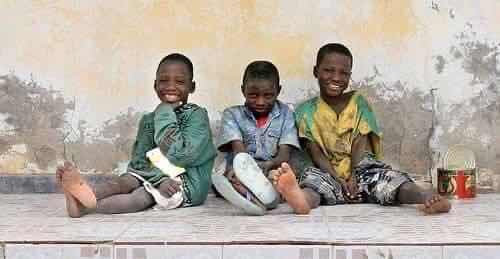
After arriving in Saint Louis we made our way to the Maison de la Gare Center. On the way we passed several groups of talibés: barefoot and in rags, carrying their begging bowls. They could not have been any older than seven or eight. A few talibés were on their own. Isolated in so many ways. unseen or detested, possibly pitied, by society. Abandoned by family. Neglected and tortured by the marabout to whom they have been entrusted. Existing void of affection or love. Their only friends are each other. And, Maison de la Gare.

It felt familiar and somewhat comforting walking up the alley toward the gates. We knew what awaited us inside: shelter, peace, welcome and friendship.


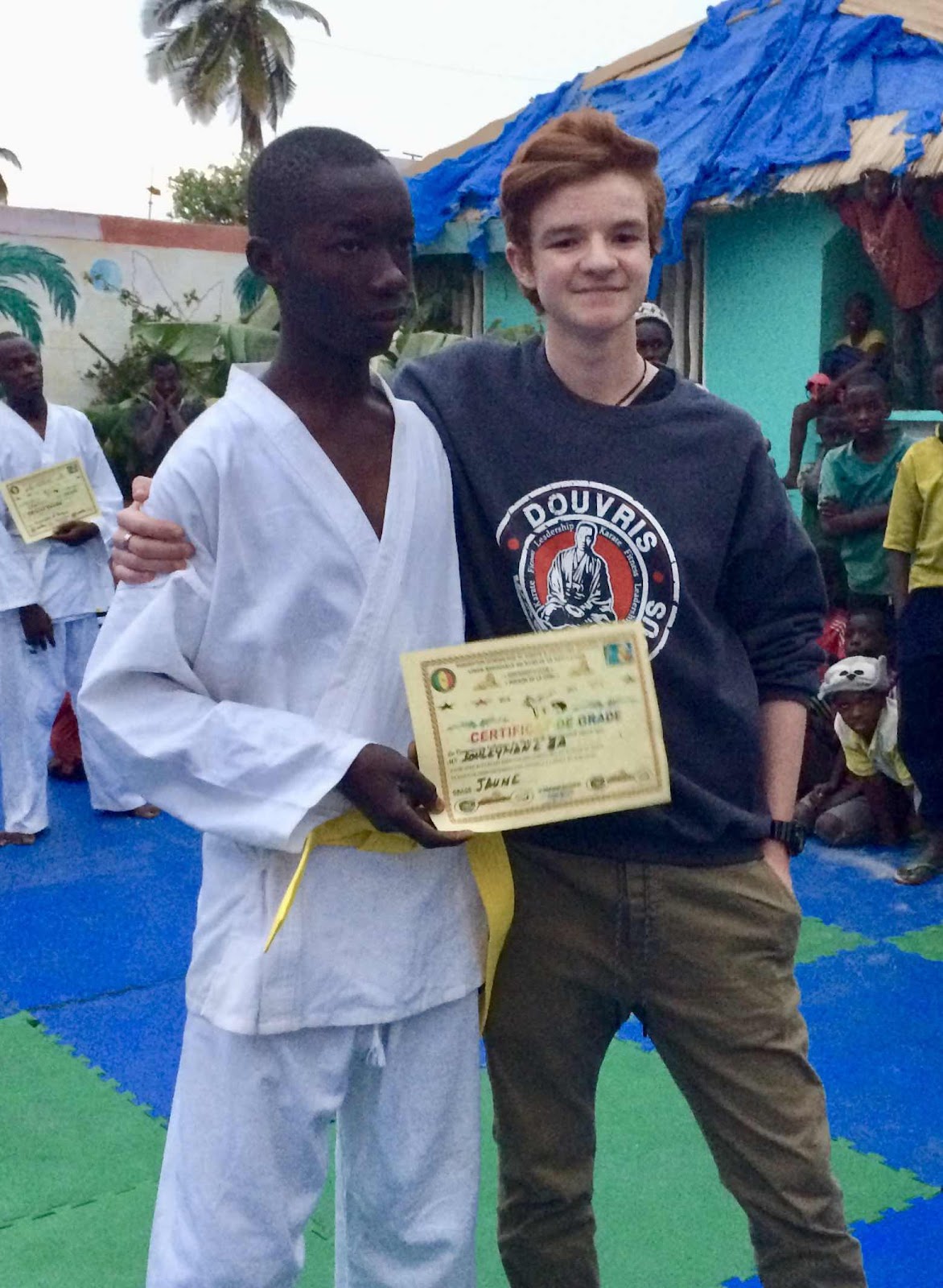
One of the first faces I saw was my friend Tijan. He had travelled from The Gambia to meet me. It was a joyous reunion. Tijan had been discussing the merits of an education with my friend, Souleymane. Souleymane has been a talibé for many years. And, he has been a karate student for years also. Robbie had the honour to present him with his yellow belt two years ago. Souleymane is seriously considering returning to The Gambia, as Tijan did, to enrol in formal school. He understands it will not be easy. Tijan, who has recently graduated with his high school diploma, has ensured Souleymane understands the challenges and the long road that awaits him if he chooses the path of education. Souleymane has made up his mind. He is going to do it. He has somehow developed enough confidence and self assurance to take this risk of the unknown in pursuit of a better future. Perhaps karate offered him this gift. Perhaps it was in him all along and karate helped him uncover it. Tijan's example showed him the impossible can be possible.


The next morning we returned to the centre, knowing there would be a karate class. As Robbie and I stepped through the gates carrying duffel bags filled with uniforms and karate supplies, the karate class that was newly underway came to a jolting halt. The karateka rushed us, calling "Sonia" "Sonia" Sonia" "Robbie". Bouaro's face lit up when he saw Robbie. The kids all reached out at once to touch or shake our hands. Then off they ran with the bags to put them away. The new students who had been waiting for Gi's dressed and so did Robbie and I. After we were bowed-in Bouaro asked Abdou to help translate the sentiments of himself and his students about how happy they were to have the karate program, and how it helps sustain them through their challenges. 


I brought out photos of some extraordinary philanthropists back home. I explained (again with Abdou's help to be sure I was understood) that children from our dojo,  Kaylie and Keagan save every penny they earn all year long to be able to help them have the chance to do karate. And Anna eschews birthday gifts and presents, asking only for money to help talibés become Maison de la Gare- Sor karate kids. I explained how these Douvris karate kids love karate and also think about and love the talibés so much that they want to be able to bring them the gift of karate.

The children seemed shocked to hear my words. A few already knew of Kaylie and Keagan but most did not. Such a huge and impossible thought that children in Canada would be thinking of them and willing to sacrifice for them. One boy asked to speak. He said "we are so happy. Karate is so important for us. Now, knowing this, we will persevere and work even harder. We will never give up." Others nodded in agreement, looking emotional, fierce and determined. one by one they all respectfully approached us and one at a time bowed. How can there be words after this!?!


Later, Robbie took a group of karatekas aside to help prepare them for the tournament to be held the next day. They would all be participating. For many it would be the first time and they were excited but anxious. Robbie worked with the older beginners, white belts, on their katas. I had the strong sense that the children felt honoured to be training with Robbie and I. But we both knew better- the honour was all ours to be training with them.

It was hard to say good bye when class ended. But, the streets called. Off came the white gis that marked them as special. In many cases they remained barefoot. But, without the gi this marked them as lesser instead of more. The children still had begging quotas to fill.


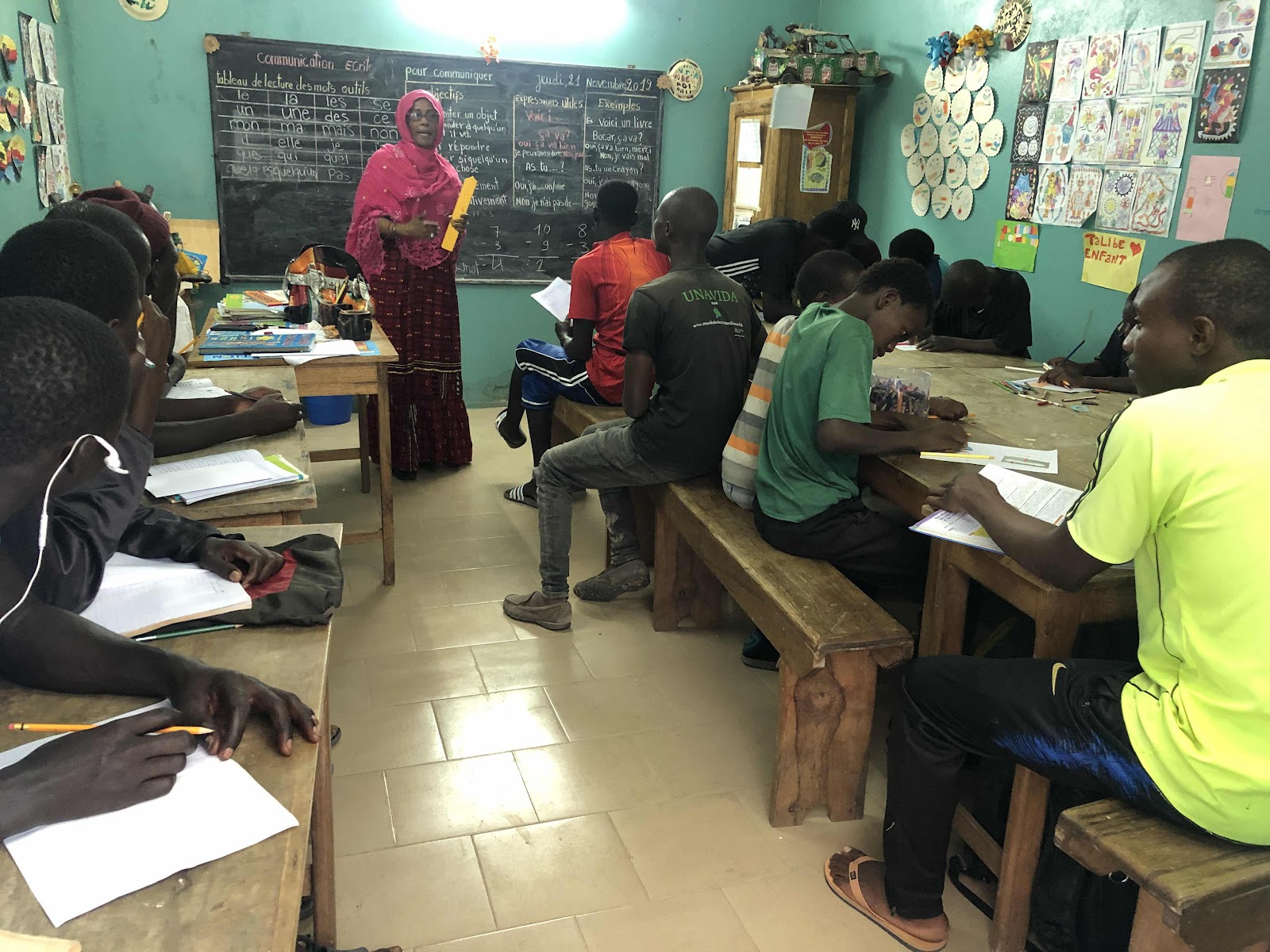
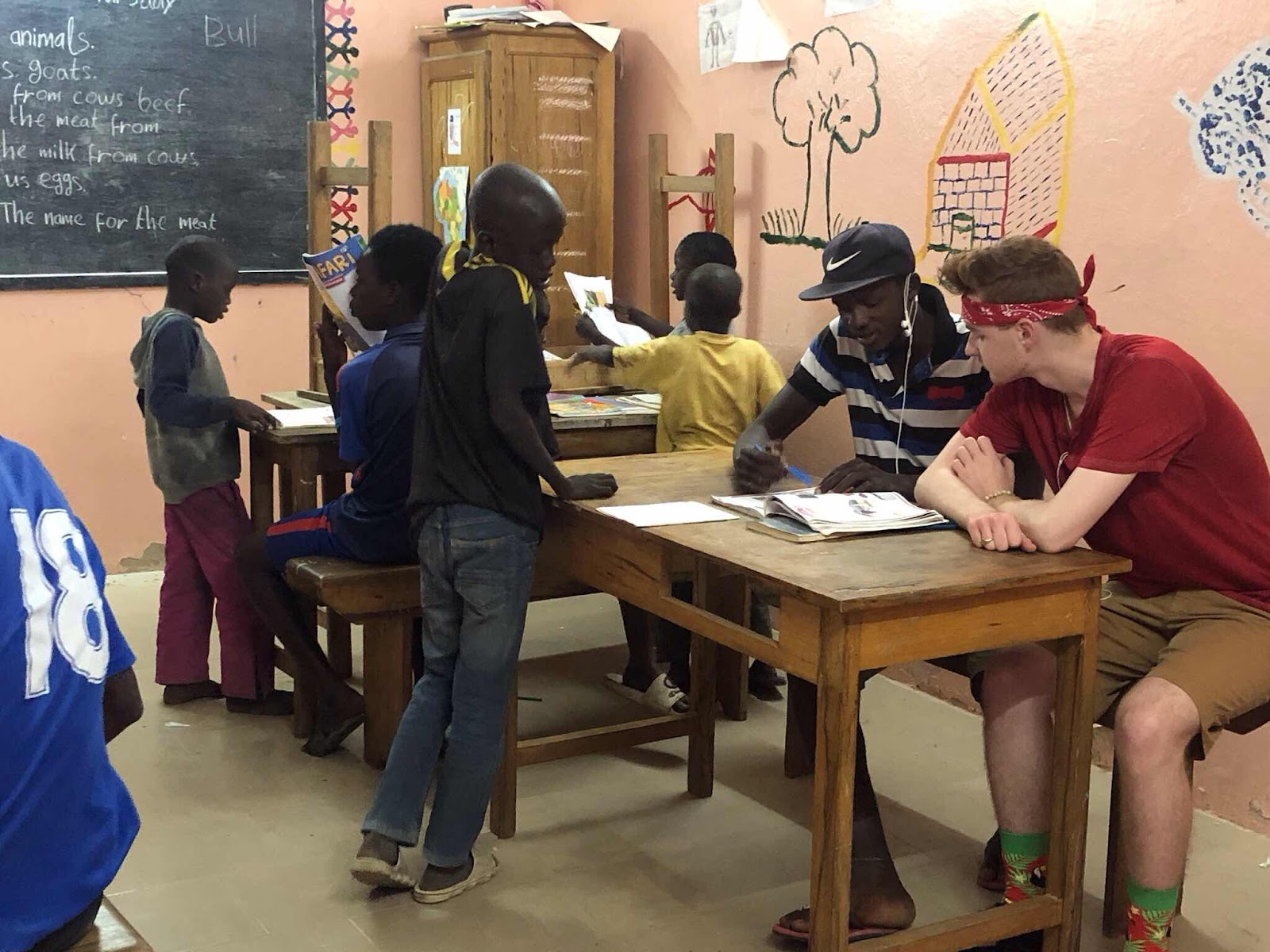
In the afternoon Robbie assisted Kalidou teaching his English class. Kalidou is a leader in the couture apprenticeship program, and he also teaches English every evening. I met Kalidou on my very first visit to Saint Louis over ten years ago when he was a forced begging talibé. Now, having taught himself English and devoted himself to learning a trade, Kalidou is an example to so many young talibés.


Robbie and I made arrangements to meet Idy late that night for a Ronde de Nuit in search of talibés who had run from their daaras and were in far worse danger, alone on the streets at night.


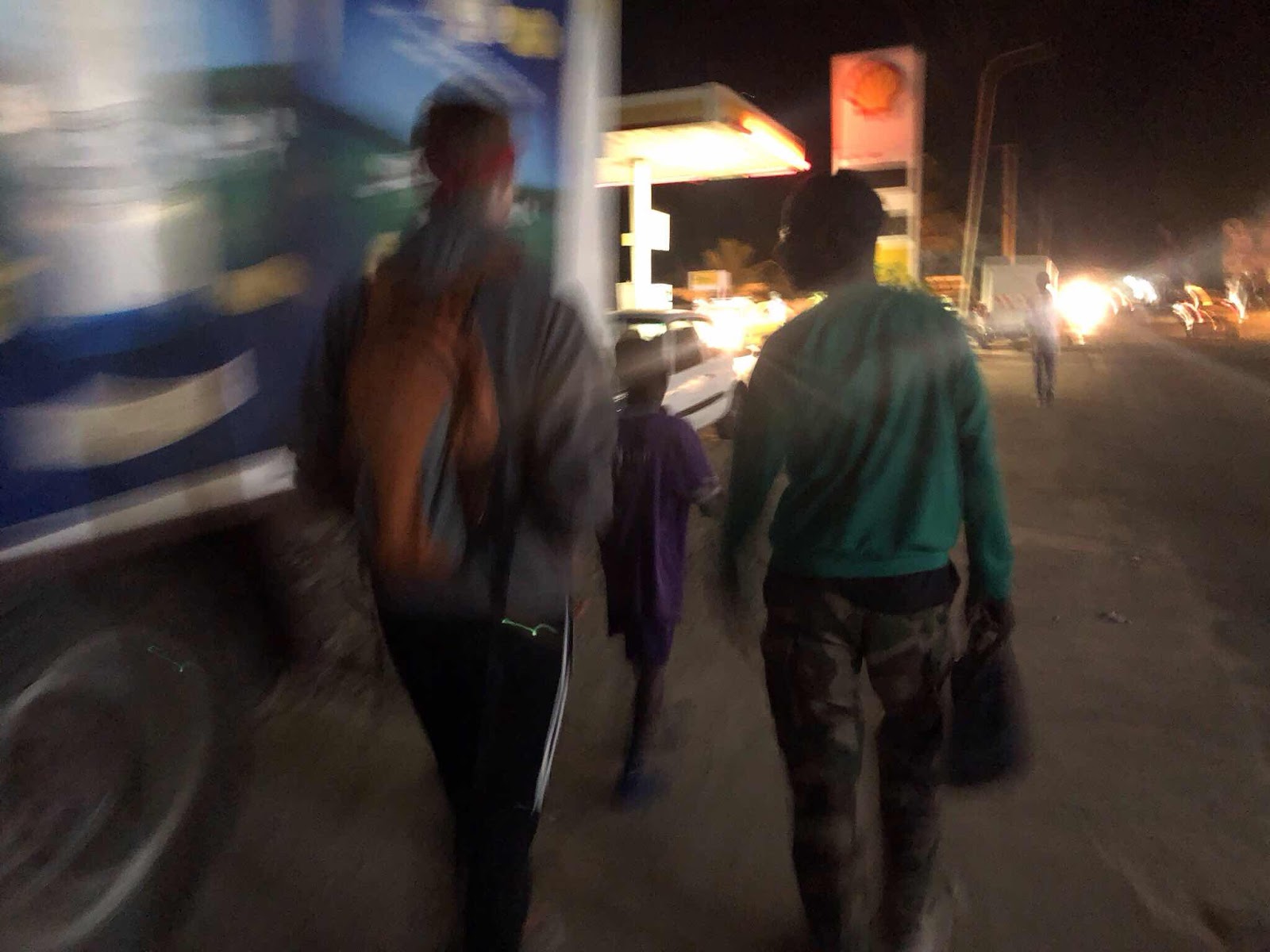
After midnight, at the Gare Routiere, we soon found a little boy, asleep in a corner. Idy gently woke him and explained he was not safe, and he could sleep instead at Maison de la Gare in a bed and have some food. The little boy, Ibrahima, trustingly followed Robbie and Idy, proving just how vulnerable they are while on the run. It was not long before we discovered a second talibé, curled up against the chilly night air on a well lit counter. For these runaways, the relative safety offered by well lit locations must be balanced against the desire to remain hidden. This boy, Ibrahim, also followed us with little objection. We took them in a taxi to Maison de la Gare's emergency shelter. The night guard checked them in and we tucked them in. Then we went out once more. 


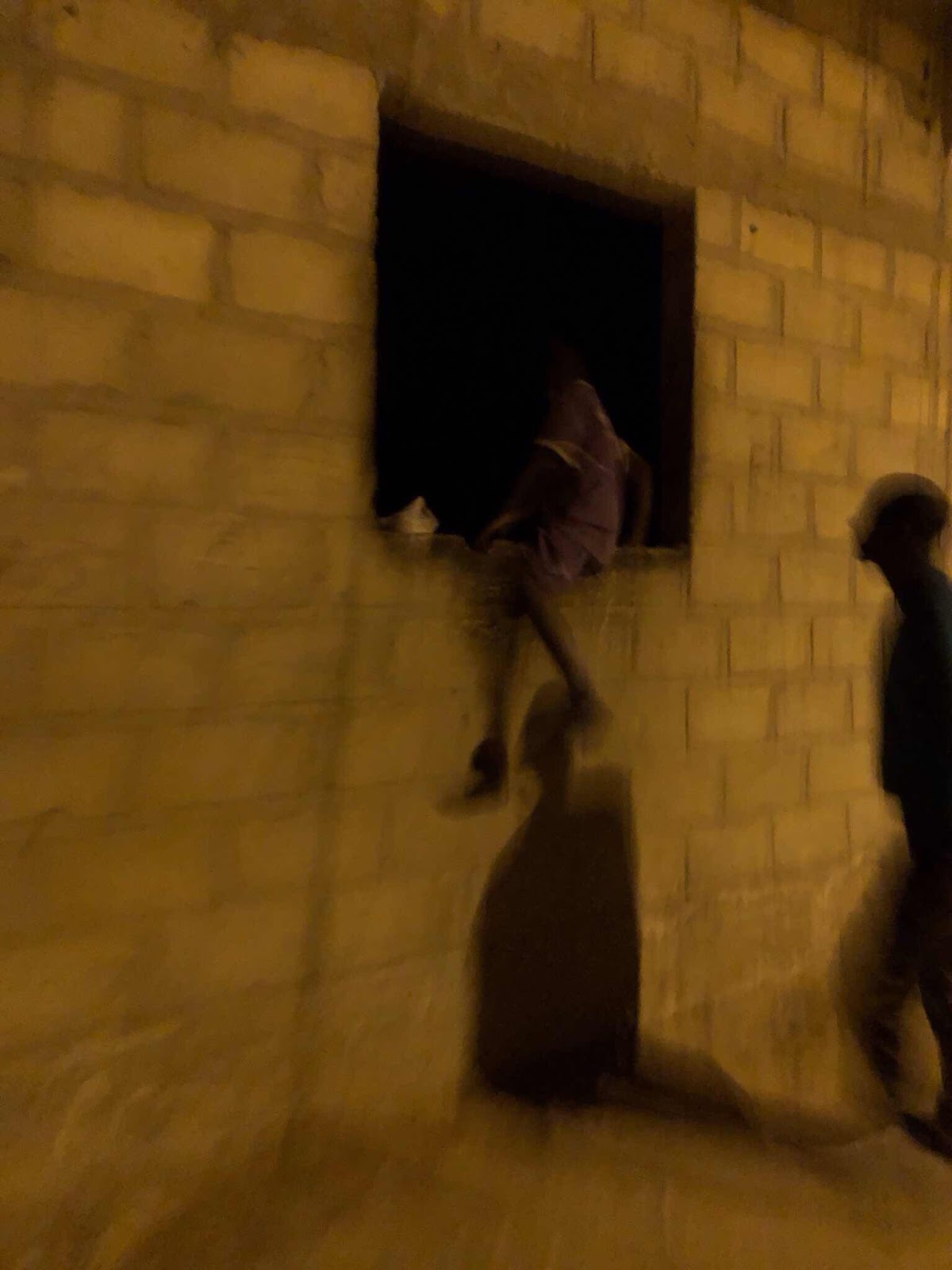
Along the main road, we found a tiny boy sound asleep under a bright light, knees tucked into his ragged t-shirt for warmth. It was very difficult for Idy to wake him, and the boy kept nodding off again, clearly beyond exhausted. Eventually he woke and realized it was late. He seemed upset that he had fallen asleep and wanted to get back to his daara quickly. He had walked for miles that day, and had not eaten at all. He had been simply too tired to take another step. I bought him a fataya to eat at the all night restaurant nearby, as well as two more for the boys now safely back at the dortoir. Idy suggested it would be safe for the boy to take him back to his daara or he would not have asked to go. So, we accompanied this little one (He seemed about age six to me but Idy said he was likely eight). The talibé was so tired that he was stumbling and seemed in danger of falling asleep on his feet. but, with every bite of his food he gained strength. When we finally arrived at his daara after about a 20 minute walk he had perked right up. instead of going in the front door, the talibé wanted to hop in a back window quietly, hoping to rejoin the other boys undetected. Idy gave him a boost, and the last we saw of his face was a smile of thanks, accompanied by a quick wave. 

It was 2 am when Robbie and I returned to our hotel, emotionally and physically exhausted. But sleep would allude us this night.


Saturday, March 23, 2019

Lala and the Beautiful Game


Lala sits under the shade of the bougainvilleas, talking to a little talibé. Lala is listening to him, giving him her full attention. She speaks a few encouraging words. He nods, she pats him on the shoulder and he runs off. 

Maison de la Gare is lucky to have one dedicated, long term volunteer, Lala Sene. Lala played soccer for Senegal's Women's National Team in 2006, 2009, and 2012. Soccer was her life, until 2017 when she received a career ending injury of a double fracture to her right foot.  Wanting to use her skills to help the forced begging talibé street children of her city, Saint Louis, she began to volunteer at Maison de la Gare, coaching the soccer-crazy talibés and organizing a weekly tournament at the centre. 


As Lala's injury healed and the talibé boys of Maison de la Gare captured her heart, she increased the frequency of her volunteering until she could be found at the centre everyday, helping to prepare the daily food or lend a hand wherever it is needed. The Thursday soccer tournaments continue, but frequent  informal pick-up games now also offer regular opportunities for the boys to receive coaching tips and the extra special attention that is so lacking in their lives.


Lala was born in Saint Louis, into a family of sixteen children. She began to play soccer at age six, with the boys in her neighbourhood.  Her father knew of her love of the beautiful game  and could see that she was always the best player on her teams.  He encouraged her to feed her passion and pursue her dream of playing professional soccer. When her father was on his death bed, he asked Lala's coach to watch over her and continue to encourage her, a wish which her coach has continued to honour. 

Lala's parents are both gone now. She lives in her family home with five of her sisters and three of her brothers. They support each other, and they encourage her in her devotion to the talibés, recognizing the importance of this work for her.


Lala is now completely devoted to the talibés. Her greatest worry is that if she falls sick, or even needs to take a few days away from Maison de a Gare, that the children will miss her. She says "If God is good, I will be able to remain at Maison de la Gare and help these children who trust and need me." She adds that the talibés are like her little brothers or her own children. It hurts her heart to be away from them. It touches her deeply when the talibés call her name out to her on the streets of Saint Louis.

It is Lala's greatest wish for the future to be able to continue to commit herself to the talibés boys of Maison de la Gare.

"I feed myself off of my love for the talibés and their love for me. I am one with them."
- Lala Sene