Followers

Showing posts with label Maison de la Gare. Show all posts

Sunday, November 30, 2025

Suxali - The Next Chapter


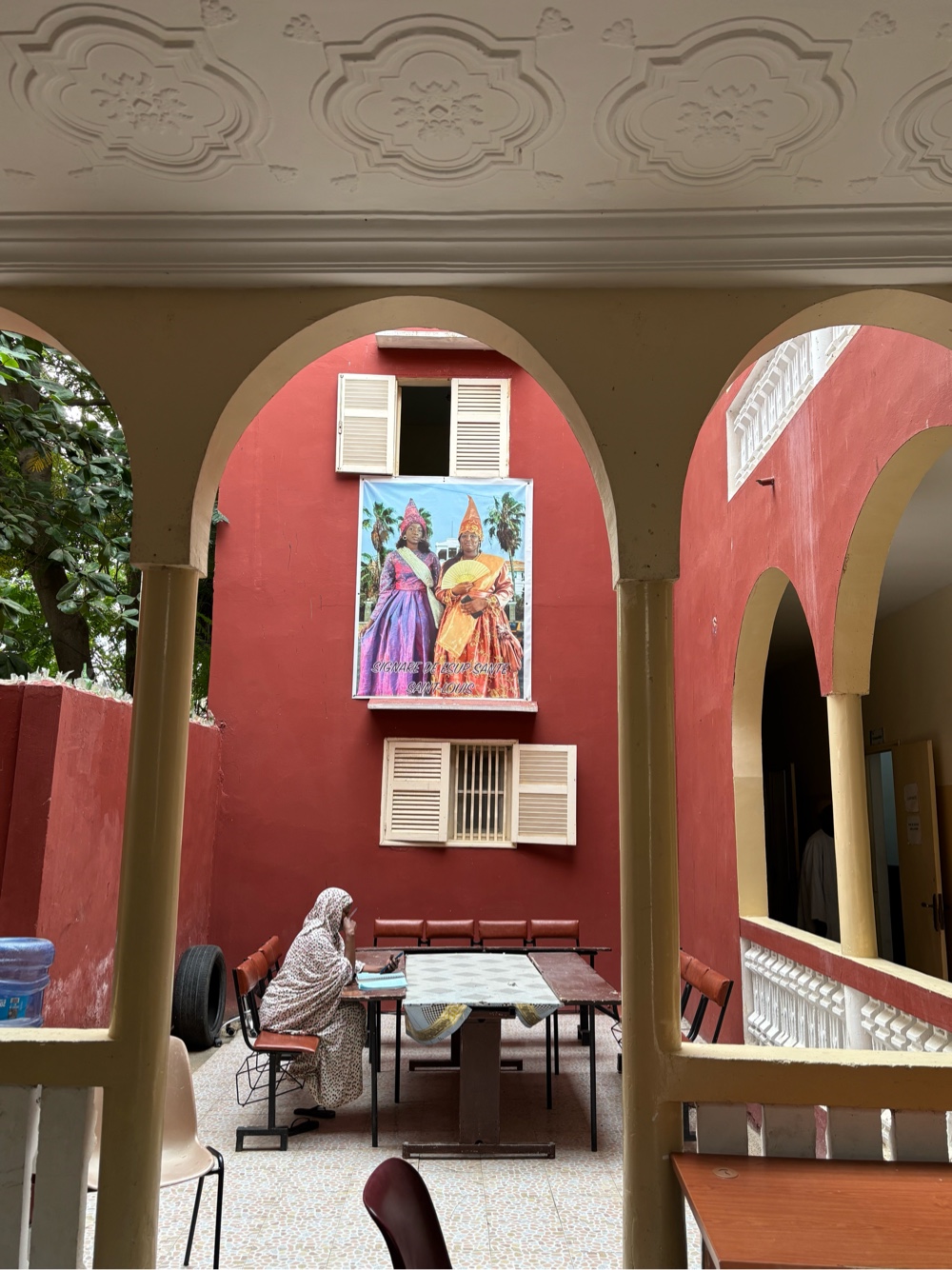
inside the USUP Santé school of nursing


For many years my family has been visiting the remote Senegalese region of M’baye Aw, where schools are changing lives. Over the years, the schools drew boys back from a life of exploitation on the streets of Saint Louis, and at the same time, more and more girls enrolled for the first time. Thousands of children have received an education in this region, where previously no opportunity existed other than for parents to entrust their boys to marabouts in the city, far from home, to learn the Quran. But, all too often, despite good intentions of parents, this resulted in a life of forced begging for the boys, and forced early marriage for girls (as villages emptied of boys who did not return).
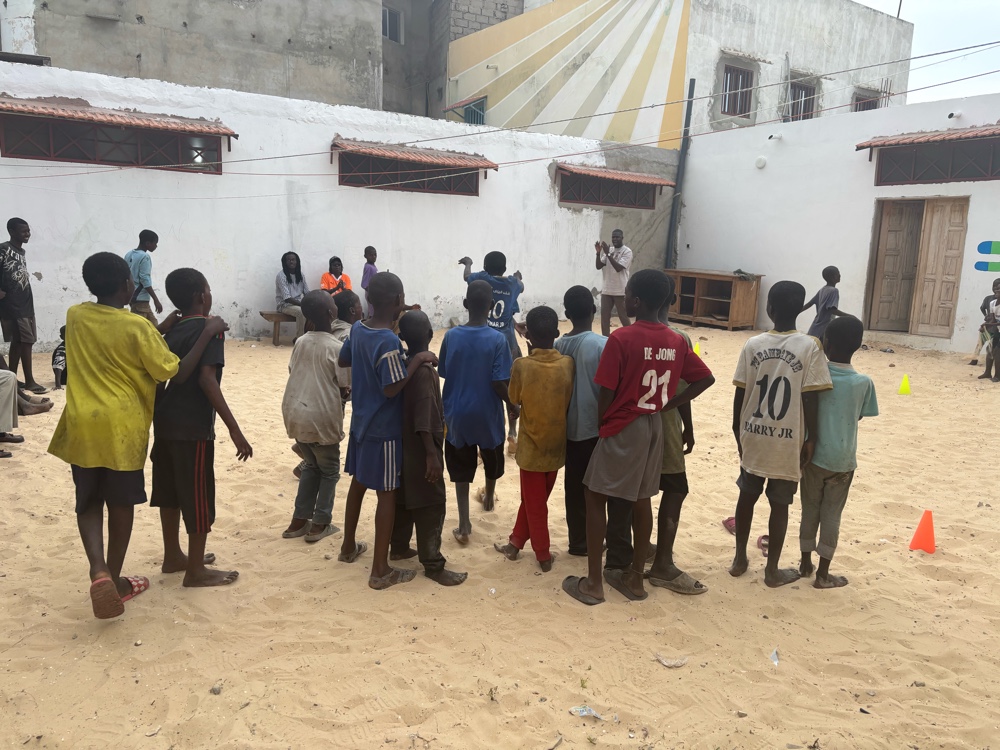


talibé boys finding refuge from the streets at Maison de la Gare


Several years ago when visiting the area to sponsor an annual convoy to the nearest large town for the children to write government year-end exams - hours from M’Baye Aw- Rowan was slipped a “help me” note. From a girl who was thriving in school, but her village based education in our schools, which ends after middle school, was coming to an end. Her parents were making her marry against her will. She ferociously wanted to continue her education, but what options did she have? Cheikh, the founder of the schools project, presented me with four more letters from other girls, that they had written upon learning we were coming. Rowan and I were devastated. These horrifying letters were personal testimonies of twelve and thirteen year old girls desperate to avoid forced marriage so they could continue their precious education. The boys have returned to these villages, and yet long established traditions remain.
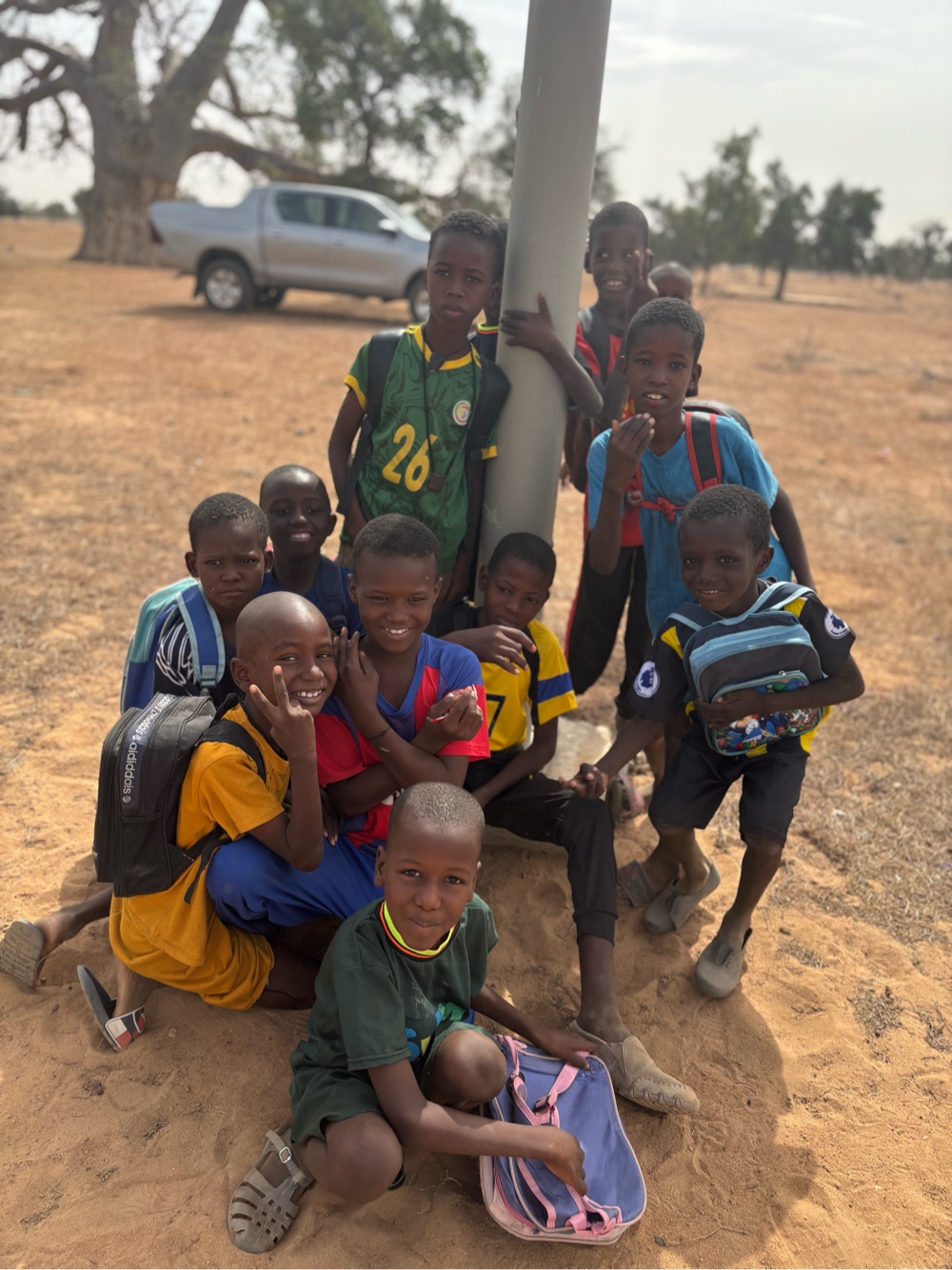


boys at recess at the Bela Doba school

It seems every solution leads to new problems. Education ended the begging talibé system here, and brings the discovery of a  world outside the village, and of the concepts of basic human rights, which, in turn, lead to dreams of more. As it should.
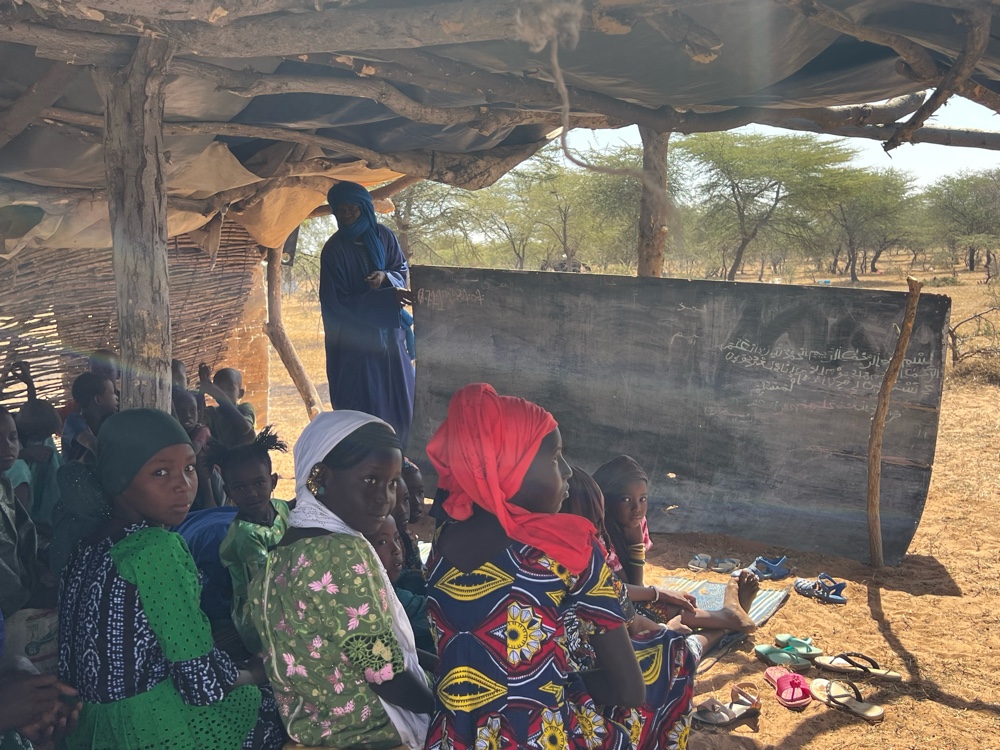

children studying in one of the temporary schools

Since that shattering moment of reading of the deep desire of girls to continue their education, and as understanding settled in about the height to which their barriers towered, we knew we had to do more. The schools are everything here. But even so, they are not enough.
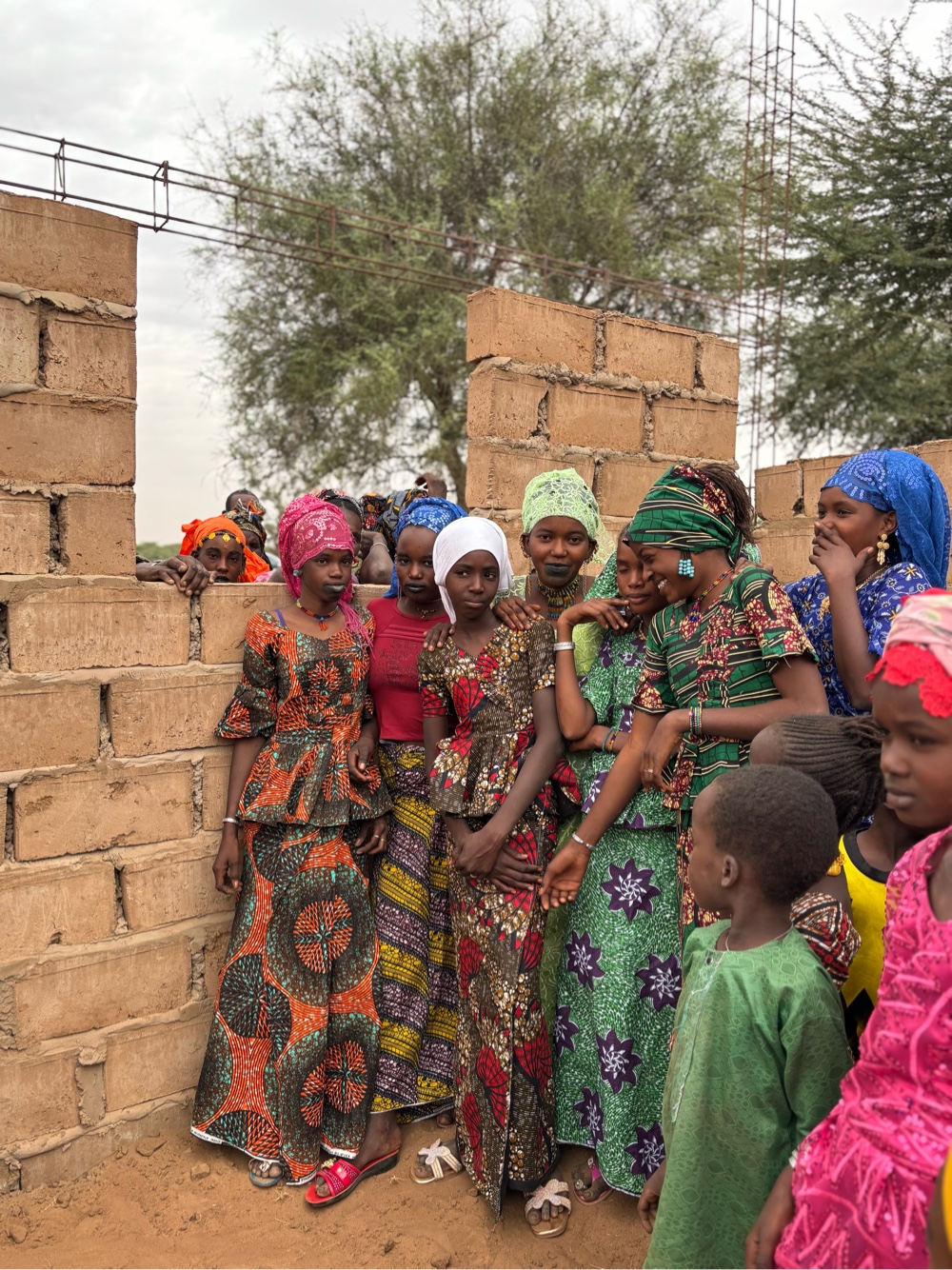

construction of a new school is underway


Rowan conceived of and created Bourse Suxali: A scholarship for a girl from the region of the five schools our Foundation’s generous donors have sustained. An unmarried girl. A girl who cares about education so much that she found a way forward, despite unimaginable challenges. A girl who left her village after going as far as she could from home, moved to town, found room and board, attended four years of high school, and succeeded in earning her high school diploma. Suxali was to serve as motivation not just to the girls, but is designed to encourage their parents to support them in their high school and higher education dreams. A full ride, three year scholarship for a health care degree including living expenses promises great opportunity to the successful applicant. And, in a region with no health care availability whatsoever within hours and hours, the community has bought in. 


A few years ago the community pooled their resources to build a health clinic building, thinking that would solve their lack of access to health care. After all, when they built the schools (with the support of our donors for the building and ongoing funding), education did, indeed, follow. But of course, there was no nurse, no midwife, no medicines, no vaccines, and the building soon crumbled due to disrepair and lack of 
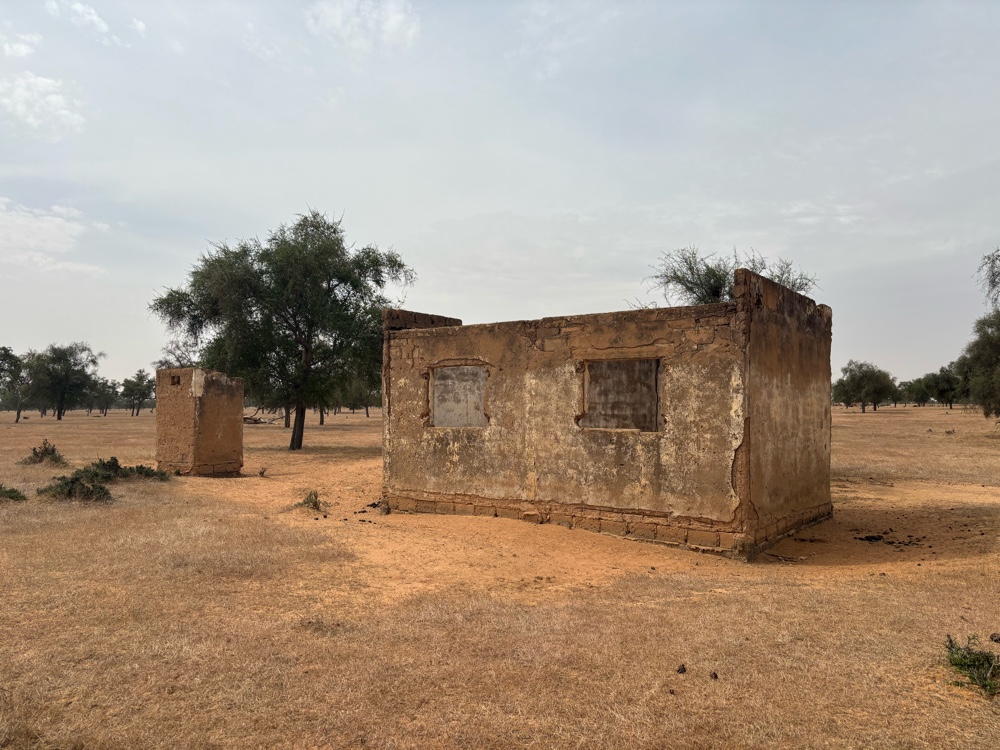


use. When we met with the villagers this week to discuss the progress of the schools and announce the second Suxali award, the Chief expressed to us that they had learned the hard way that they had put the cart before the horse, and that putting one foot in front of the other slowly in a logical, sustainable manner over the long term is what would bring progress to his people. He expressed his emotion and gratitude at seeing his children and grandchildren learning to read and write and speak foreign languages when his generation could not write their own names.  He said they all now understood the importance of Suxali and how before a new health clinic is built, first they need a nurse, a midwife, a doctor, who are connected to the area and feel a responsibility to help their neighbours. Our satisfaction in feeling our vision was understood and shared cannot be overstated.
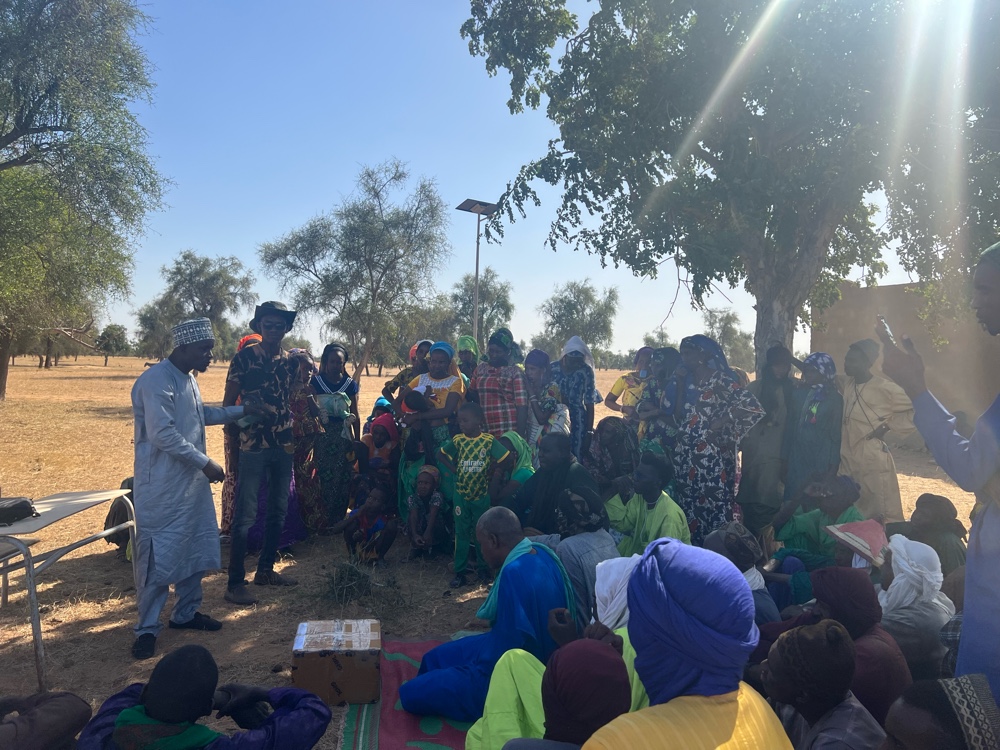

The villagers gathered to greet us

We had visited the high school in Dahra Diolof two years ago to meet the girls in their final year of high school, to learn about their hopes and dreams, and to inform them about the opportunity of Suxali. We were there again last year to confer the inaugural scholarship to the first winner, and to inspire the next year’s candidates.
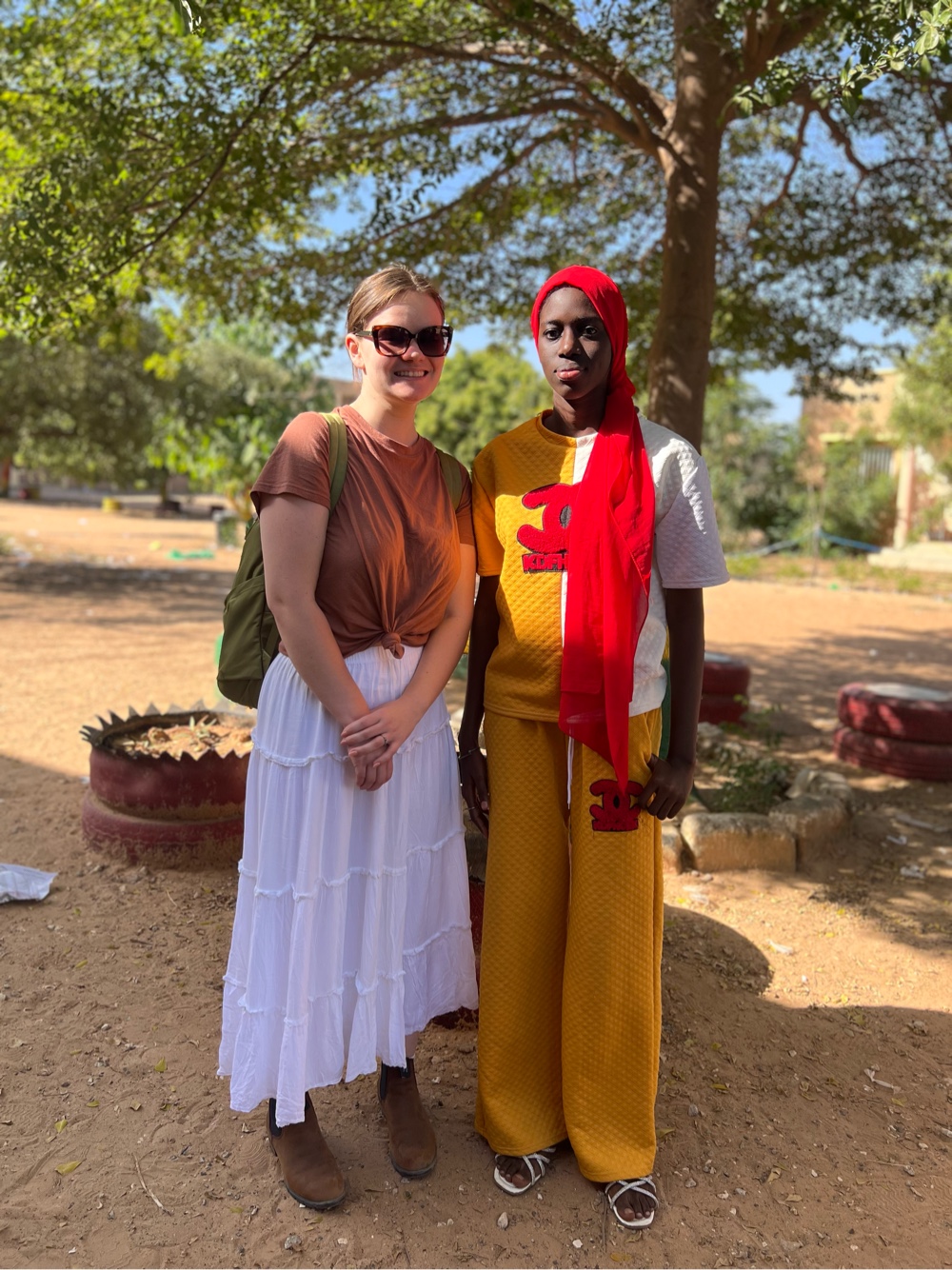

Rowan and the first Suxali scholar

A year ago, before our return to Canada, we had met the first Suxali winner, delivered a backpack with school supplies and a computer, registered her in the three year nursing program, and set her on a path to finding room and board in the city. She has embraced her education, and is in process of beginning her second year of study.


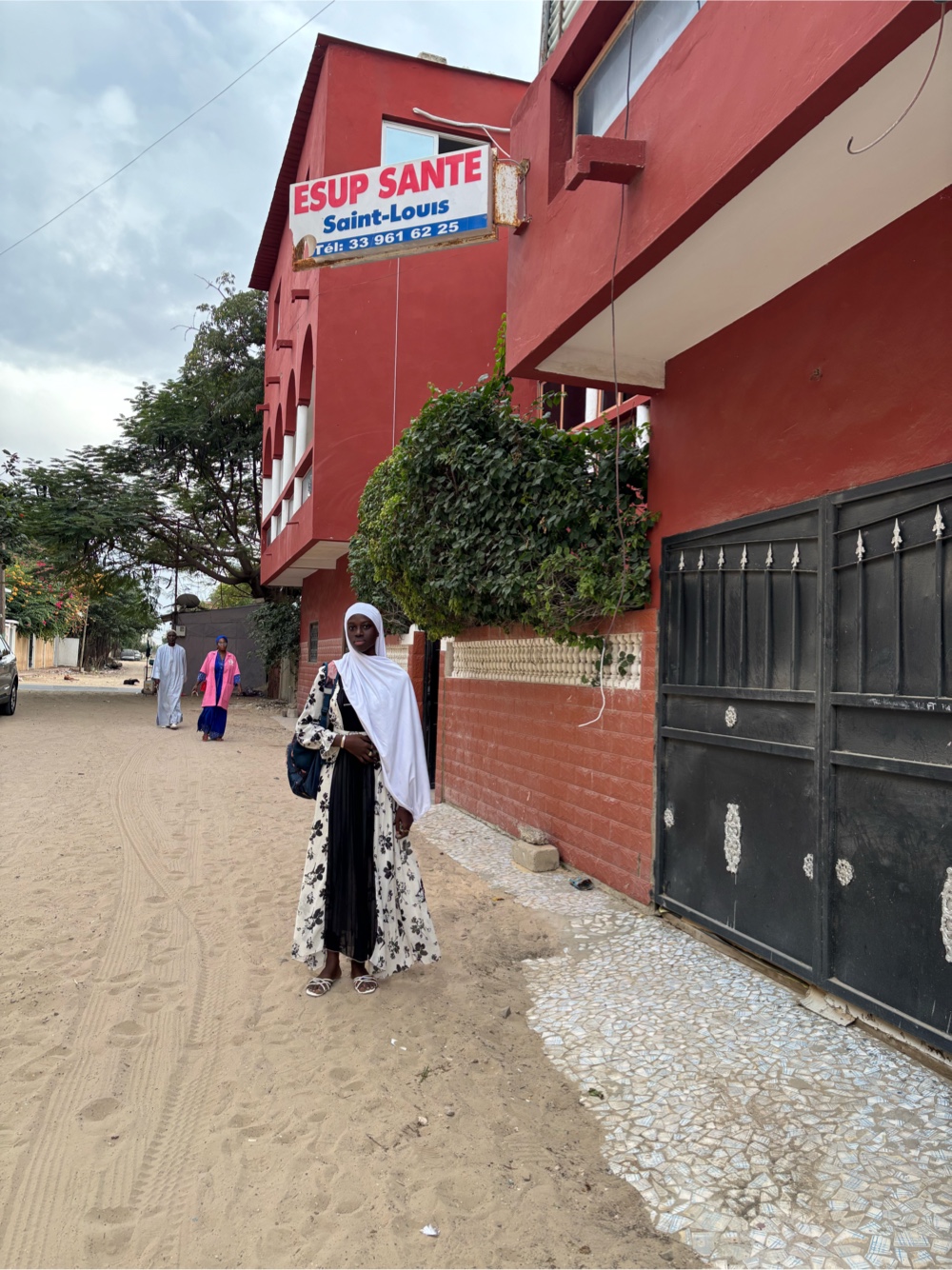
On this trip, we met the second winner of Bourse Suxali. Her dream to become a midwife is on the verge of becoming reality. Rowan had been communicating with her on Whats App, making plans for her to come to Saint Louis to meet us. We finally met in person Friday for the first time and travelled together to ESUP Santé, the nursing school. The first Suxali recipient was waiting to meet us and greeted her new mentee. After meeting with the director and completing registration formalities, Rowan made an official presentation of the new scholarship, backpack, and computer. When the registration process began, and again later as the certificate and computer were presented, she was overwhelmed with emotion. Her dreams are becoming reality, and her future awaits. 
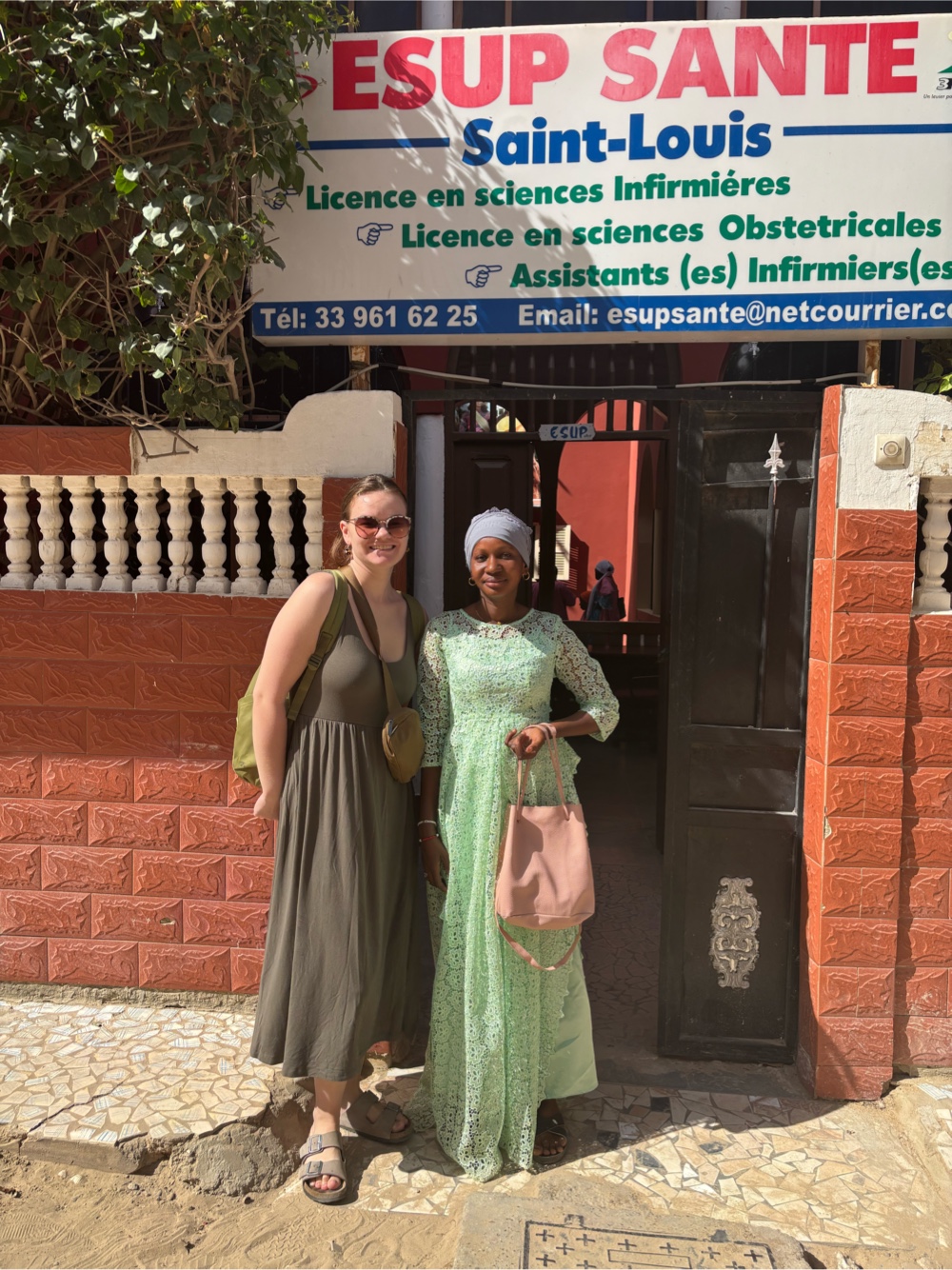

Rowan and the second Suxali scholar


After the ceremony at the school, a tour of the facilities, and a phone call to her mother to share her news, we escorted our new scholar to Maison de la Gare to meet the team there. We headed directly to the infirmary, to introduce her to Awa, the Maison de la Gare nurse. Awa is currently in process of completing her own studies at the same school of Heath. Rowan had previously arranged for Awa to serve as the first Suxali scholar’s mentor. Rowan’s idea is that each new Suxali recipient will be mentored by the winner from the previous year.
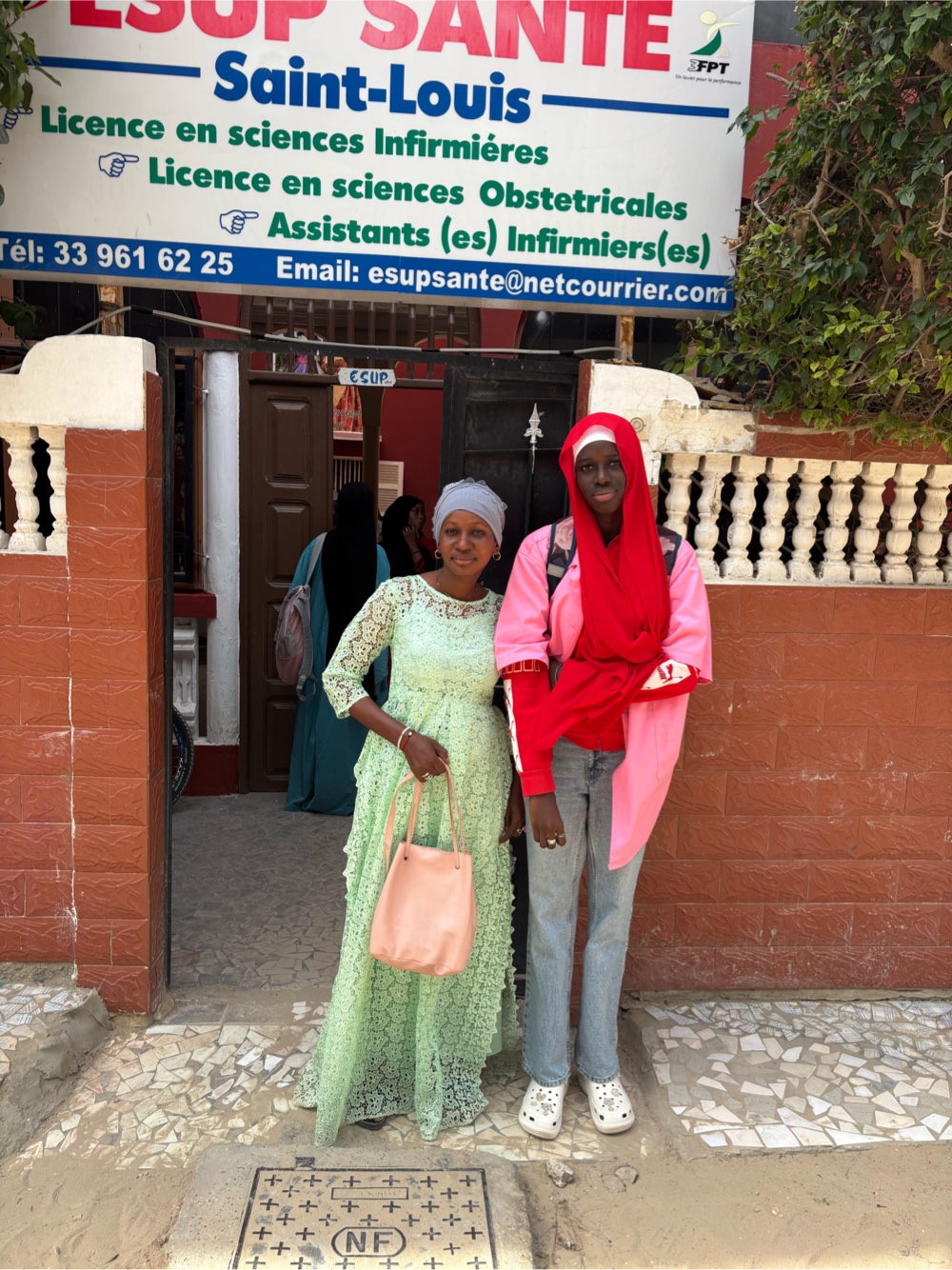

Mentor and mentee

All of the staff at the Maison de la Gare Centre welcomed our new Suxali scholar, indicating they would be there for her, for help, support, and friendship. We left knowing she would not be alone in this new place, that she was now among friends, and that her future now lies in her own hands.


There are now two Suxali recipients working toward their dreams. It is our hope to be able to eventually fund a new Bourse Suxali each year, so that there can be three 3 year health care degrees in process concurrently, with the mentoring cycle paying it forward continuously. But, fundraising has not been as easy as we had hoped. The opportunity we see to change so many lives so dramatically is not something everyone cares to or has the means to embrace. This is understandable, as everyone has their challenges and hills to climb. We may need to pause a year before a third Suxali is offered. But who knows. As we hear expressed in Senegal so often: God is good. Things worth doing will happen. Lives will continue to be changed. And dreams will keep coming true.

Saturday, November 29, 2025

Passage


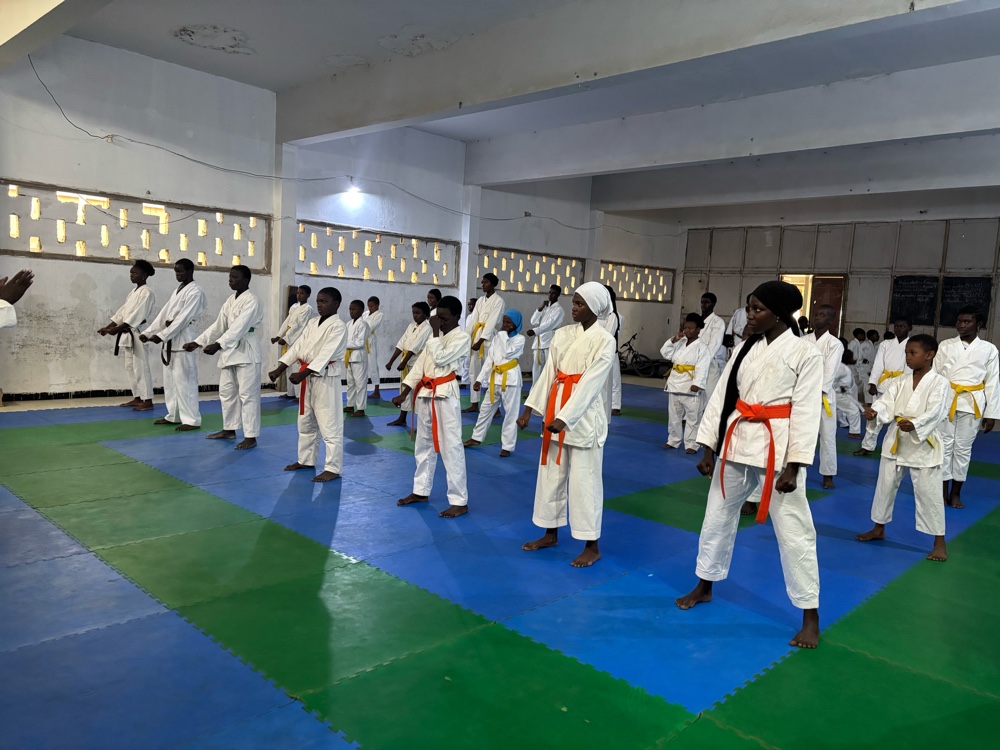
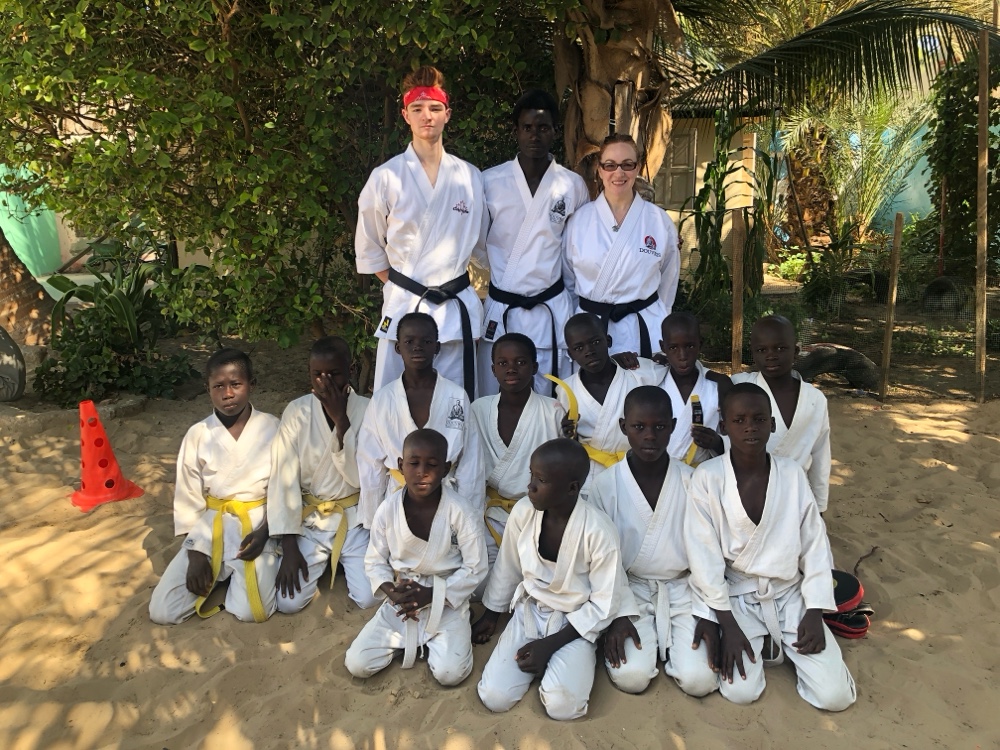
Karate is an important part of my work in Saint Louis, in partnership with my son, Robbie Hughes. Its a passion project for both of us. Robbie established the Karate program at Maison de la Gare over a decade ago, soon after he had earned his own first black belt, during his first visit to Saint Louis. Since then, many challenges and triumphs later, many hundreds of talibés have donned clean, white gi’s, and grown into a strong sense of discipline, self respect, and confidence. Not to mention they have learned skills to protect themselves on the sometimes unforgiving streets.


As Robbie was not with me, and we had limited time, we did not host our usual full day martial arts tournament on this trip. Instead, we held a grading ceremony for the karatekas who had recently successfully completed their passage to higher belts.


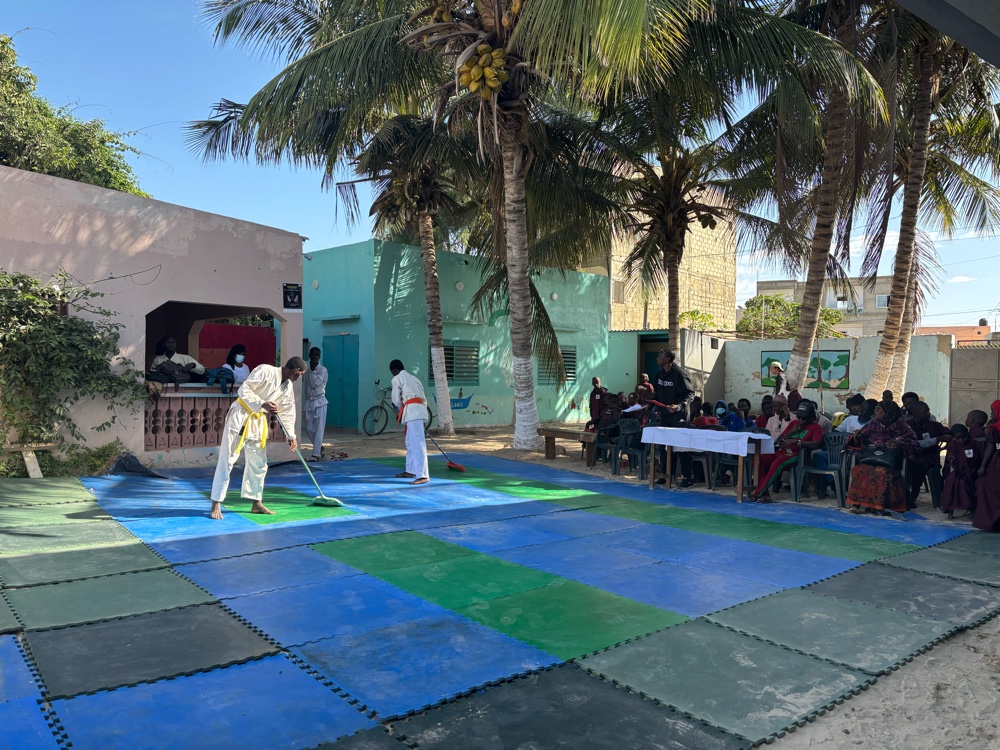
The night before, the mats were delivered, so as to be ready first thing the morning of the ceremony. Horse cart is the method of delivery we had always used in the passed, which never fails to fascinate me.  But unfortunately I had missed the delivery the night before. In the morning the karatekas and others arrived at the centre early, working together to help organize the mats and arrange chairs. 


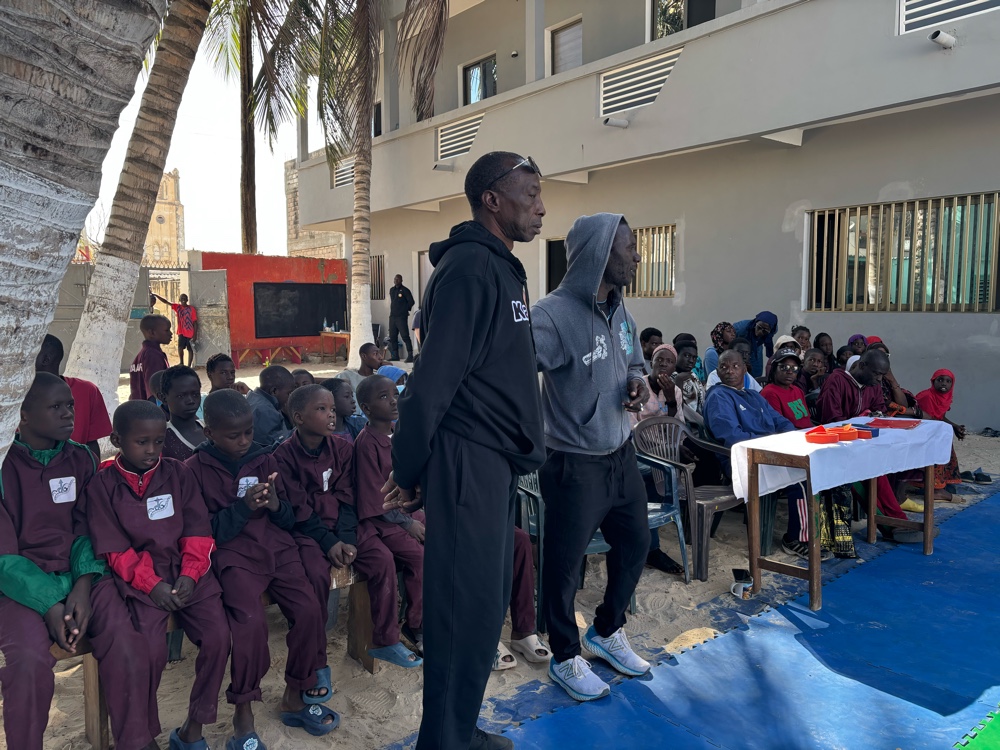
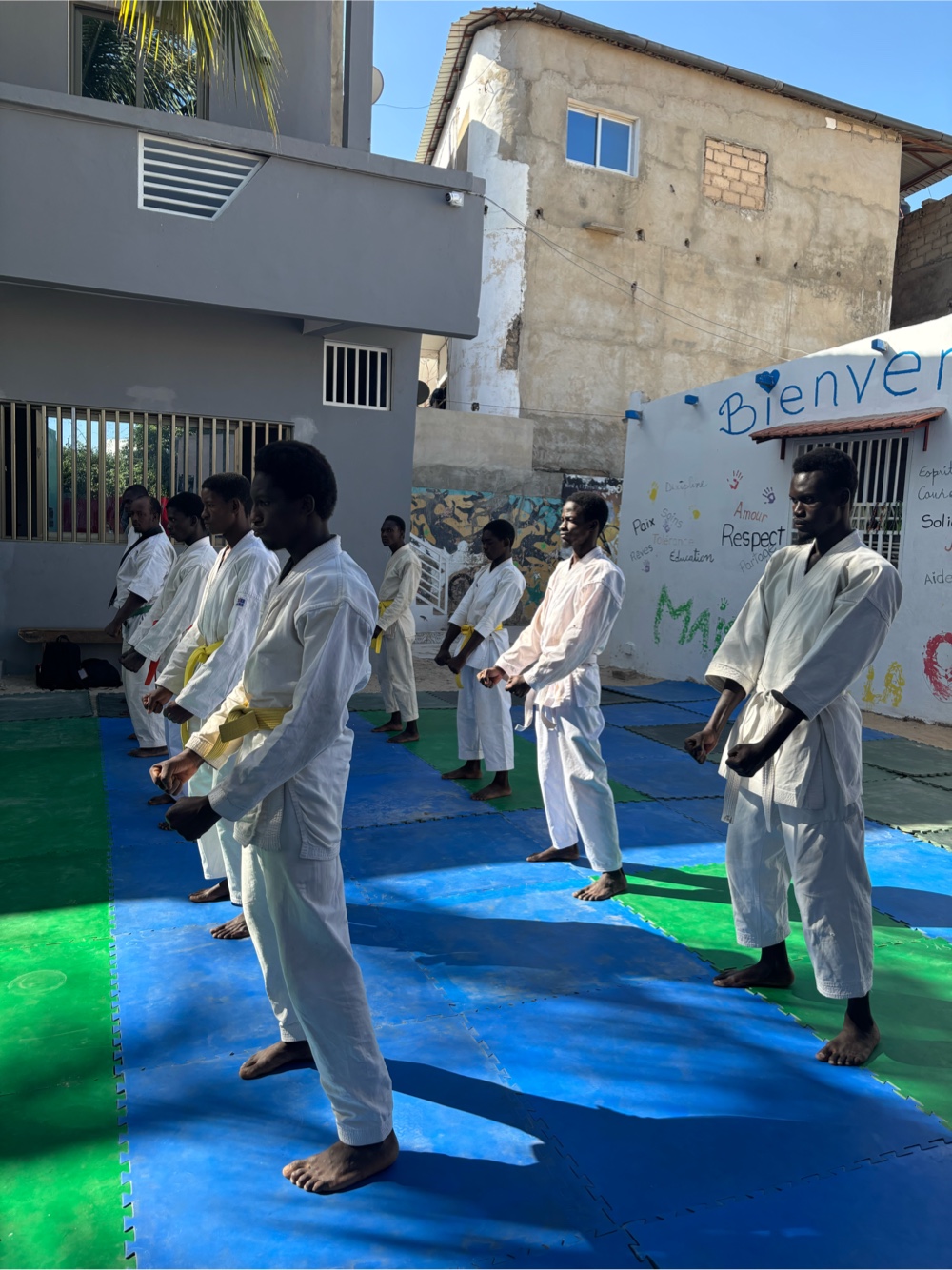
The time for the demonstration arrived. The karatekas who would be granted their new belts, along with the others who had not succeeded in their grading or had not graded, lined up on the mat. The chairs filled up with spectators, including the staff of Maison de la Gare, students from the Yaakar school program, and many talibés. 


Sensei Ignéty Ba welcomed everyone, and congratulated the successful karatekas on their achievements. He spoke of the importance of karate not only for health and self defence, but as a way of living and as a philosophy for life. Issa was introduced as the president of Maison de la Gare, and mostly in Wolof he talked about the advantages karate offers vulnerable and exploited talibés. Issa also spoke of the importance of our long partnership and of karate, and congratulated the kids on their achievements. Then, I was introduced and I thanked them all for providing Robbie and I the extraordinary opportunity of being long term partners in this project. I also congratulated all of the karatekas and each of the successful graders, in turn, from Robbie, and I passed on how proud he is of each of them, and how sorry he is that he could not be with them.


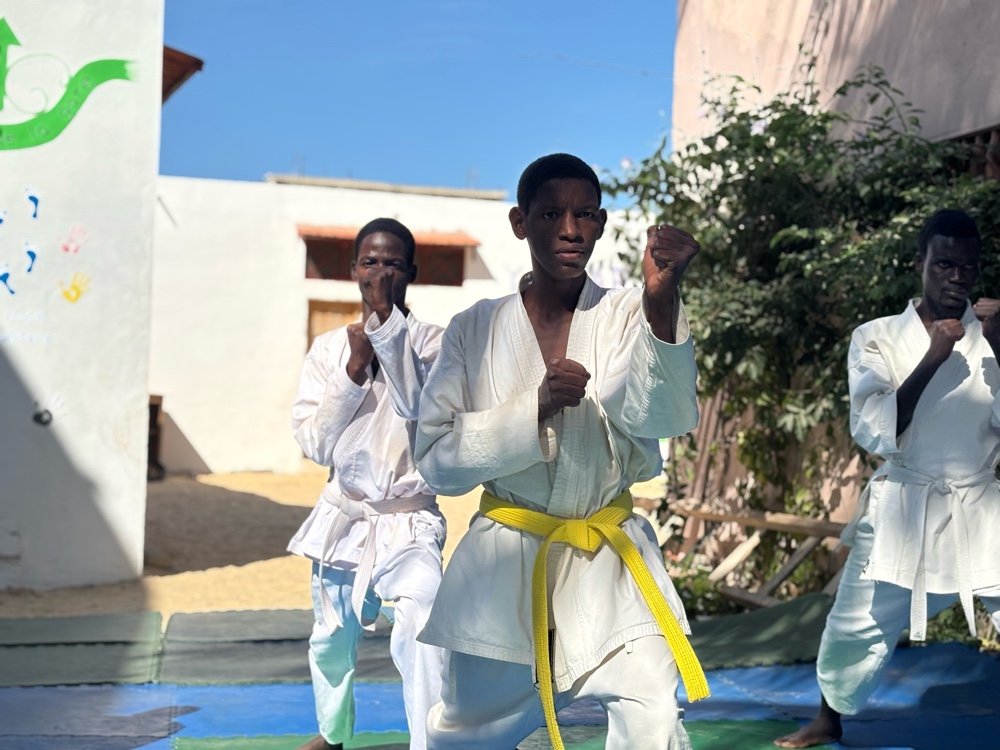
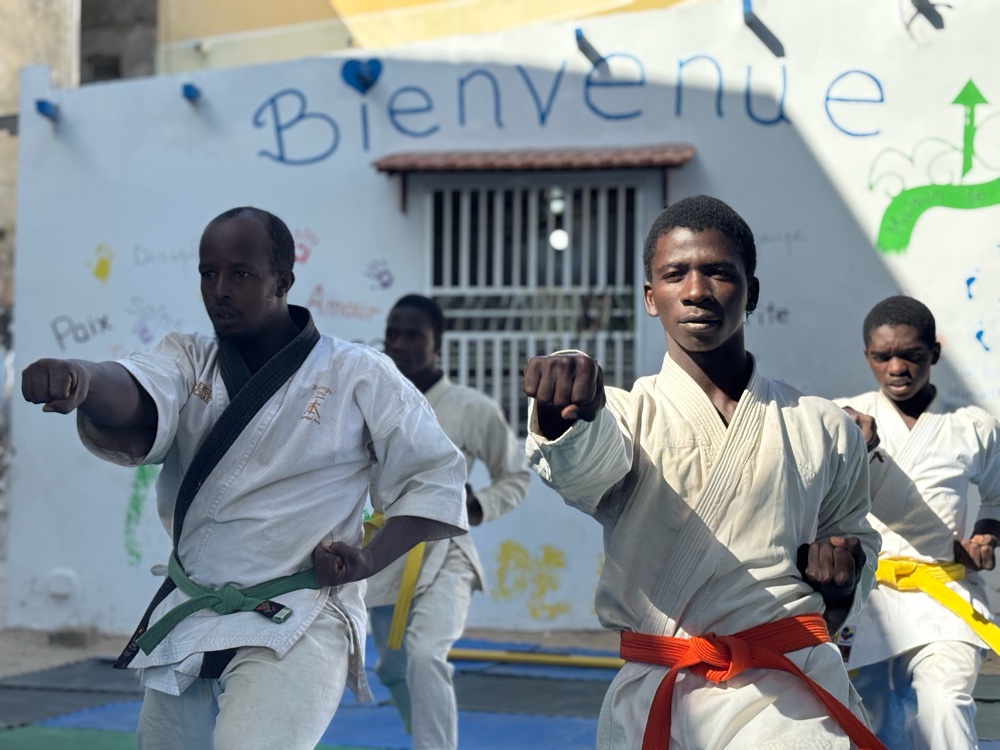
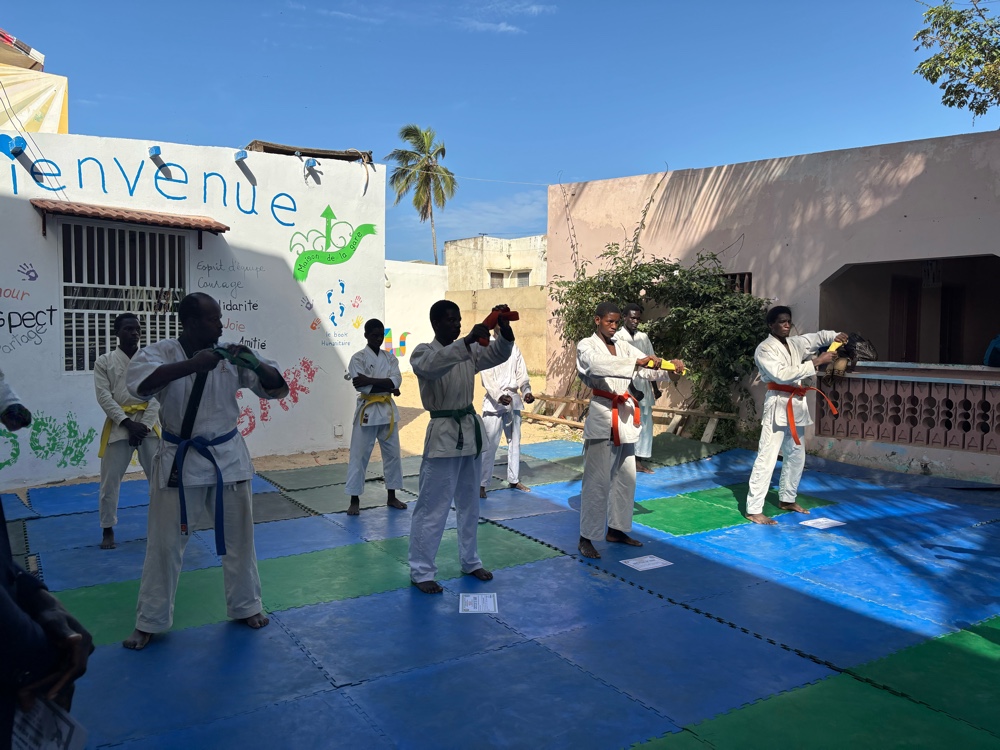
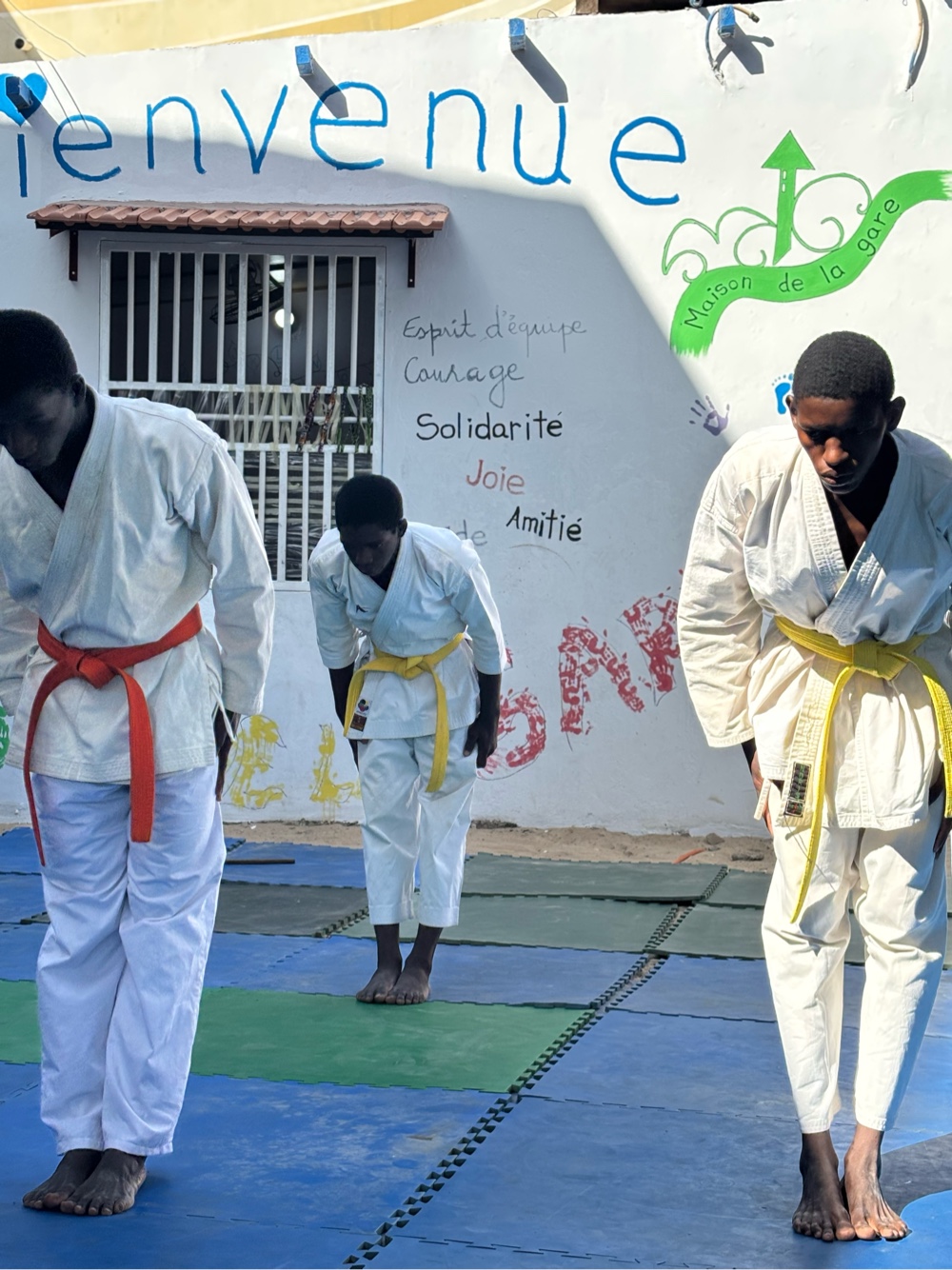
Then Sensei and the attending WKF judges invited the karatekas to begin the demonstration. The audience silenced. The force, skill, focus and kime demonstrated was truly impressive, I could feel the astonishment in the air. The audience watched keenly, surprised by the obvious skill demonstrated by talibés. After kata, they switched to bunkai applications, demonstrating various self defence techniques. The mood lightened as mock attackers swaggered threateningly with batons and wooden knives, only to be thrown to the ground as they succumbed to their wood-be victims. The karatekas leaned into their moment, break-falling skillfully then groaning and rolling on the ground, and playing dead. The crowd ate it up. 


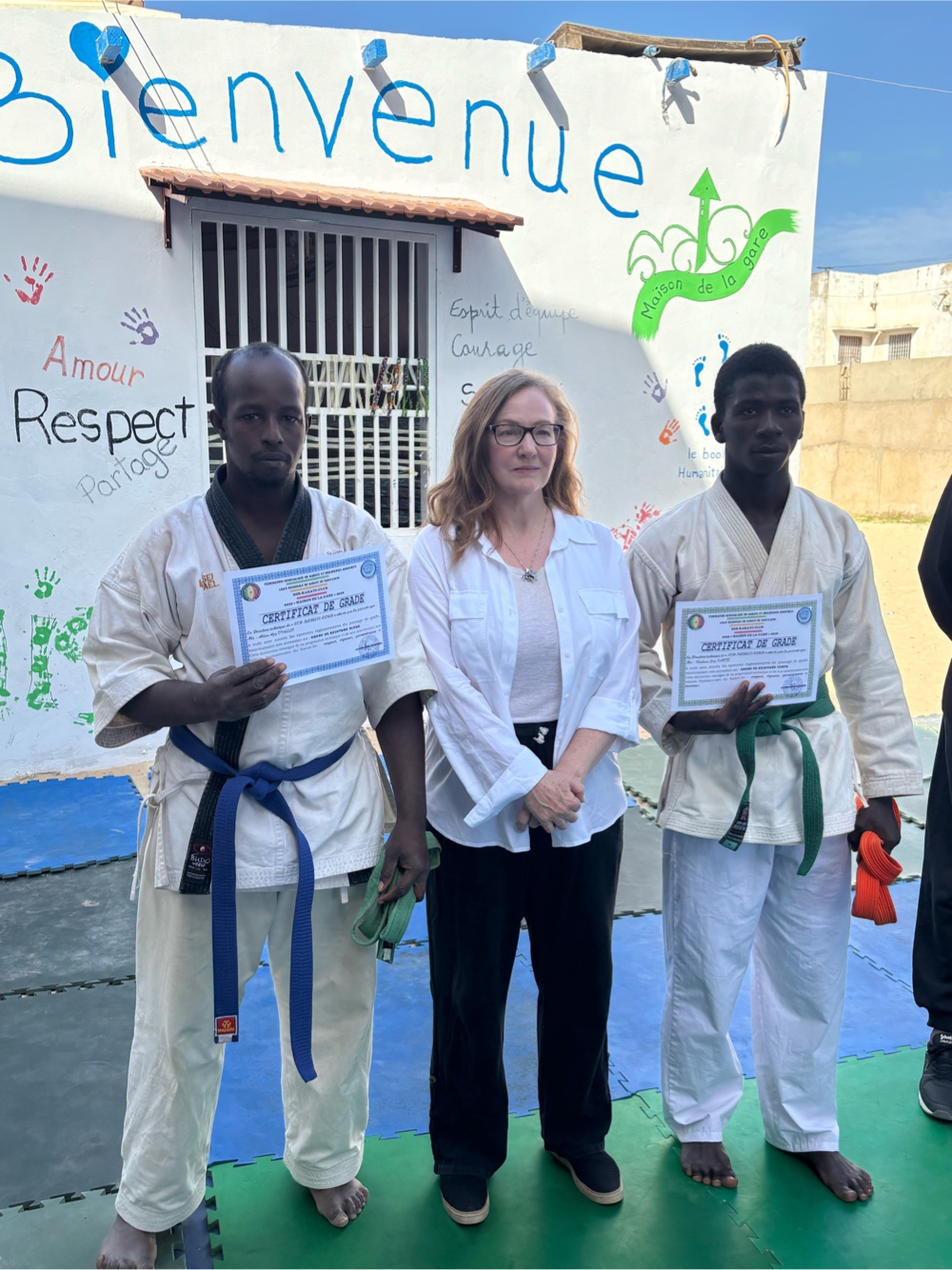
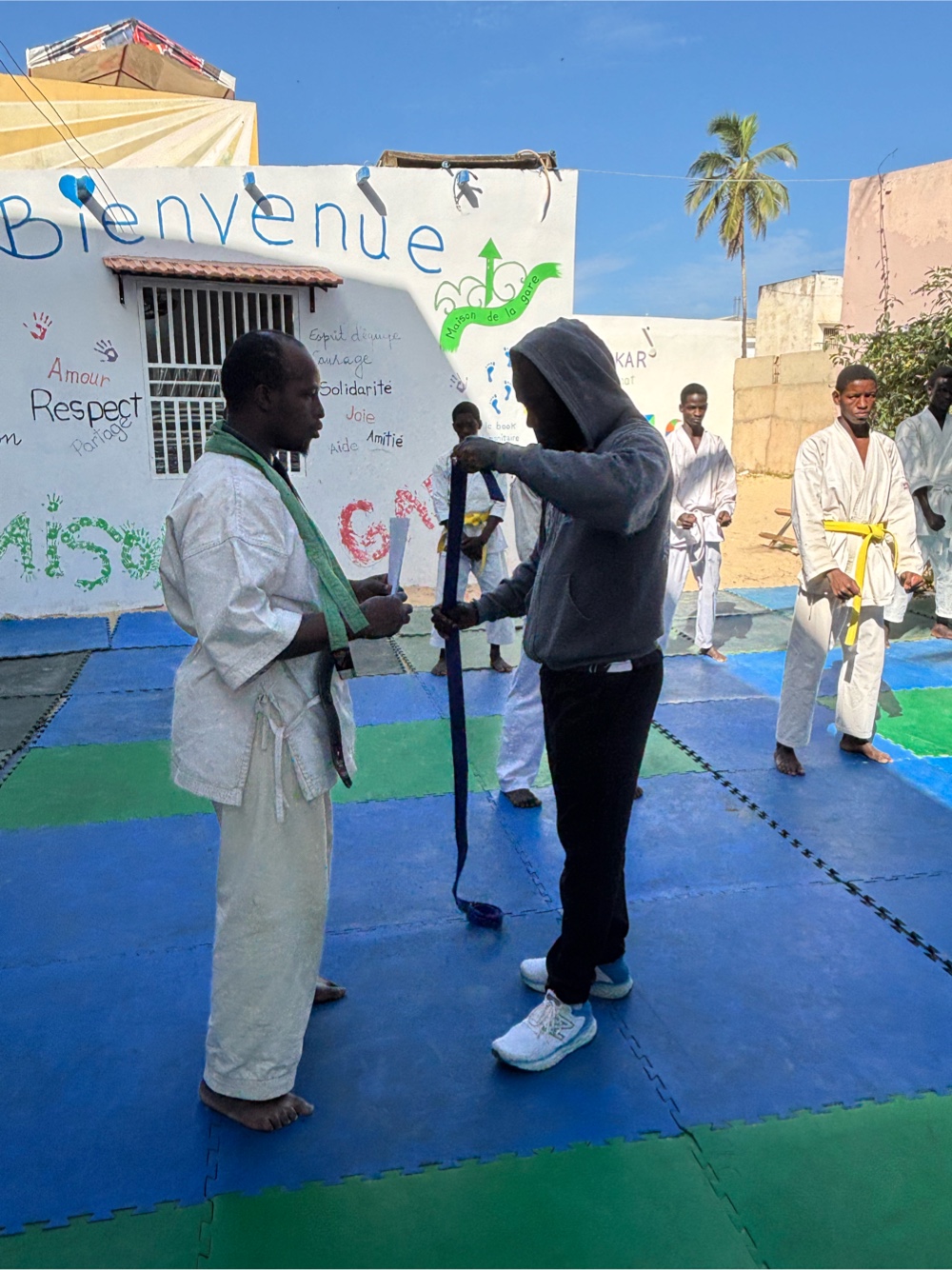
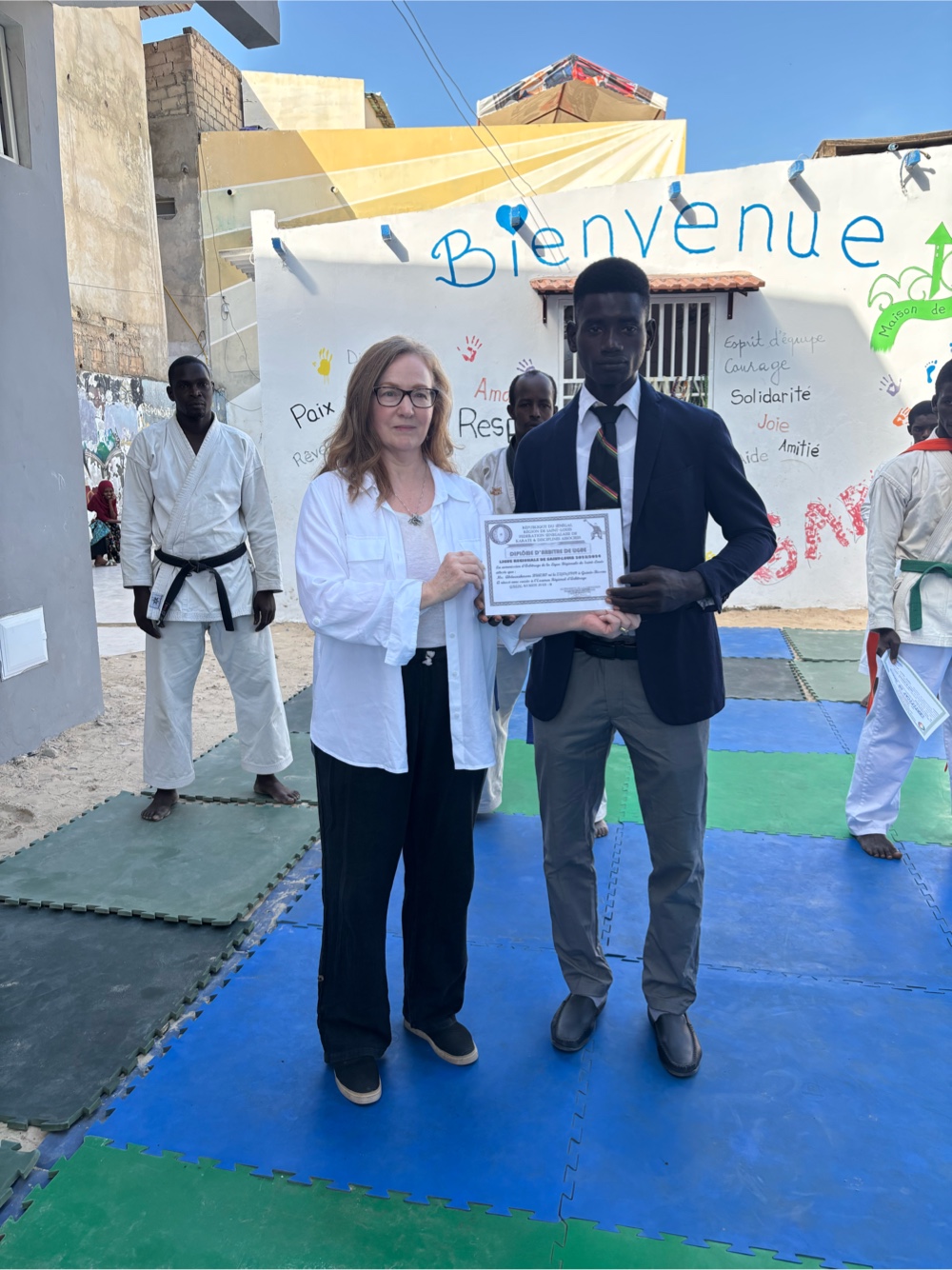
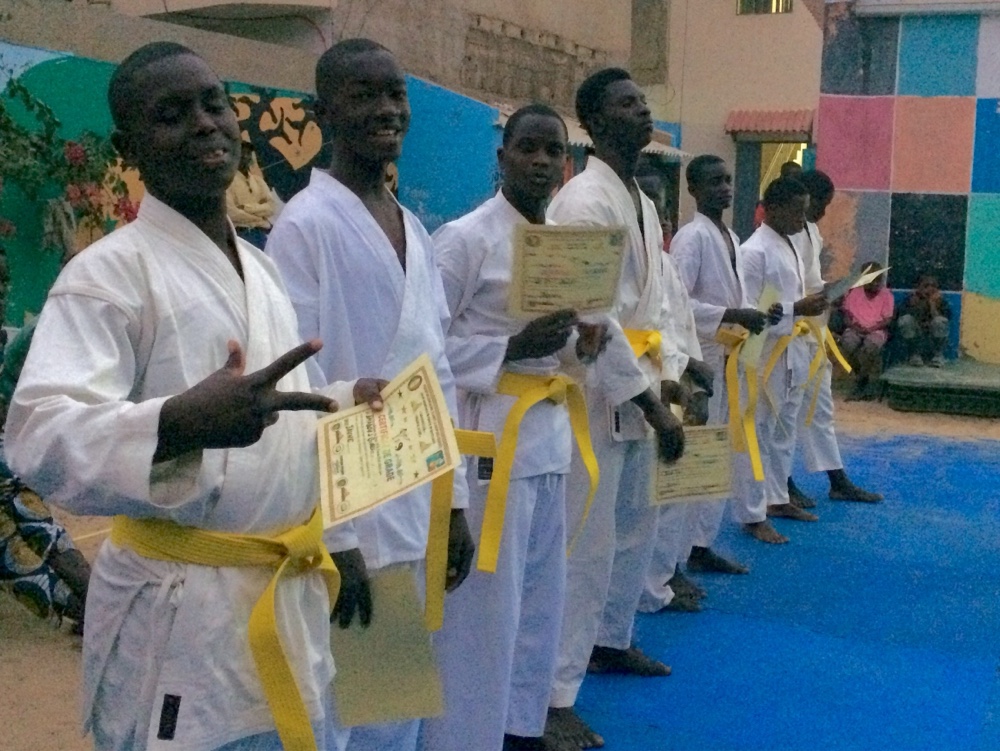
When the demonstration was complete it was time to present the six new belts to those who had succeeded with passage. The challenges these kids have faced to get to this point cannot possibly be underestimated.  I was offered the first certificate and Orange belt to present. We bowed, I removed the old


belt, tied on the new one, placed the yellow belt around his shoulders. Issa was handed the second orange belt to confer. Although not a karateka himself, he had observed my method and copied it exactly, tying the new belt perfectly around the waist of the successful grader. Each youth was presented his new belt in turn. Together, we all felt the triumph of passage.


It was time for The Breaking of the Belts. I described the tradition we follow in Canada that when we earn new belts, though hard work, dedication to the principles of karate, and a successful passage, the Breaking of the Belts symbolizes this important transition, and that they no longer would have need of their old belts. Together they all solemnly removed their old belts from around their shoulders, folded them carefully, and held the belts out in front of themselves, curious about what was next. I asked them to twist the belts first one way and then the next, symbolizing the breaking of the belts they no longer had need of. It was done. The pride was palpable, mine in them, and theirs in themselves. The audience erupted in applause. 


Finally, Sensei Bouaro, once a begging talibé himself, and now a second dan black belt, was invited to the mat. Bouaro has had the longest and most difficult road imaginable in reaching this point. Exploited in a daara for years, far from his family in Guinea Bissau, karate has been his refuge. He has devoted his life to karate, it is his love and his hope. Sensei Ignéty awarded Buaro the certificate of his recently earned level B kumité as an accredited judge, and it felt to me as if Bouaro had summited Mount Everest. 


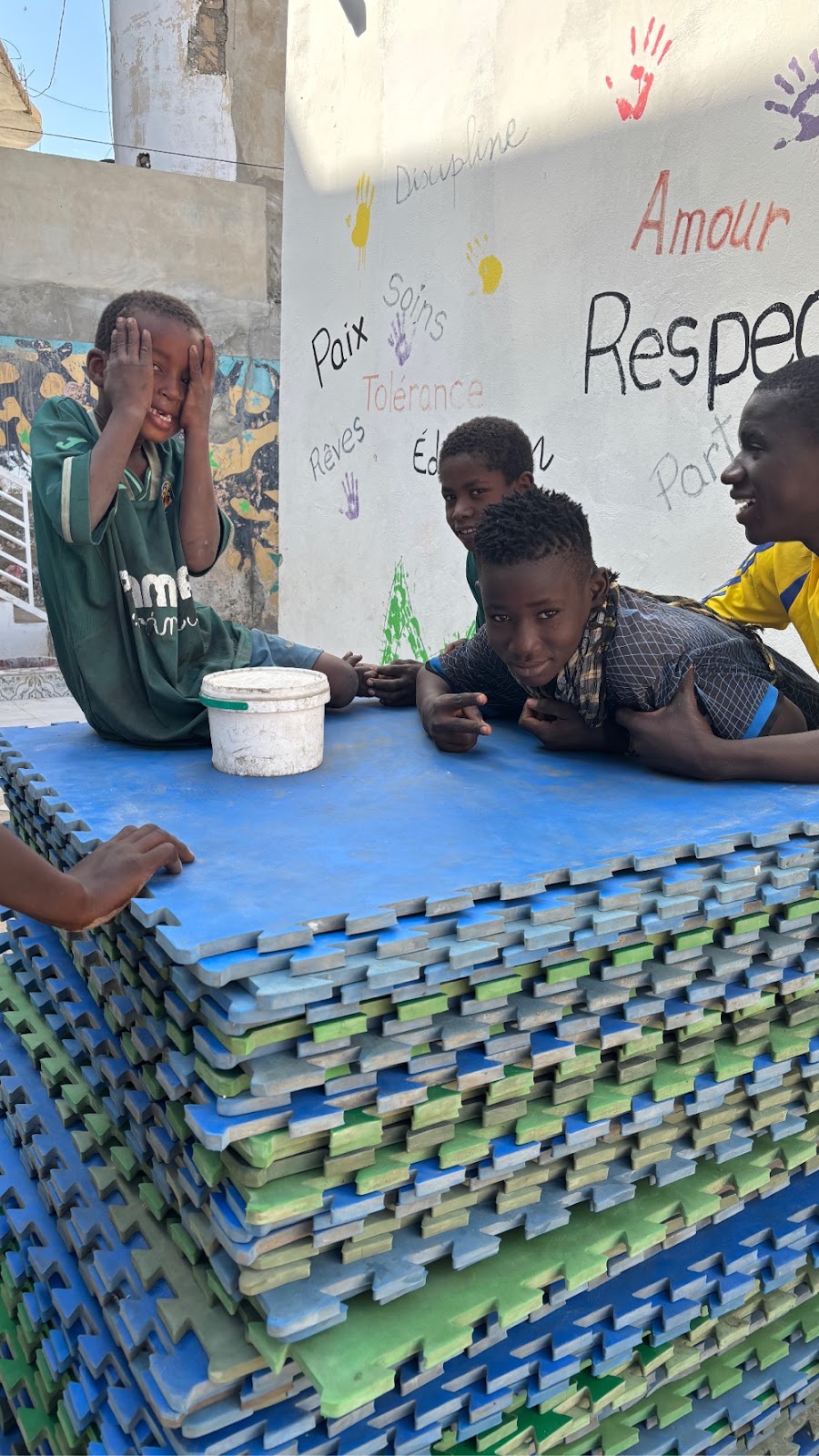
The crowed clearly had been impressed and several kids approached Sensei afterward asking about joining the karate program. The karatekas removed the mats, stacking them to the side, and they collected the chairs. Just as at tournaments back home, the stack of mats soon attracted the attention of many young kids, who discussed the wonders they had seen as they played - begging bowls forgotten for the time being.


Sunday, November 23, 2025

Karate and a Pause to Reflect


I felt sense of peace envelope me as I walked through the gate of Lycée Charles de Gaulle, past the administrative buildings, and across the sand toward the dojo. A soccer match was in progress on the sports field. I reached the Sor-Karate dojo and paused to bow at the threshold, then stepped through. One by one as the senseis noticed me, they paused their instruction to turn in my direction and bow. I bowed to each, in turn. Reluctant as I was to disturb the class in session, my excitement to be present in this special place had won out. Sensei Ignéty Bâ left his students in the good hands of another and came to greet me.


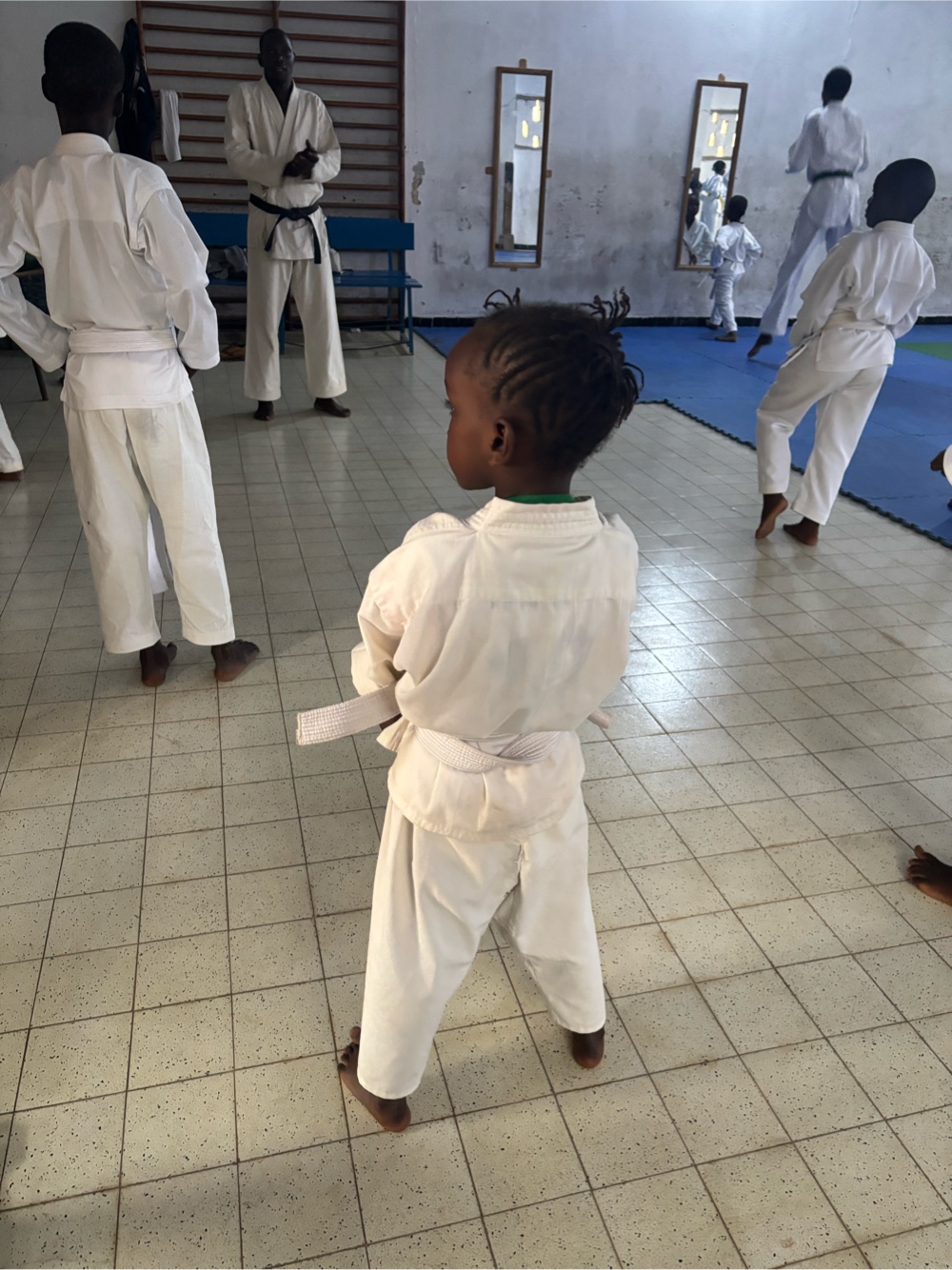
“c’est ton dojo” he assured me, when I apologized for the interruption. I did not come to train this time, but to observe, pay my respects, and to see Robbie’s protégés: 9 young karateka participating in this very class. The newest little girl, Astou, a white belt in the front row of beginners, was strong and confident, her kions impressively precise for her young age. Then again, she had been mimicking her older brother and sister’s katas since she could walk. She will not be a white belt for much longer, I think. Her siblings were practicing in the more advanced group. All the kids had impressive focus and form.


Astou

I admired the technique and discipline of Robbie’s more experienced students, there would be some future leaders and champions here. Robbie would be, is, so proud of them.


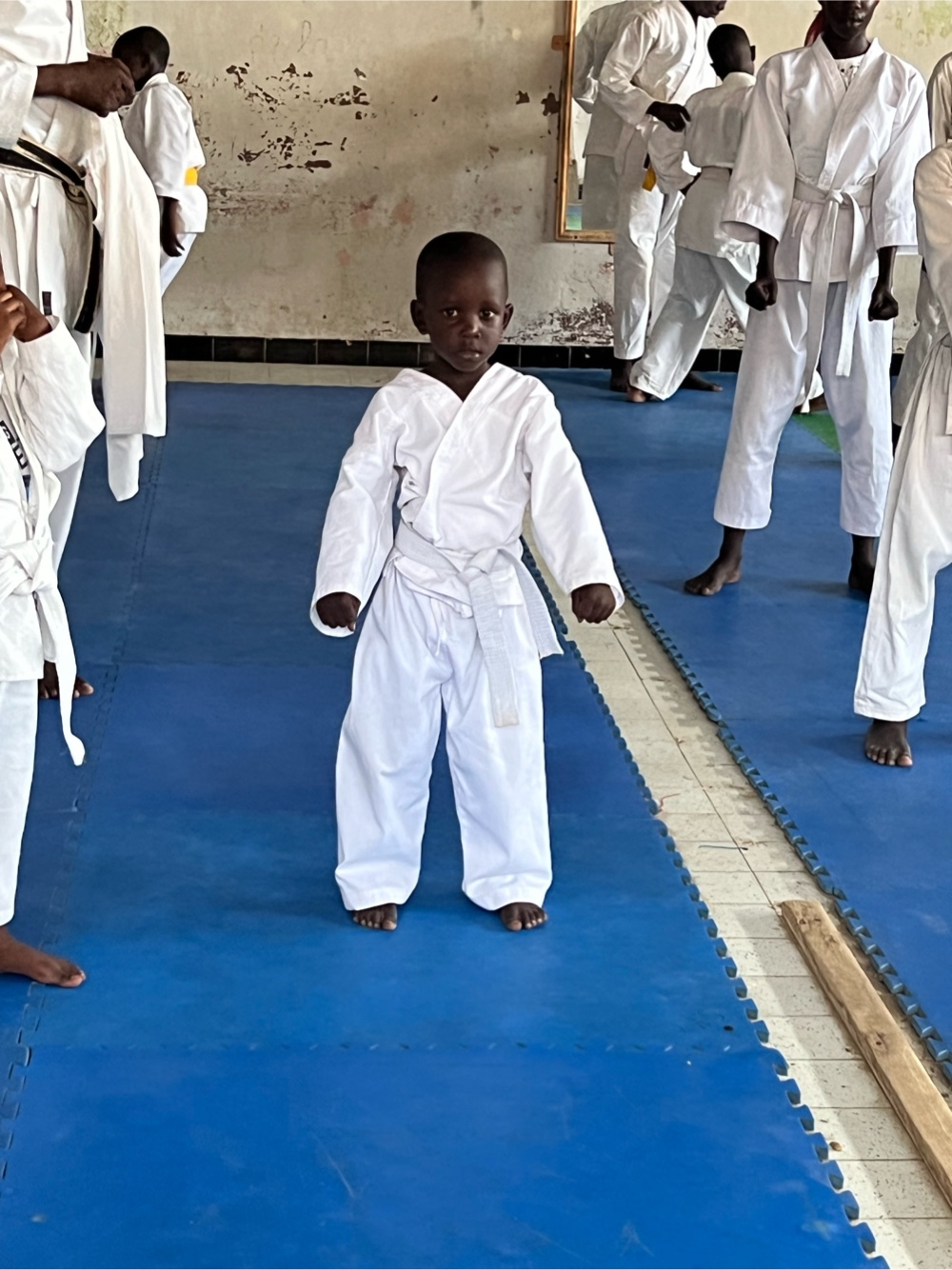
I searched the class for Djiby, he was the only one I could not find on the mat. Then a little person stood before me, saying “Sonia”. He was not feeling well, and was sitting out the class, waiting for his older sister and brother. He asked where Robbie was, those two have a special bond. Djiby and I looked at many karate photos together on my phone, and he told me he likes his school, and he held my hand.


Djiby a few years ago when he was a white belt


After class, a reunion with all the kids. During class they had impressively remained focused on their practice and remained undistracted even when they spotted me.


After the kids left the dojo, I had a talk with Sensei Ignéty Bâ about the Maison de la Gare karate program he oversees. Inevitably there are always issues to resolve. And inevitably we always find a way to resolve them. Robbie, Sensei, and I are partners in this important labour of love that Robbie began over ten years ago - bringing karate to talibés of Saint Louis. Hundreds of talibés have passed through these dojo doors,  

developing confidence, learning to believe in themselves. Hundreds more have passed through the gates of the Maison de la Gare centre to enjoy the beginner classes led by Bouaro there. 


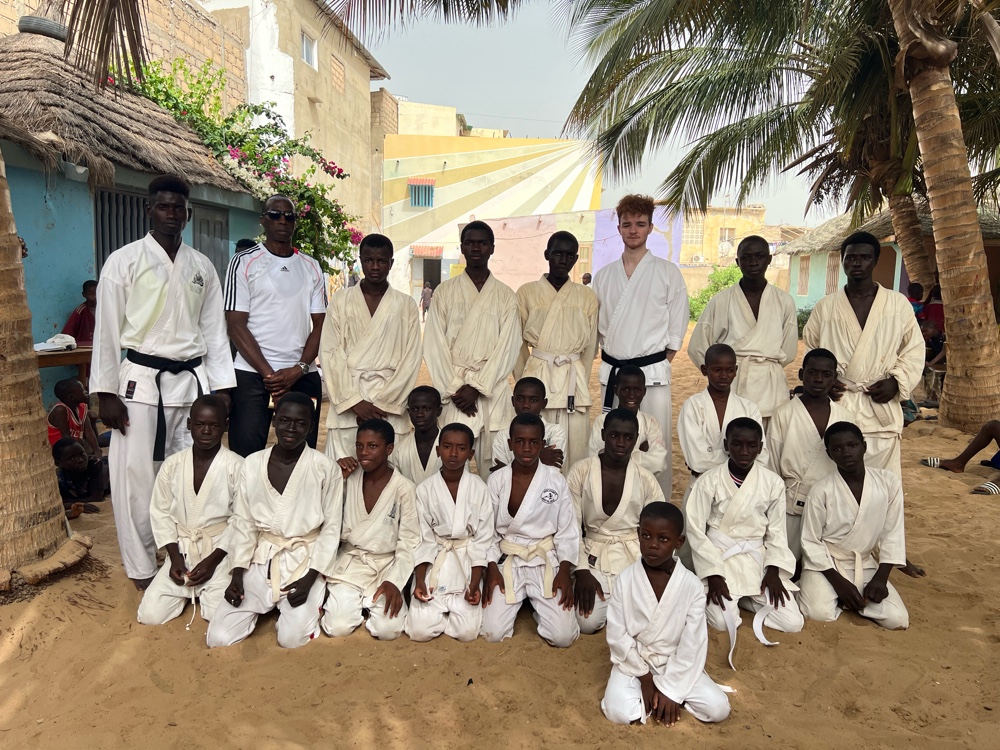
Robbie, Bouaro, Sensei Ignéty Bâ and MDG karate kids

I learned that six more talibé karateka has recently succeeded in a passage to higher belts. Gradings here are no mere formality, and many attempt multiple times, after much training before finally advancing. We agreed to hold an advancement ceremony and demonstration at Maison de la Gare Thursday morning to celebrate these remarkable achievements. I look forward to it with anticipation!


a past grading ceremony

As I walked back to the Island along the Senegal River, alone as the African sun set and then disappeared, I reflected upon how privileged  Robbie and I both are to have been so warmly welcomed into this karate community. And how fortunate were are to have the opportunity to play a role in bringing the gift of karate to so many vulnerable children.


This morning, my Dad and I walked through the tranquil morning to the Cathedral. Inside, I let the at once soothing and joyful djembe drums and choral voices wash over me. Here, reflection seemed more easily to lead to a sense of peace, and I allowed my hope for this place and my purpose to renew. 


Sunday, November 24, 2024

Shifting my World


Miami Beach is 6000 kilometres behind me and Dakar lies 1000 kilometres ahead. As each kilometre passes, I feel pulled closer and closer to my second home. So much more than physically. My whole world feels like it is shifting. 


My thoughts are starting to form in French. Faces of karate students, talibés, villagers, Maison de la Gare staff, and other friends are behind my eyes as I try to get some rest in these last quiet hours. Failing. As I see the sun rising out my window over Africa, the air feels heavier, warmer. I taste the desert. The pastels of Florida are fading as vibrant, bright colours take their place in my senses. I already hear the cries of welcome, of de retour, les Canadiens! Hey, karate! And to Robbie: Le Champion! Strategies for better serving my clients and ESG investing factors diminish in significance as begging bowls and marriage précose lie heavier and heavier on my heart. Senegal. 


I have flown over this ocean that lies below me on the way to Africa many times. Dozens. But each time feels so special. A new adventure awaiting. I am as much in awe of this continent as the very first time I touched down on African soil. It’s ancientness, richness, vastness, the birthplace of all of us. It felt like coming home, even back then. 


My Senegalese Godchildren. My many protégés in school, studying for the unknowable futures that await them. So many karatékas who have found a passion and risen to it, despite their daily lived oppression. The Maison de la Gare staff, working everyday to make life better for children the world has forgotten. The villagers, so welcoming and generous even though they have so little. The village students for whom education has changed everything, walking for hours daily to attend school and for days to write exams far from home. The girls, who having tasted education will do anything to continue to learn. The boys, who when education was barred to them at home, would have walked across the the Sahara and crossed the sea to access it if they had to. The many friends I have met over the years, raising their families, instilling values and hope and joy even when they have so little. These beautiful people are inspirational.  It will be good to be back.


Friday, December 1, 2023

Suxali


Candidates for Bourse Suxali

My daughter, Rowan has big plans for this year’s trip to Senegal. Last year she planned for and helped establish a new communications position for Maison de la Gare, a local Senegalese to take over some of the communications work we, and in particular my Dad, do from Canada. How would she top that this year? 


Rowan studied international development in university, developing many ideas herself about what NOT to do. During her degree she had extensively researched and written about the talibé system in Senegal, its causes, and levers, and possible solutions. She has also been here fourteen times before, and had visited the bush region of M’Baye Aw in the desert twice. She had a theory. Education should help change social norms and diminish modern forms of slavery - for girls as well as boys, for some interesting reasons.


The newest school, built this year.

The remote villages had few or no schools. Young boys were often sent to the city to be talibés, and they rarely returned, emptying the villages of much male youth. For many families the prospect of learning the Quran in a daara was the only educational opportunity their boys would have. The girls married polygamously and young. Forced marriage at the age of twelve is common in these villages. It had a certain sad logic. No young boys, way more remaining females than males, poverty, no schools for the girls anyways, and the begging daaras are only for boys…


We have been involved for some time with a project of helping build and reinforce schools and financing teachers in several remote village schools. This was the idea and project of a friend of ours from the area, and we supported his dream for his region over the years, and linked the project with Maison de la Gare. Amazing things began to happen after the first school was built. Parents stopped sending their boys to the city to be talibés. Girls started to attend school too. Talibés in the city from the region were identified, rescued and returned home. After many years of this schools project there are now over 560 students, almost half are girls. And, no more talibés from these particular villages that have access to schools! Although classes in the villages end at age fourteen, some intrepid students who want to continue their studies into high school move to town, about three hours drive away, and billet with relatives. Some girls even, despite the unimaginable challenges they face, have extended their studies in this way. Once a passion for learning is lit, it burns.


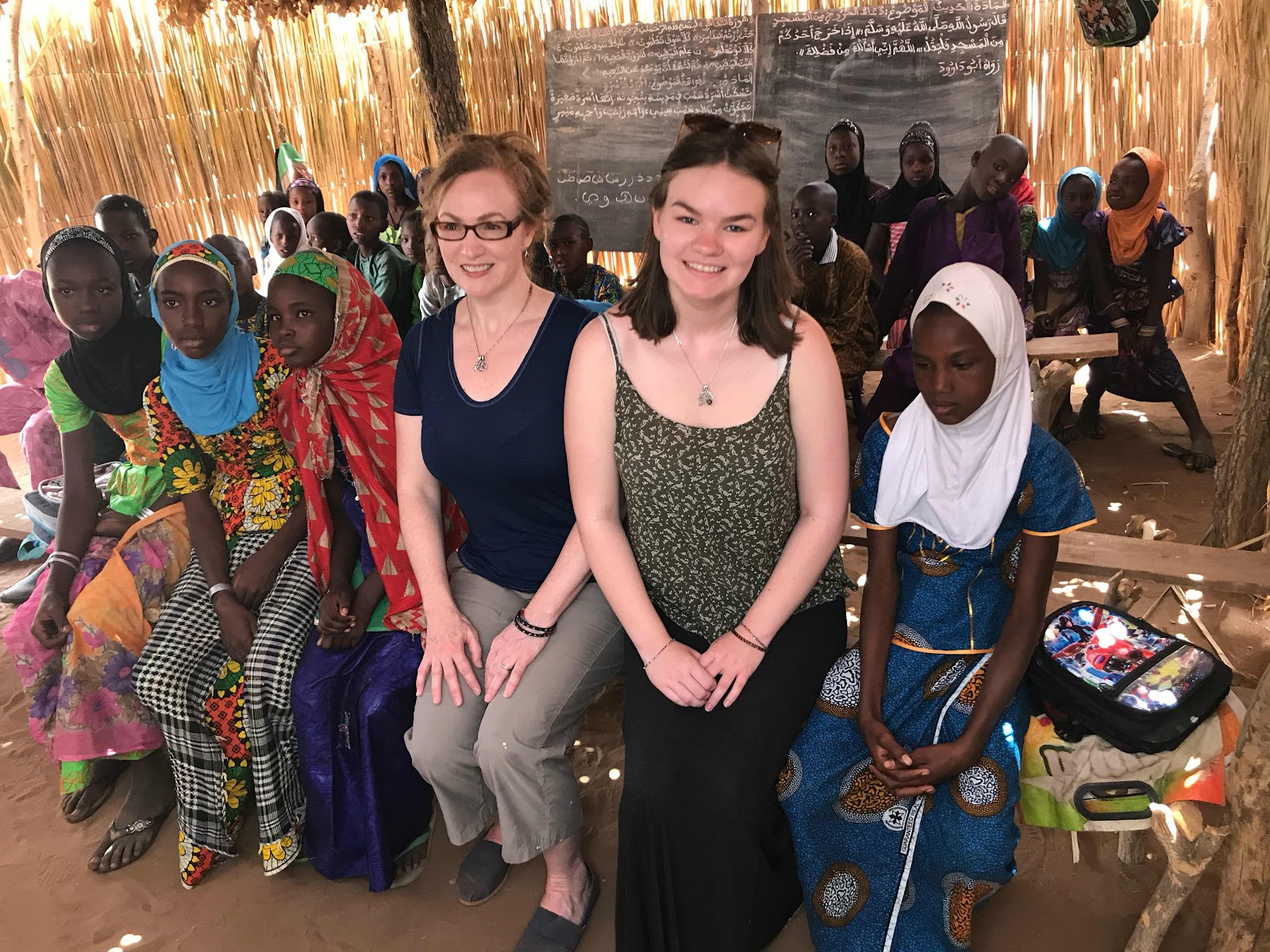
Rowan and I visiting one of the schools several years ago

Last year when I visited the region with Rowan and also my son Robbie, something new appeared to be happening. When meeting the students from the villages that had travelled to the nearest town, Dahra Diollof to write government year end exams, we were met multiple young girls who were being pressured to marry. The age seemed to be increasing, though. Previously it had been age twelve, and now it they told us age fourteen was becoming more typical. But social norms take time to change. The reasons that caused this problem may no longer be in place. But customs and tradition remain.  Some girls told us they would soon be forced to marry by their parents. They begged for our help because they wanted to continue to study and not marry.


And so, we are establishing a “full ride” scholarship, Bourse Suxali: For Women at the Heart of Development of their Communities. We have set it up through the Canadian charitable foundation, C.F. Johnston.  The first Bourse Suxali offered is for the 2023-2024 academic year. For a girl in her final year of high school. A girl from the M’Baye Aw villages region. On condition she receives her high school diploma. To study post secondary health sciences of some kind (the idea of our friend, physiotherapist Vicki Chase who travelled with us). For up to three years- the time required to earn health credentials. Preference for an unmarried girl. For someone who wants to then return to help her village continue to develop and improve, and provide an example to other girls, and boys also, that education leads to better things not just for oneself, but for the community as a whole.


Rowan in front of a Dahra Diollof high school

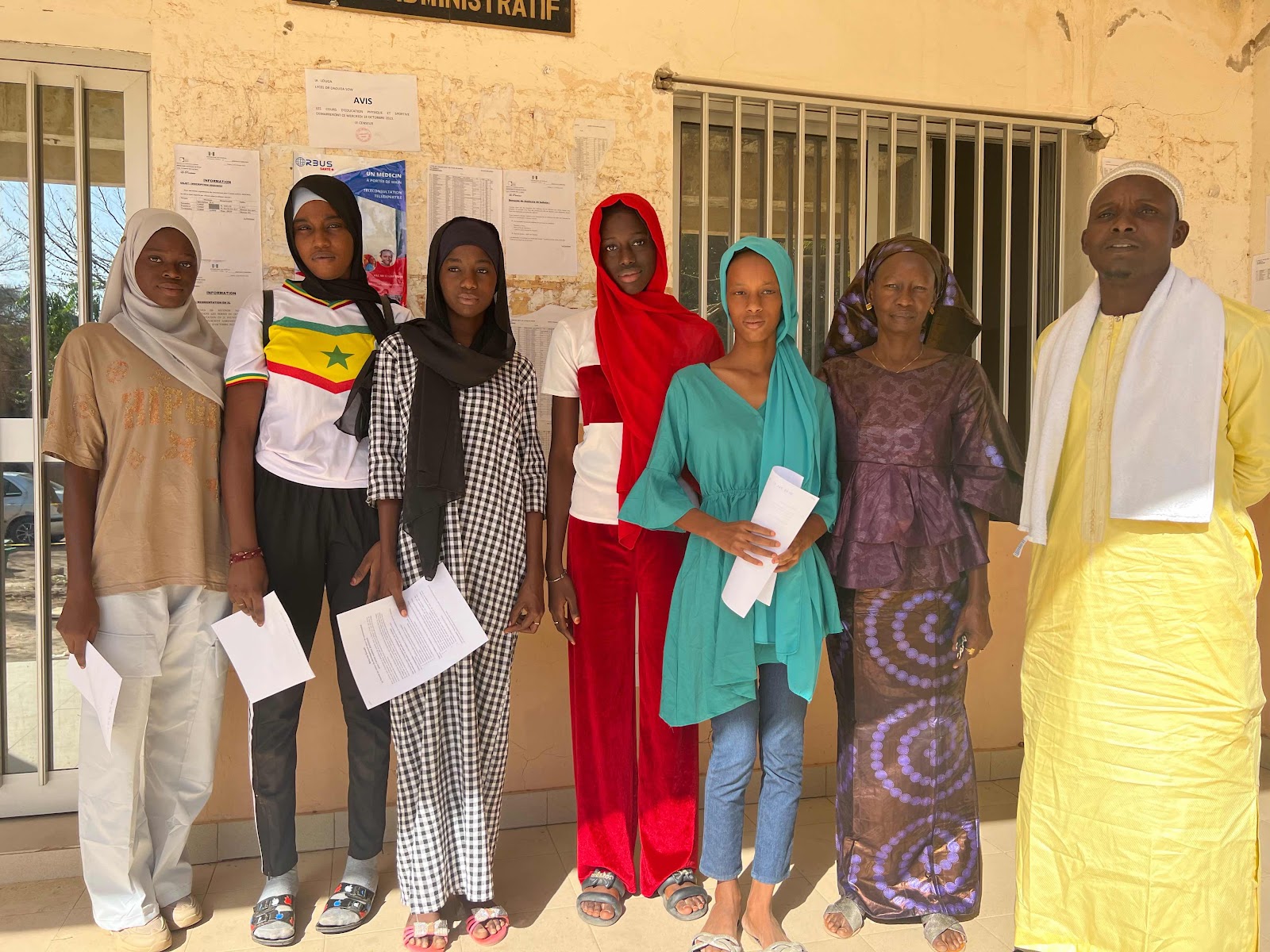
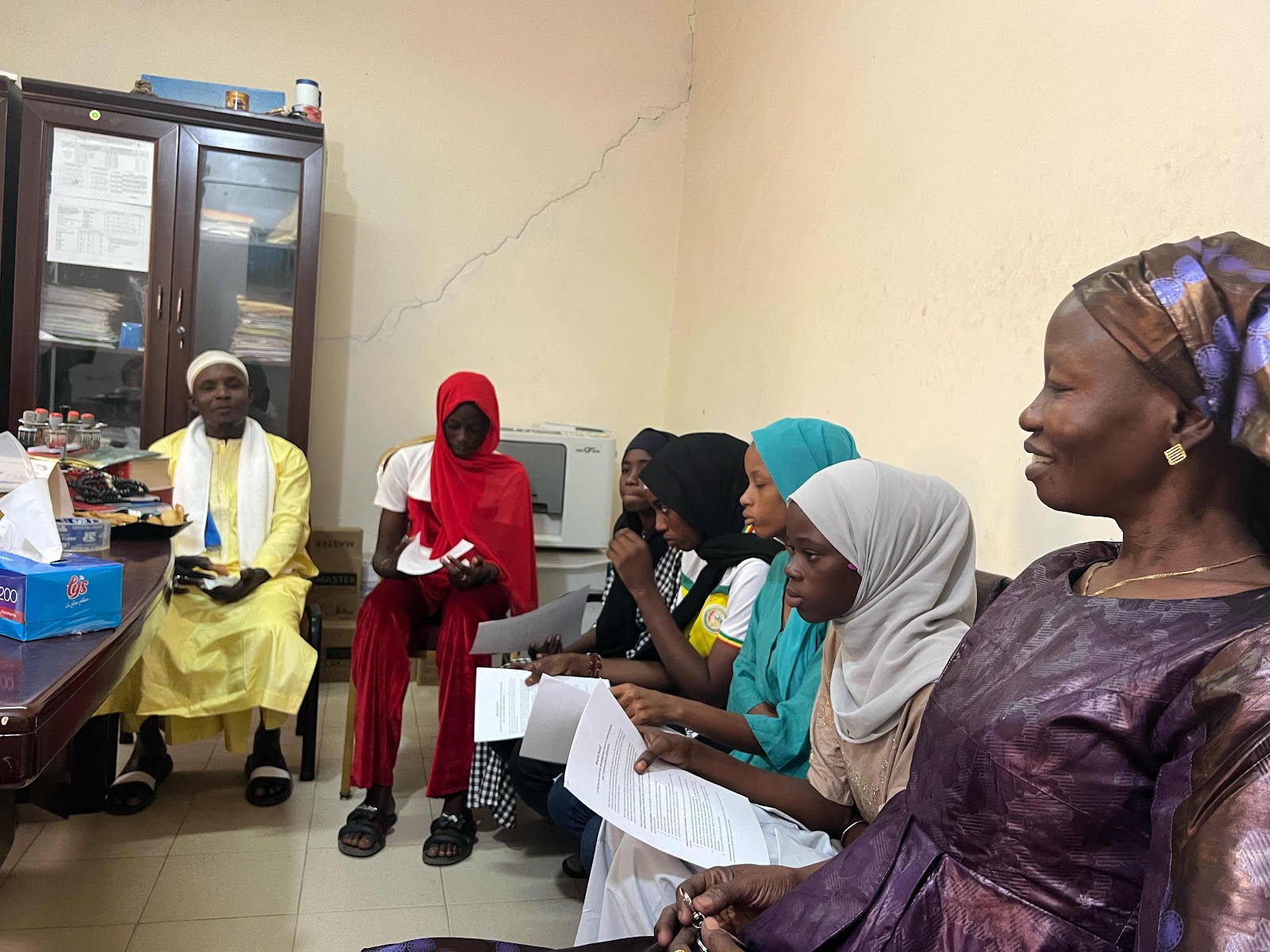
During this week’s trip to the villages, Rowan, Vicki and I met the president of a Dahra Diollof high school where five of the eleven girls from the region in their final year are currently studying. And we met with the girls themselves to ask about their hopes and dreams, to deliver the scholarship information and inform them of next steps. Two want to be lawyers, one an architect or geographer, one wants to join the army, and another dreams of health care. We also met one girl in Saint Louis who had run away from her village to pursue her education. She is in her final year and is an eligible candidate for Suxali. She wants to become a nurse. The president of the high school will take responsibility for informing the other five eligible girls from the other schools, as well as those now two and three years away from graduation, so they will be inspired to work harder and also spread the word, should this first scholarship and funding go well and we can offer more.


Cheikh, and administrator and some of the candidates sharing their education dreams.

Our friend Cheikh, the president of the village schools association, l’Association pour la rétention  des enfants en village et la diminution du mariage précoce, is certain the existence of Bourse Suxali will incentivize more parents to allow, even encourage their daughters to continue to study into high school and help relieve the pressure of forced early marriage. Rowan planned and is leading the execution of this scholarship. Vicki helped us define and refine it. We have funded the first year of Bourse Suxali, and there is time enough to fund the rest. It is Rowan’s and our great hope that we can fundraise sufficiently to enable a new Bourse Suxali to be offered every academic year to a new graduating student. And we would love to eventually offer a scholarship for boys as well, as they face terrible, albeit different challenges. Education is saving them from the fate of being forced begging talibés, and offering hope. Pas a pas, s’avance. Education changes everything.