Followers

Saturday, June 25, 2022

A travesty Against Humanity


On this day that the U.S. Supreme Court threw woman's rights back nearly a century in the United States, I feel ready to write about this other assault upon human rights in general, and women in particular. Another form of modern slavery in Senegal. Learning about this at the same time as the terrifying SCOTUS mistake feels unbearably too much.


“My name is Sokhna. I live in the village. I am  11 years old. I am a student going to school and I live with my mother, my father and my sister. I am the first one in my family to go to school. My sister married very young. In my village parents give the girls in marriage when they are 12 years old. I am becoming afraid that I will be forced to be married and not allowed to continue going to school.”


- name and details changed to protect her identity


I have been reeling since I opened the envelope our friend handed us the night before last. stuffed full of written testimonies of young girls. Children testifying about their forced early marriages, and their fear of being forced to marry far too young and forced to end their education and dashing their hopes for the future. This was just one of them. It is too much.


Okay…I was not ready. It is now the next day. I am trying again. 


Where do I begin?


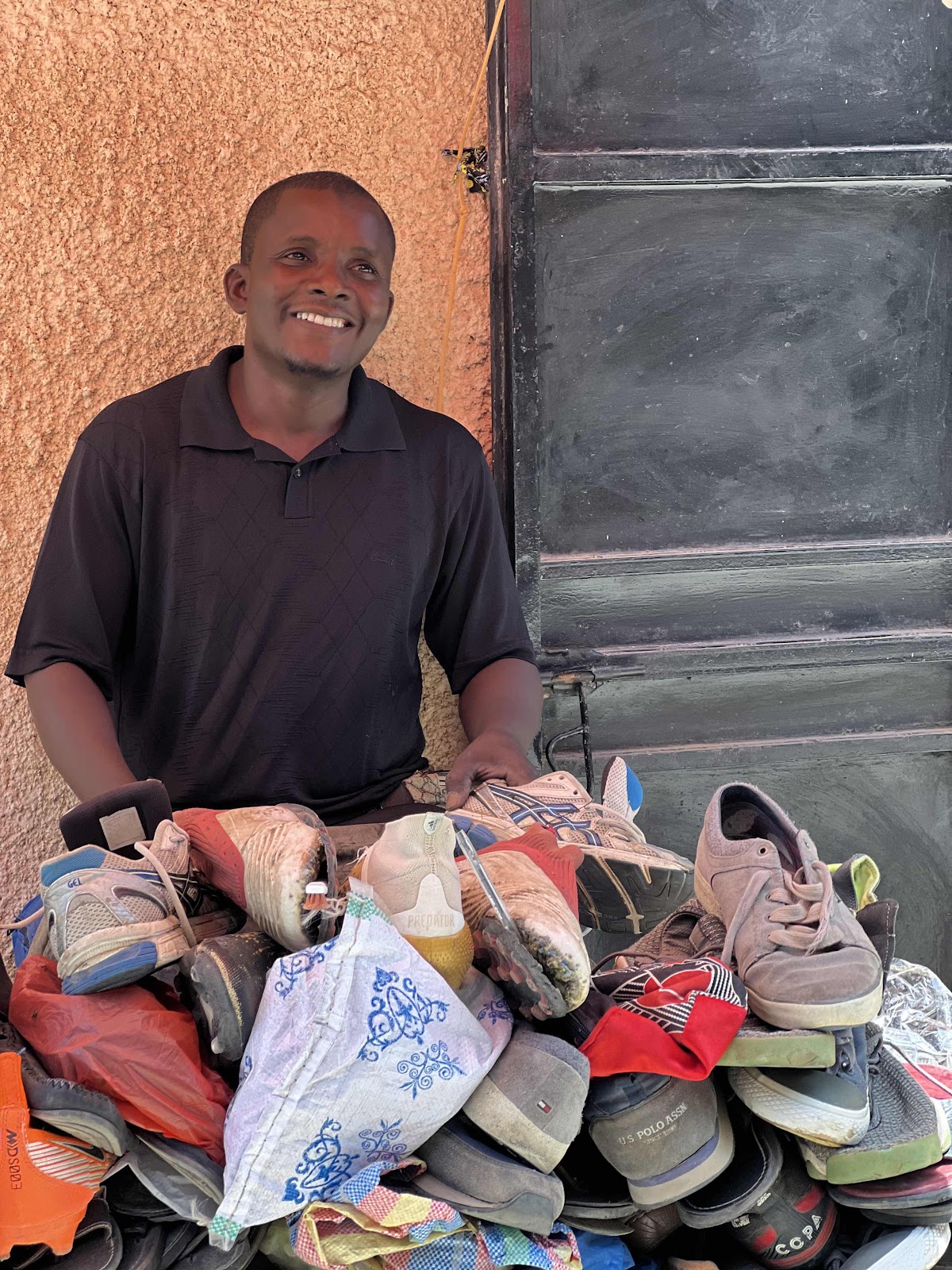
Several years ago our friend, Cheikh let us know he was trying to build a school in his village. He said he was inspired by watching us year after year helping Maison de la Gare help the talibés. Many talibés come from his village and region. There are no schools there. So parents felt their only hope of education for their children at all was to send their sons to to the city to daaras to learn the Quran. So… building a school can change things, he thought. And he started saving from his long days working as a street-corner cobbler. When we found out about it we started helping him. The first school was built. Then, this became a Maison de la Gare-associated program.  More years of savings and the villagers “bought in” and more schools were built. Then one special donor in Canada found out about it and that has enabled hiring more teachers.  
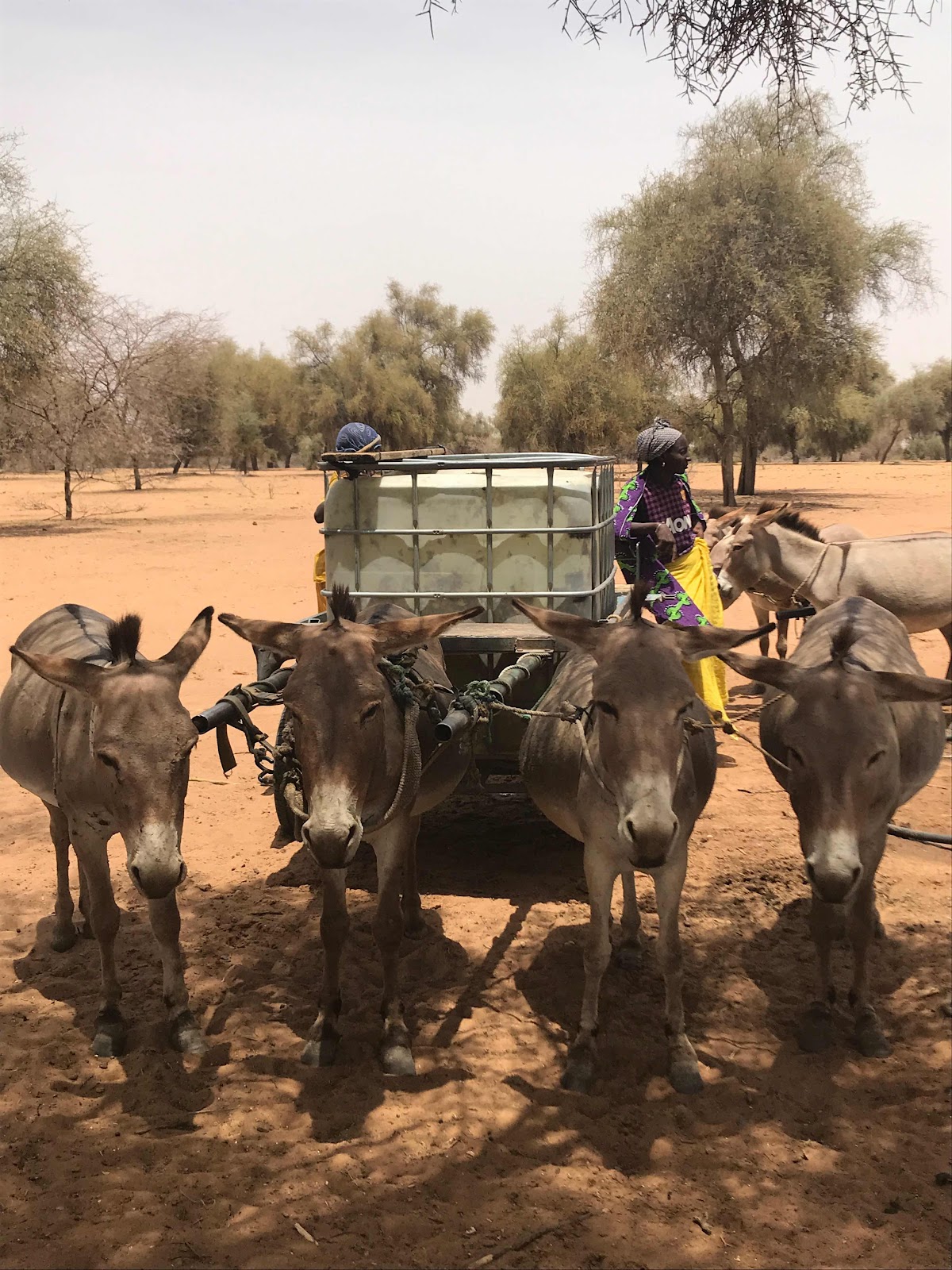


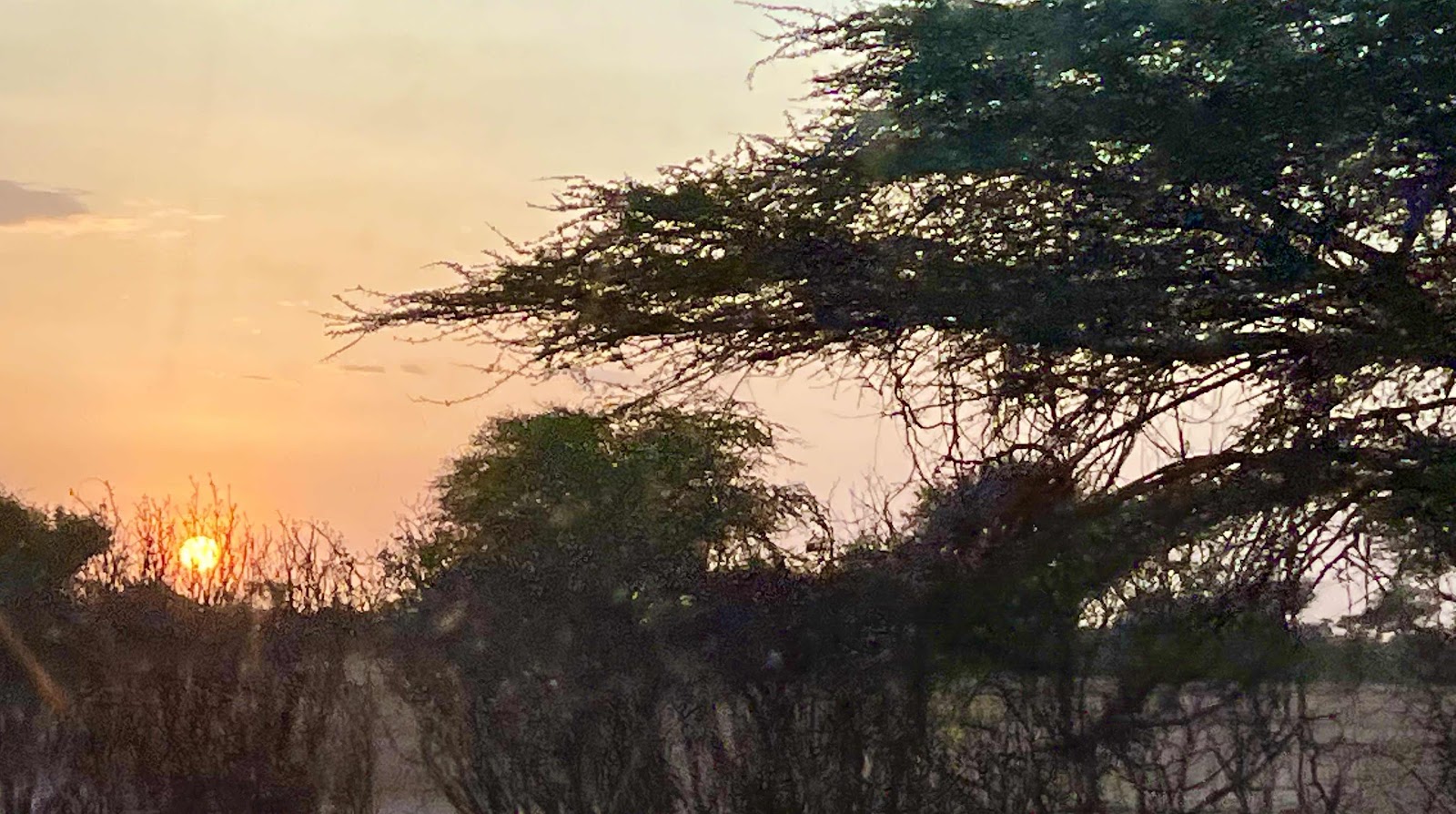
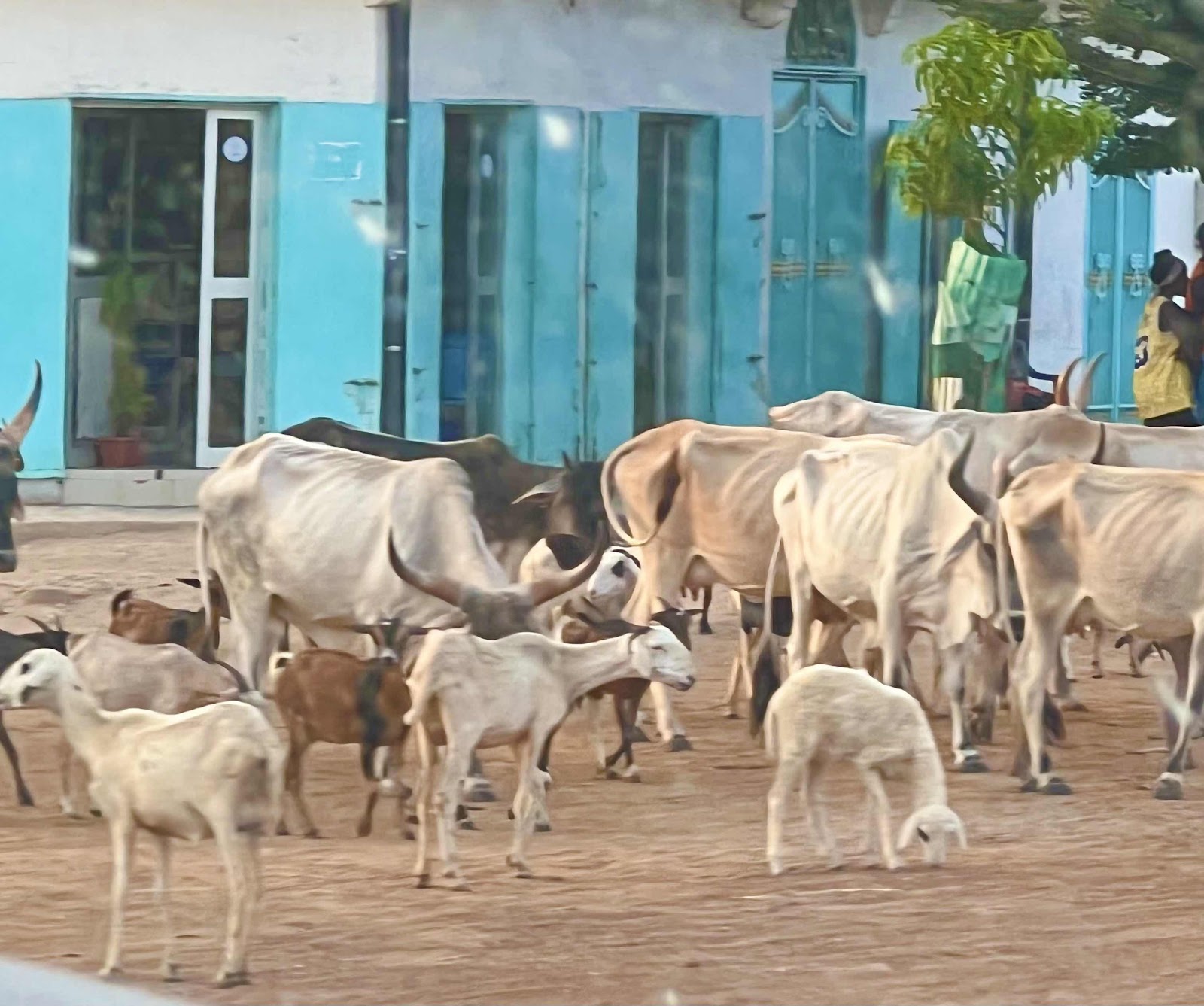
a scene on route to the village region


When we visited several years ago we saw the schools in action, met the talibés who had returned from forced begging on the streets, met the girls who were attending school for the first time ever, because now that is a possibility for them. Turns out they were all beyond hungry for it, and are the most dedicated students. Here is a version of an earlier blog post published for Maison de la Gare about the project: 


Into the Bush in Search of Education


Now, after years of a campaign to obtain documentation for the children, a lengthy process attempted one by one that enables them to write state exams, annual trips to the nearest city to write the exams are becoming normalized. This year, 65 students are writing their exams at various levels. 31 boys and 34 girls. 12 of the boys used to be forced begging talibés. This is an incredible achievement. Almost an impossible one! Hundreds of children, including girls are being educated and documented, and many dozens of talibés are being repatriated. This Senegalese, grass-roots project has sown dramatically more success for dramatically less investment of money, than any international development project I have ever read about.


But of course, each success opens another pandora’s box, and then leads to much more to do.


When my daughter Rowan researched and wrote about the forced begging talibé system, she noted the history, the various actors, and the possible levers for change. She also speculated based on observations and conversations from our trip to visit the schools the the talibé system likely contributes to the practice of early forced marriage and polygamy. When boys disappear from the villages at an early age and rarely return, and there are no schools, marrying the girls left behind to older men, multiple girls to each man, may have seemed a logical, perhaps even the only choice to the villagers. We did not really know how widespread child forced marriages were. It was just talk. But it seemed a logical conclusion to assume it happened regularly. Here is a much abbreviated version of Rowan’s report that was published for Maison de la Gare: 


Who are the Talibés and why do they Beg.


Rowan and I speculated that by building schools in the villages, not only would talibés be repatriated, but girls would also begin to study, to discover, to learn about human rights. Ideas would spread. And, there would be boys their age to marry, in equal numbers once more. Perhaps pressures for forced early polygamous marriages would eventually also diminish. Change could come for girls as well as for talibés. Schools in the villages could be the key to ending two forms of modern slavery.


With the envelope of testimonies we received this week, the theory about forced early marriages ceased to be talk. And our speculation that education would bring awareness and opportunity and could lead to change has been proven out! This feels very important. 


But, we are now in the time between awareness and opportunity, and the change to come. This is surely the hardest time. The traditions of child forced marriage remain. But the reasons for it do not, thanks to the schools built in the villages. Change is being called for, but it has not yet happened. I have no doubt that it will come. But, in the mean time the testimonies in this envelope I am holding in my hand, and the pictures of the hopeful, newly educated young faces looking as if into my eyes, what of them? 


Do we console ourselves that they are bringing the change that will benefit their daughters? While I know that to be true, it is also hard to swallow. 


It will be harder yet to wait for the change surely to come when next weekend we travel to meet the students writing exams and to the village, and the eyes we are looking into are real, and not photographs.


“My name is Aïssa. I live in the village and I am 12 years old. I am a student at the school. I live with my father and mother and my brothers. My father wants to give me in marriage but I refused, as I want to continue with my studies. I have even spoken with the old man he wants to give me to and explained I want to study at school. It will not be easy, but I am determined to fight to continue to study. I am also determined to fight against forced child marriage. But I can’t do it alone.”


- name and details changed to protect her identity


In the desert and bush regions there are camels and sheep but no schools


Wednesday, June 22, 2022

Saint Louis - de retourne


The sky is clear and the sun is hot. There is no sign of the violent storm we drove through last night enroute to Saint Louis. Word has spread that we have arrived and more friends have appeared to greet us. 


The pandemic has been so difficult for so many here. So many jobs lost, then later regained, but at diminished hours and wages. People understand, and belts tighten. The many who rely on tourists for their livelihoods are still waiting for things to improve. How they have found a way to make ends meet these past years is a mystery. 


As we walk through the streets, I hear my name called out many times in greeting. It seems to be well understood that we are here for the talibés, and not as tourists. 


But, there seem to be fewer people on the island than I remember. I wonder how many have left the city to return to families elsewhere, due to the high prices and lack of work. The Pont Faidherbe has far less foot traffic traffic than I remember. The city is definitely quieter. More subdued. Waiting for things to be better. Waiting for the city to wake. 


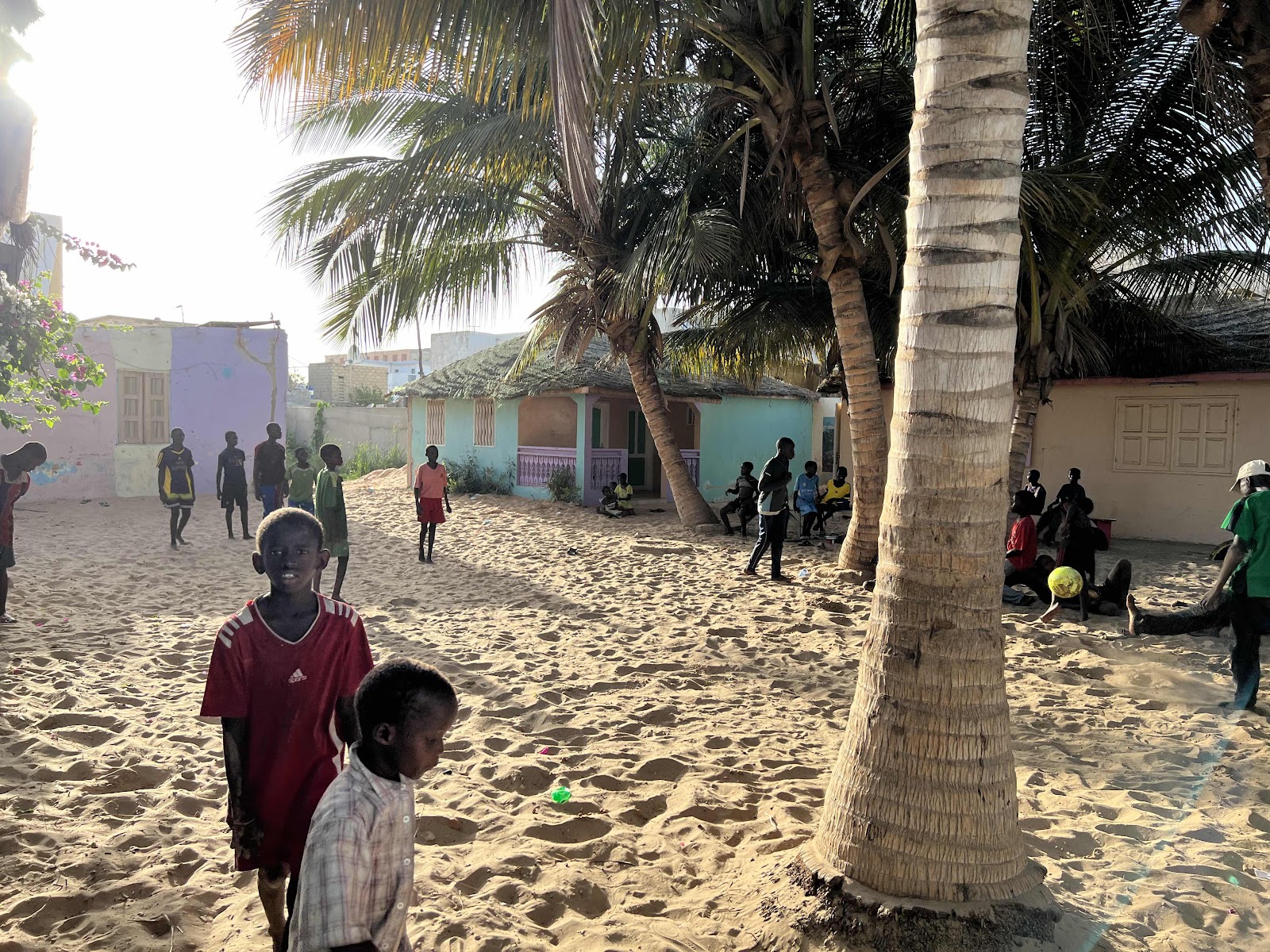
In the afternoon we make our way to Maison de la Gare. Sor is definitely busier. This is a place for locals. This is closer to what we remember. At the center a pick-up game of futbol is underway. Kalidou is teaching an english class. As Rowan and I meet with Issa and Boubacar Robbie leads a game of tag with the kids. Then he helps Lala prepare and hand out the evening meal. 


At 8pm we are surprised by a great noise. I wonder if the rain has come to Saint Louis. But no, it is a planned “symphony of Cassoroles”. it seems much of the city has come out to bang their pots tonight in protest of the President of Senegal in advance of the upcoming election. it lasts 10 minutes, then normal night sounds resume. On the way back to the island we are passed by a hoard of protesters who had been banging their pots near the government buildings, still banging and chanting. Then quiet once more.


One young man we encountered, an old friend, was excited about the protest, and showed me his identity card as evidence he could and would vote. Others shake their heads… “la politic”…It seems July 31, election day, may prove to be interesting.


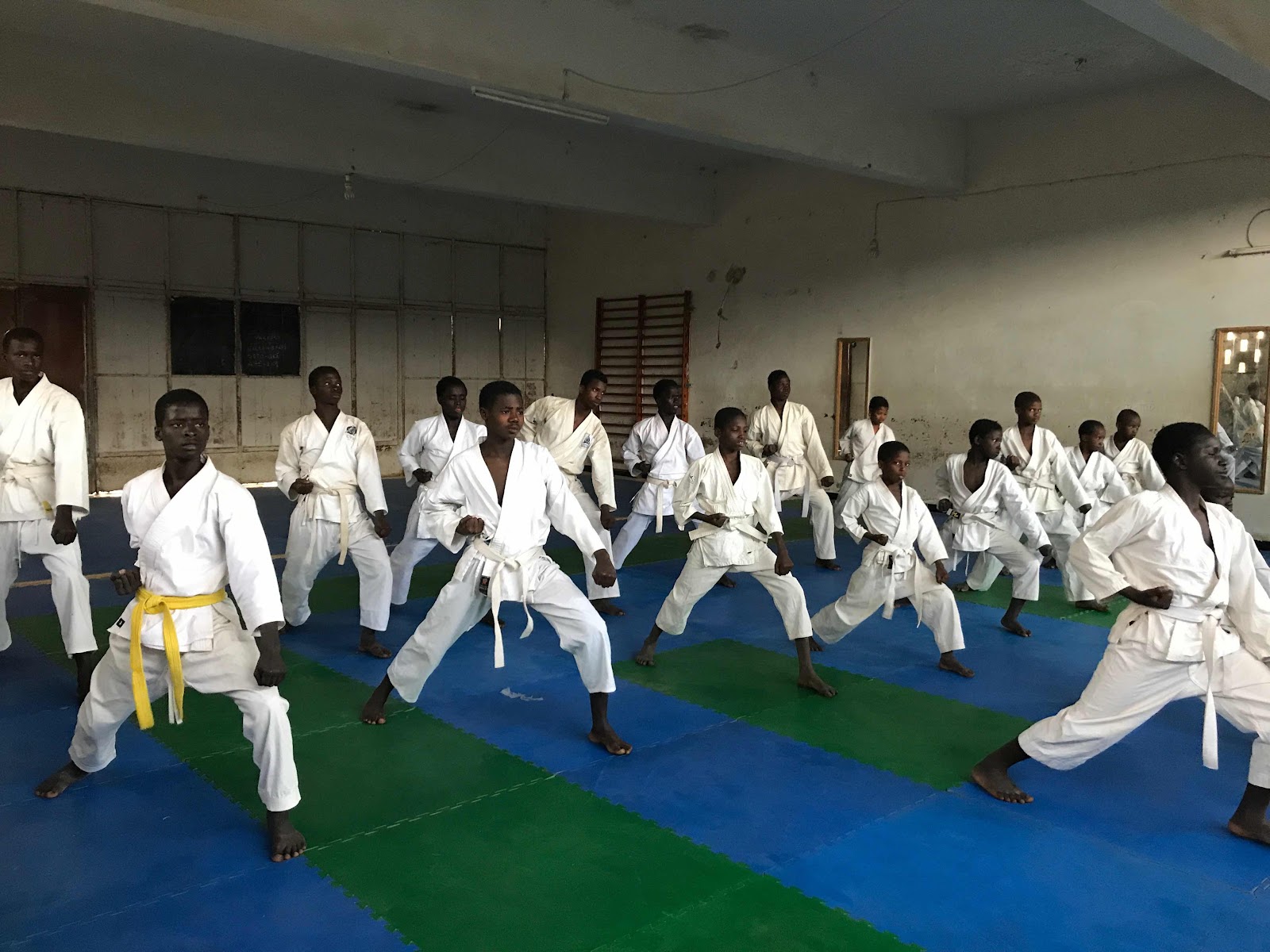
We learned that one of Robbie’s karate protégés, Abdou, succeeded with his first belt grading. This was announced with so much pride. The other three will get the chance to grade next time, Insha’Allah. We cannot wait to see them and practice together at the dojo. 


The talibé karateka will come to the center for class tomorrow morning. But, we have learned, and they have yet to learn that classes tomorrow will be postponed. Instead a nationally televised presentation will take place highlighting terrible conditions in the daaras, and training for how to help improve conditions to stop the spread of disease. Karate will have to wait until Friday.


As we were were about to call it a night, a soft knock on the door. We stayed up until well past midnight talking with our friend Cheikh. He is a local cobbler who has committed himself in his own way, and in so doing has involved us and Maison de la Gare, toward ending forced begging in Senegal, of talibés from the region of his village of origin. His project has become a great success. But with every success, new stories come to light, with issues to solve. This is a big one. Too much to write about tonight. I doubt I will sleep tonight


We are Back


We are back. 


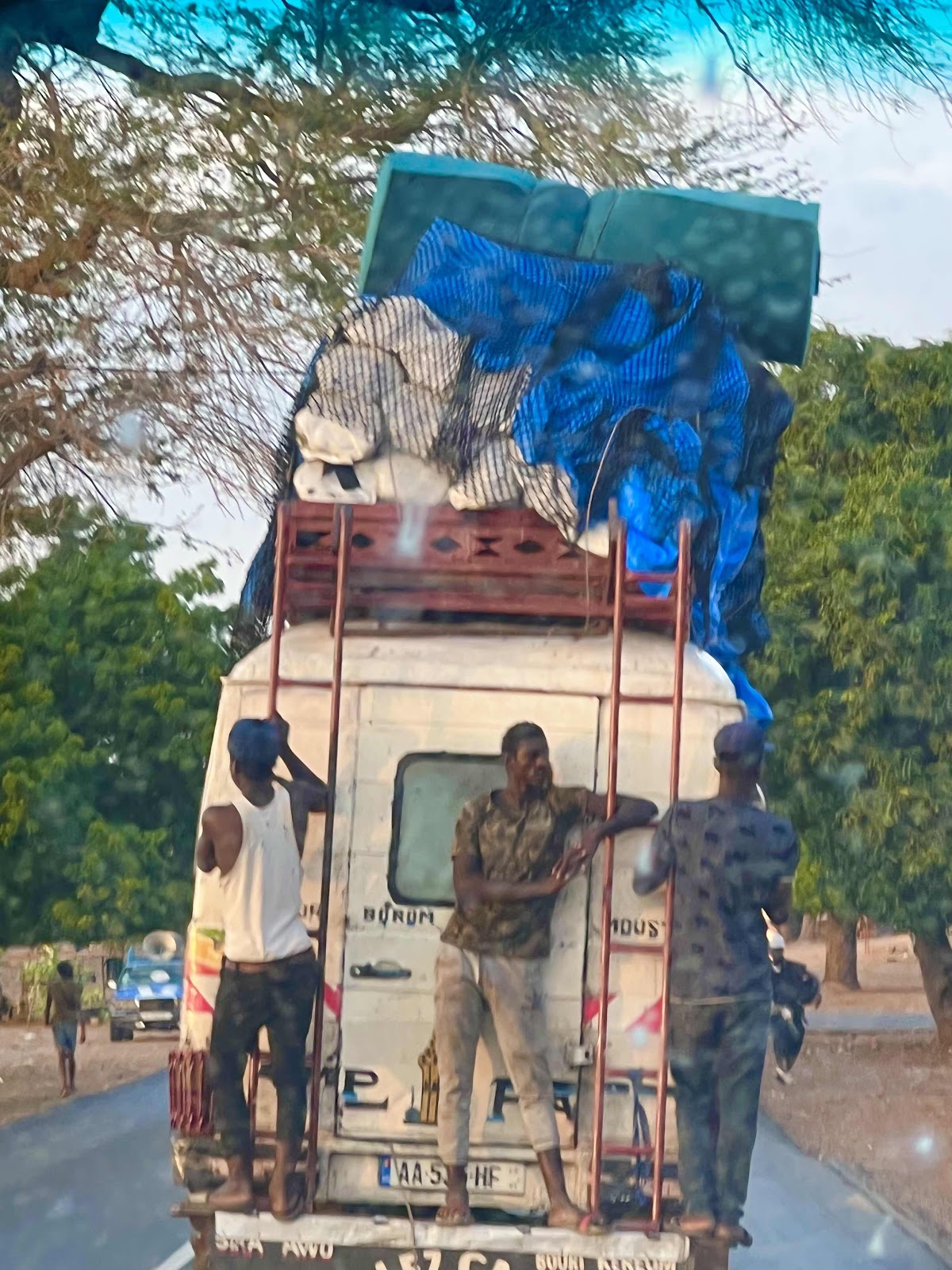
It has been two years and eight months, and yet it feels like we were just here. The majestic, ancient baobabs and the palms along our route, the red Sahel sand hazing the air, the many vendors along our route waiting for customers (the basket town, the meat town, the furniture town, the auto repair town, the fruit town, etc.), the horse drawn carts piled high with families and goods, the buses with people hanging on to the 


back, the seemingly equal numbers of bright traditional dresses and bou-bous, and jeans and t-shirts, the herds of zebu, it all feels so familiar.


But far less sheep were evident than usual. Tabaski is next month, and it is traditional for each family to slaughter a sheep. So, most have already been purchased. And due to the embargo on trade with Mali it seems there is a significant shortage of sheep this year. Those that are available have risen in price beyond the means of most families. Many may go without this year, unfortunately. Our driver confirms what I already know, times have been difficult since the pandemic began. Many families are struggling. But the optimistic nature I remember seems to prevail… “God is Good”, “we will find a way”.


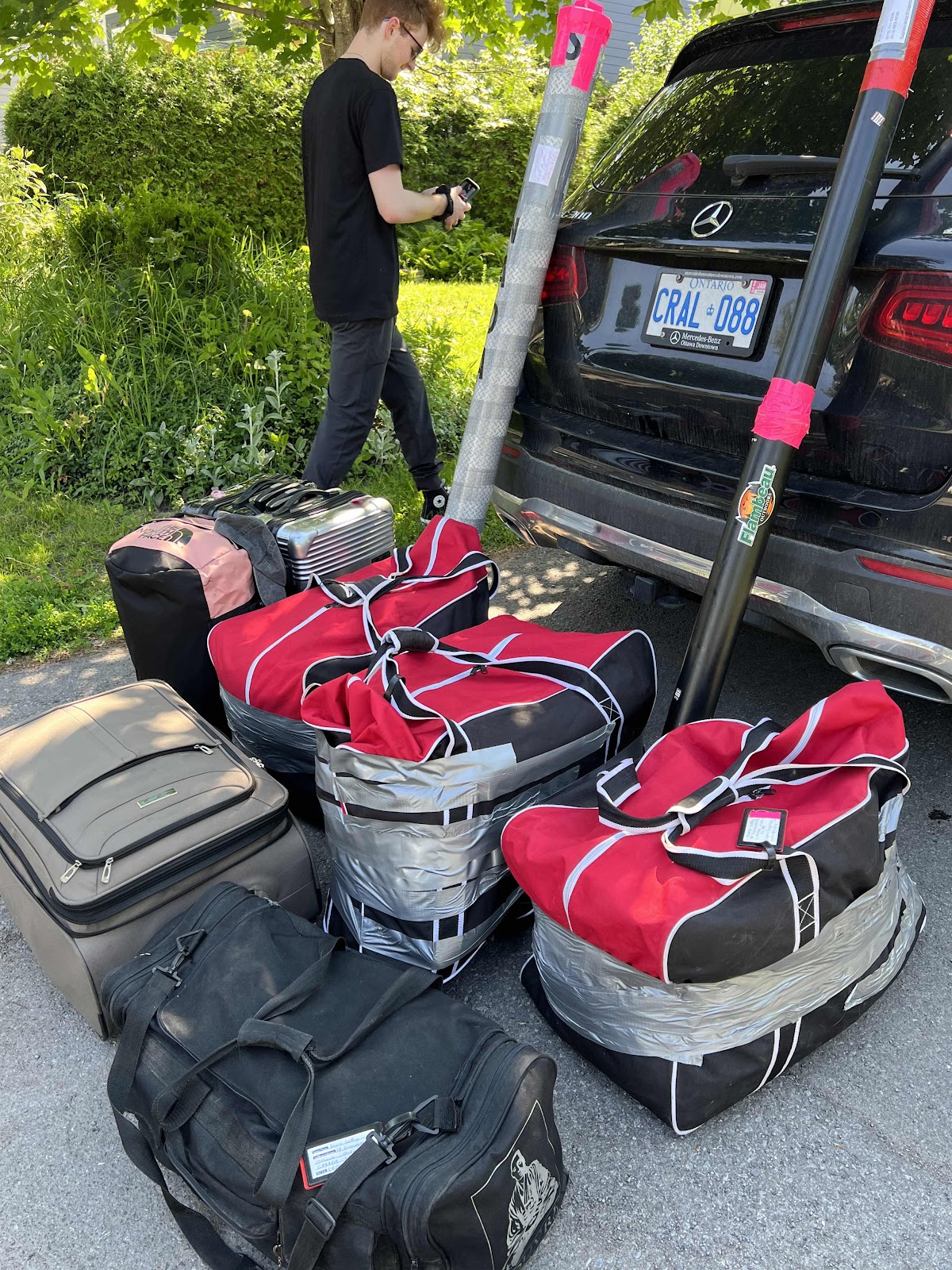
All of our luggage packed with donated karate equipment and uniforms for the Sor-Maison de la Gare karate program arrived safe and sound. This should not surprise me, but it always does. In 22 visits we have not lost a bag. Each bag is right at our allowable weight limit.  Although this will be very much appreciated at Maison de la Gare, there is that long trip up the stairs at our hotel…


The luggage includes some very special items this time. We will be hosting a karate tournament on Canada Day at Maison de la Gare: The Douvris Cup Challenge. The medals and trophies are donated by Canadian and world champions, hoping to inspire by sharing their own hard earned medals with the winners.


We passed through a thunder storm on the way from the airport to Saint Louis. An early sign of the rainy season yet to come. But when we arrived in Saint Louis the streets were dry and the hot air was humid. As our car pulled up to la Maison Rose we were warmly welcomed by old friends. One close friend, Cheikh, had been waiting all day and night for our arrival to greet us. And our reunion with other friends was poignant, after so long apart. “C’est comme chez vous” are more than just words here.


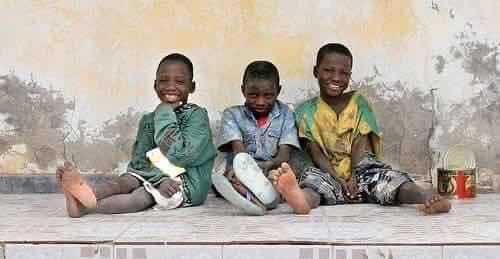
the reason we are here


Friday, May 13, 2022

A Talibé’s Hard Road Led him to Education


It has been over two and a half years since I have been in Senegal, due to the pandemic. But, my connection with the children and my friends who I travel to support has not wavered. Throughout the pandemic I have continued to mentor Sulayman, a former talibé, and support his tutoring, as he continued his high school education. He has now completed his secondary school studies and is about to write his final exams, with hopes to carry on to university. This is why I volunteer in Senegal!  Sulayman’s story, told in his own words, describes a typical talibé’s life and hopelessness. It is nearly unbearable to read, let alone to live. Most talibé stories do not end in hope and education, or lead to new beginnings, as Sulayman’s is, unfortunately. But, this one does. Please read from Sulayman’s own pen…


My name is Sulayman Ba. I was born in Gambia, West Africa. I have six siblings and I am the third son of my mother. I spent much of my childhood and youth as a modern slave, first as a slave labouring then a forced begging talibé. But education was all I ever wanted. Eventually I finally took some control over my own life and found a way to go to school.


The way I became a talibé is tragically a bit funny actually.  I  and my elder brother would always be arguing about who is going to be a school teacher and who is going to be a marabout (Islamic teacher). I was the one that would always say I want to be a marabout and my brother would say he wants to be a teacher, but I was not really being too serious. One fateful day, my late father called me and my brother and asked if we were sure of what we were claiming we wanted to become and we said of course! I was very optimistic about it at the time, I was not familiar with the system of slavery that many West African marabouts practiced. So my father sent my brother to school and he took me to one of his friends who was a marabout, to teach me the Quran. 


Although I was learning the Quran, the teacher was extremely strict. He would not even allow me to go to see my parents. Sometimes I would go to visit my parents house when I really missed them.  When this was discovered by my marabout, he would beat me up. I can still remember those beatings. I lived with him this way until he persuaded my parents to send me to another village in Gambia. When I arrived in this village I was given over to another man, left alone with him. I remember on the second day my shoes disappeared. At this time I started crying, realizing my life was to be real hardship. I was so young at that time that I can't even remember what my age was. 


This village was composed of many "talibés". In this village we talibés were the labourers. We were forced to work on huge farmlands. We grew groundnuts and maize. We consumed half and the other half was taken for sale. We also took care of gardens for the son of our marabout in that village. We mainly cultivated bananas and onions. Our marabout had more than 400 talibés and there were only a few rooms for us to sleep in. It was like a prison inside our rooms, there was not even space to step or walk. There was a long time that I only had the clothes I was wearing and no shoes on my feet while I had to do this hard work every day. The life in the village was like a hell for me, particularly in my first year before I got somewhat used to the situation. We did not have electricity so we would go to the forest everyday to fetch firewood. We would burn that wood for our light at night and when we had to wake up 4:00 in the morning to learn the Quran until 7:00 am. Then we would be sent to work all day. 


There I was until my father passed away. I wanted to go home and my mum visited me there in the village only twice and I would cry whenever she was leaving. But she always told me “I have no choice Sulayman, your Dad wanted you to learn the Quran and become a marabout and he always reminded me of this” my mum said. So there I remained until I was finished the Quran. But then my marabout in that village decided to take me to Senegal to continue studying. This was how my journey to Saint Louis came about. 


I was taken to Saint Louis, Senegal with one of my daara- mates, who  was also a Gambian. When we arrived in the city around 8pm we were supposed to be taken to the "ville". But we were not allowed to stay in the place we were sent. Instead we were sent to a different marabout. We eventually arrived at this other daara later that night and it was full also. But the marabout let us stay there with some of his talibés despite it  being overcrowded. I remember it was so dramatic that night! 


My first morning in Saint Louis, I woke up and was sitting waiting for breakfast. We were extremely famished after our long journey and the the chaos of the previous day without food.  One guy came and told us boys “I know you boys are new comers, but here in this daara you have to go out beg for food or look for job in order to survive.” We of course had no money, so we went to the market with some of the other talibés to try to get jobs carrying people's stuff. We were paid very small amounts actually, not enough to even buy food. That was how we were living for several more years. 


I was forced to do many tedious jobs in Saint Louis just for survival to take care of myself, and also to give my marabout money. No one else cared about taking care of me even though I was a child. I can remember my first job apart from going to that market was sweeping. There was a very wicked woman named Aja that I was working for, she was very mean to me. I did not understand the money, and I would wake up every morning and clean everywhere in the house up and down everyday, with no days off. For this I was paid 2000cfa a week (about US$3.25). But this woman often would not even pay me that small amount so I left there and I returned to the market to earn what I could.  


In 2015 I learned about some centres helping talibés like me. I started going to the centres and found Maison de la Gare. Whenever we were returning from working in the market we would pass by Maison de la Gare to take a shower and sometimes watch films and play. We would also come back in the afternoon and eat free food they gave us. I joined karate classes too. I started falling love with it. Maison de la Gare was a break from my very hard life. I spent as much time as I could at Maison de la Gare. I started getting used to the people at Maison de la Gare, and trusting them, especially the teacher, Abdou Soumaré. He always would advise me go to the classes and learn French or English, that it may help a lot in my life. 

Sulayman and Abdou


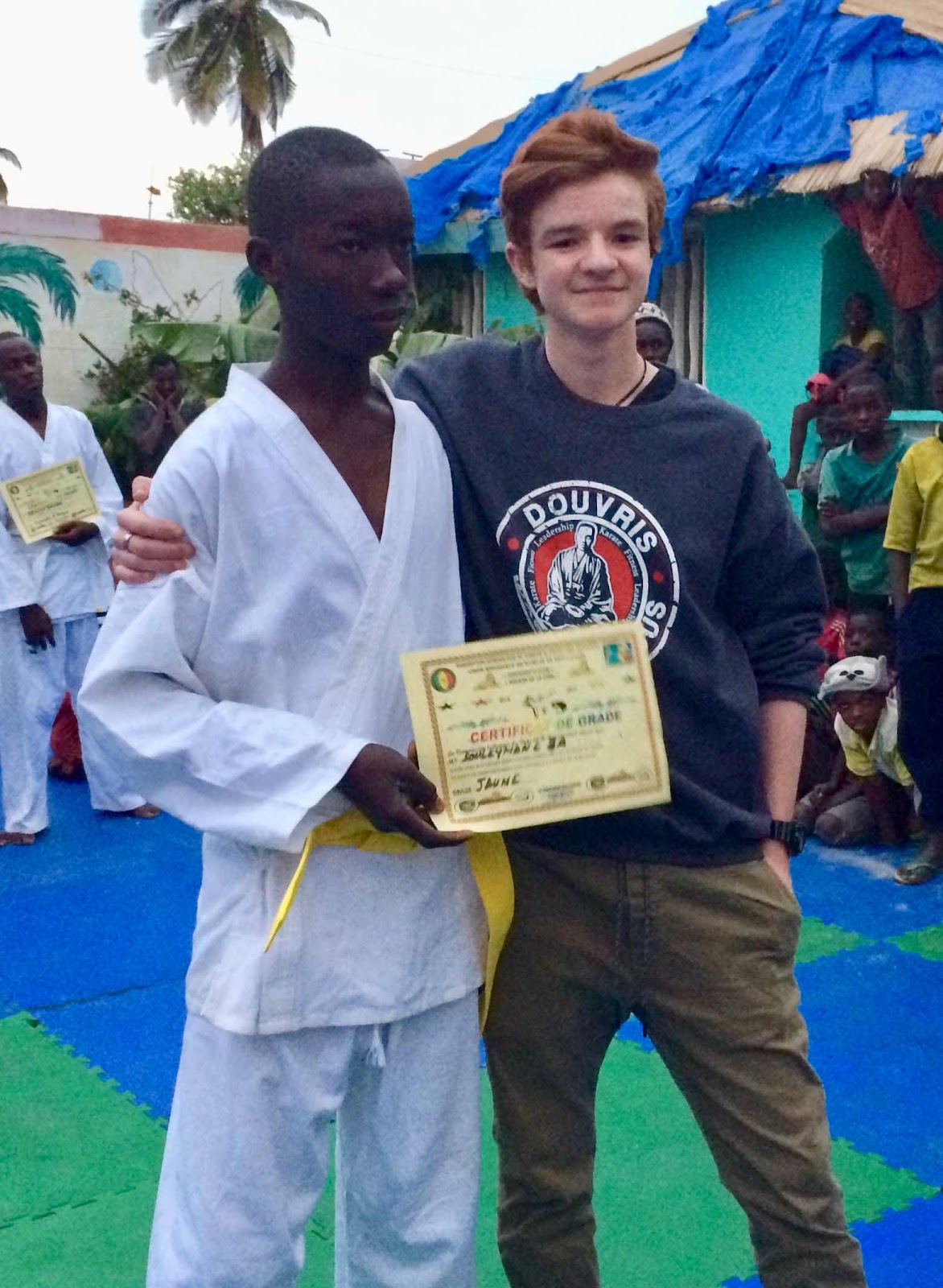
At that time I could not understand anything in either English or French so I found it pointless to sit in the class room. I could not tolerate my life in the daara any longer, so I was eager to escape to Europe, through Libya or Morocco. Four of my friends had gone on that journey, and I wanted to do it too. That was the year I left the daara and went to Mauritania to try to find a job and then make my way to Europe. But Mauritania was even a worse nightmare for me. Even more terrible than living in the daara. I returned to Saint Louis and finally took Abdou Soumaré’s advice. He had always been telling me I should try to go to classes and at least learn to understand one official language that could help me in life. So I started learning English with some of the volunteers at the centre. I remained at the centre until I started speaking a bit of English. I even joined the karate dojo and earned my yellow belt.

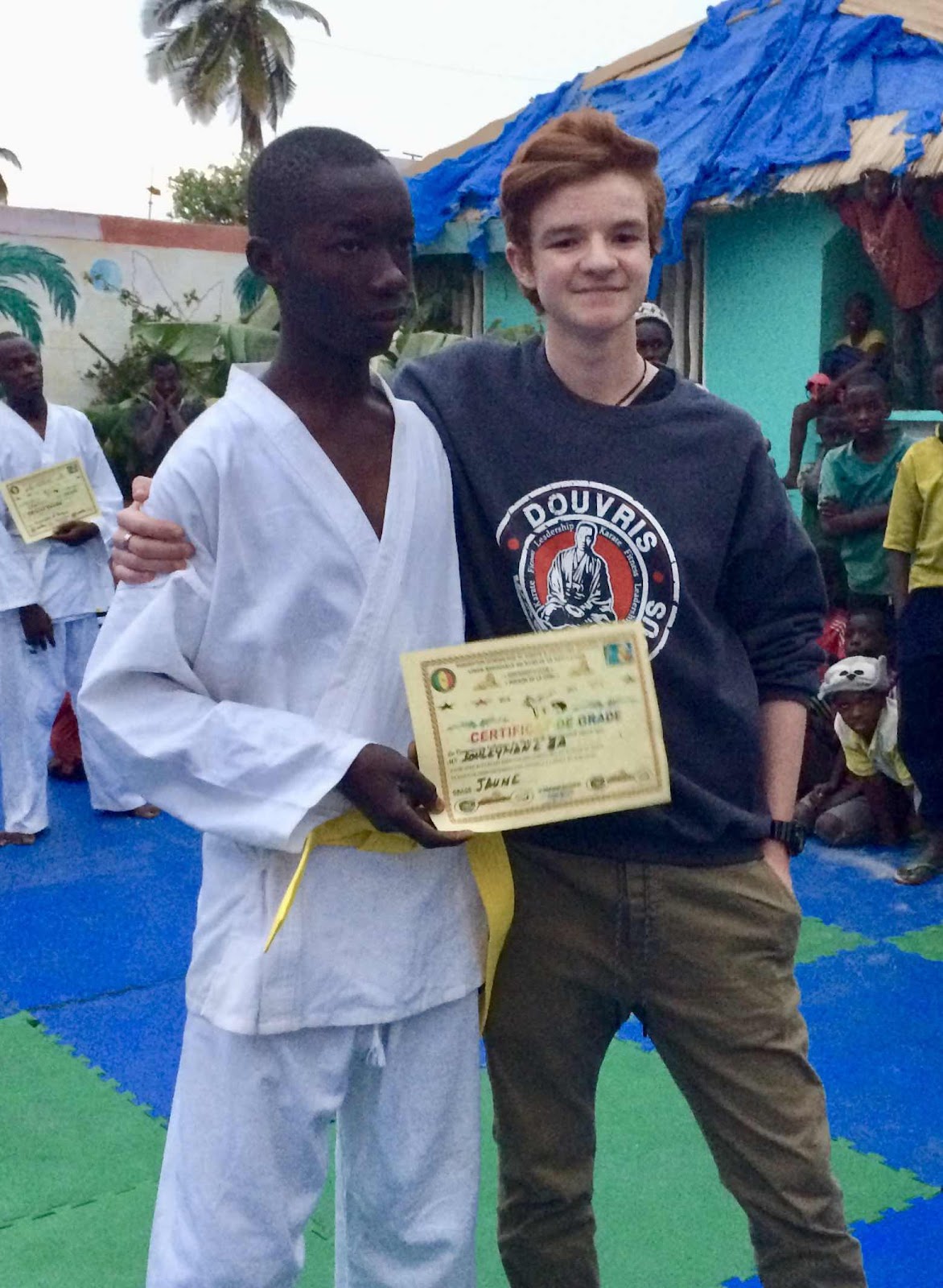
Robbie granting Sulayman his yellow belt


I returned to Gambia in late 2018, but I found my mum had a heart attack and my elder brother was not working. My uncle was the one taking care of this whole family and I had the feeling that I needed to make a change. I was wondering how I could make my way through my entire life with only having learned the Quran. I refused to treat other children the way I had been treated, as slaves, so being a marabout was not for me. I felt quite useless in my family. I went back to Saint Louis, and my main objective was to try to support myself, enrol myself to school, get my certificate, and then start working to become the bread winner of my family. I refused to return to the hell of the daara so I lived sometimes on the streets, sometimes at friends’ rooms, and sometimes at Maison de la Gare’s dortoir (emergency shelter). I continued to go to the Maison de la Gare classes.


I explained my situation and my desire to go to a real school to some of my friends. One friend who motivated me the most to find a way to go to school was my friend Tijan, also from Gambia. Tijan and I almost have similar stories. He was the one who would tell me “Sulayman stop thinking about this back way of going to Europe. You can make it in your own country.” He had returned to Gambia to go to school a few years before and he was going to graduate from high school! He was at that time in Senegal only briefly to visit Maison de la Gare. Tijan convinced and inspired me to return again to Gambia, this time to go to school. Abdou Soumaré and Issa Kouyaté, the president of Maison de la Gare gave us both some advice and wished us well. Tijan and I returned to Gambia together. 


Today I believe that everything in life is possible. You just have to believe in yourself and give it a try. If I didn't believe in myself so strongly at this point, and already been through so much hardship, I would have dropped out of school the very first week that I enrolled. I will never forget this in my life: my very first test in school I earned zero out of one hundred. The teacher called me in front of the class room and embarrassed me in front of everybody. But, I didn't give up or think “well, I am stupid  and I can't do this” instead I was like “ahhh, this is my first time in school, so it's not the end of the world. I’ll do better next time after I learn something.”  I thank God now, Alhamdulillah!! that I stuck with it. I have learned much and improved a lot, advancing through all my high school grades. I am not bothered that I am of such an older age compared to my classmates and I am now at the last stage of high schooling. I have completed my high school studies with the help of tutors to help me get caught up for all the education I missed as a child. I have qualified to write the WASSCE, the West African Senior School Certificate examination, which I will be attempting this spring.


My hope for the future is to get good results in my upcoming exams. My high school diploma and good exam results will open the door for me to further my education. I hope my hard work and perseverance will give me the chance to go to university, to continue my education. I want to do it for myself and for my family. I believe education can brighten my life, it is the way.


Monday, February 21, 2022

Opportunity Knocks


2021 has been such a difficult year for the talibés, forced begging street boys, of Saint Louis and the staff of Maison de la Gare who strive to make their lives better and help them find hope for a better future. Again.


Covid 19 initially closed the Maison de la Gare centre and dramatically affected the talibés ability to find enough even to eat. Eventually with the help of donors, Maison de la Gare was able to help feed the hungry boys during periods of lock-down. Later, the Center was able to reopen and talibé could return to spend a few hours a day playing, learning, seeking solace or health care, and just be children.


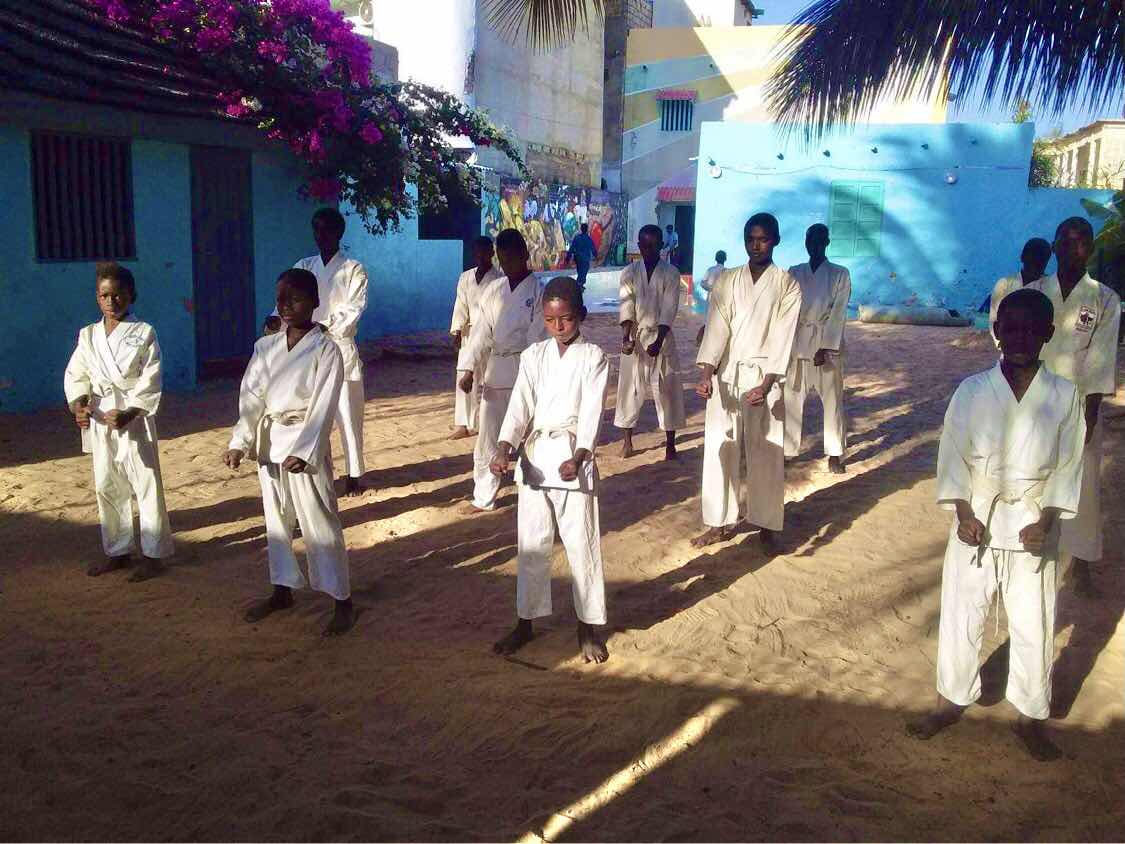
Best of all for the young martial artists of Maison de la Gare, karate could resume. the clean, white gi’s came out of storage, white and coloured belts were wrapped around torsos once, the sand was raked and swept of shells, pebbles and twigs, and the karateka lined up under the African sun once more. Yoi. Ready in anticipation for the instruction of their Sensei.


This December, excitement about karate was heightened as a few of Maison de la Gare’s long time karate students, Ahmadou and Adama, and the Center’s instructor, Bouaro were invited to compete at a rare International Karate Tournament being hosted in Saint Louis on boxing Day, December 26. Ahmadou and Bouaro competed in kata divisions, while Adama competed in kumité. For any martial artist, a karate competition is an exciting opportunity. For talibés, it is an absolute life highlight. More than an opportunity to excel at their sport and test their skill, competition tests a karateka’s perseverance, courage, determination, and offers incredible opportunity for personal growth. It is also an opportunity to shine on the mat. To be applauded as a hero, win or lose. For talibés who live most of their lives neglected, overlooked or pitied by much of society, the positive impact of applause and admiration, let opportunity to be in the spotlight can hardly be understood.


Bouaro, Adama, and Ahmadou enjoyed their glorious day of competition. Cheered on by Maison de la Gare supporters and their fellow karatekas, the day of competition will not soon be forgotten by the competitors.  And it will be remembered by the spectators who watched these young people putting everything they had on the mat, demonstrating their skill with unusual passion and determination, inspiring other talibés that it is possible to rise out of the invisible crowd and shine, that glory is possible if one is willing to work for it. 


There are over 40 of the talibés who are more advanced and particularly committed to elevating their karate skills, who are registered in the local dojo, Sor-Karate. They are anxious to renew their memberships at the dojo and be able to continuing to practice the martial art they have come to love, that offers them a sense of self worth, confidence, self respect, and belonging. January each year the karate licensing and dojo membership renewal fees are due. Continuation with the program depends on the generosity of international donors. A gift of $100 Canadian will renew a child’s karate membership for a year, enabling them to test for higher belts, and participate in a supplementary food program while training. More kids who have been participating in the morning karate classes at the Maison de la Gare center are ready to join the dojo as well. Their hopes being fulfilled will depend upon the generosity of donors. 


Thank you to our generous donors for helping to bring the opportunity that participation in martial arts offers, to the talibés of Maison de la Gare.


An Oasis During the Pandemic


In March of 2020 Covid-19 hit Maison de la Gare like a freight train. Our planned visit was cancelled at the last moment. International volunteers evacuated the country. Other planned volunteer visits and the revenue they bring were cancelled. Travel between regions was prohibited, trapping vulnerable talibés children in the cities in their darras. And, the cities locked down, instantly eliminating the source of food for tens of thousands of forced begging street children.


Early in the Pandemic, Covid-19 was not the primary danger in Saint Louis.  With travel and all activity stopped in its tracks, cases were few. But, the economic devastation was swift and deep. Many Senegalese lost their work and income. Many could no longer house or sufficiently feed their families. For the vulnerable talibés, already victims of abuse, neglect and modern slavery, things became so much worse. Within days of the first lock downs, the streets of Saint Louis were empty of all but hungry talibés, desperately sorting through garbage heaps for anything at all to eat. With the help of generous donors, Maison de la Gare was able to continue to pay its staff, but the Center had to close. The only refuge for thousands of talibés was lost to them. 


Maison de la Gare soon was able to pivot and respond to the new dangers to talibés. Neighbourhood cooks were rallied, international donors responded, and first hundreds, and then thousands of meals each day were cooked and delivered by Maison de la Gare staff and older talibés 


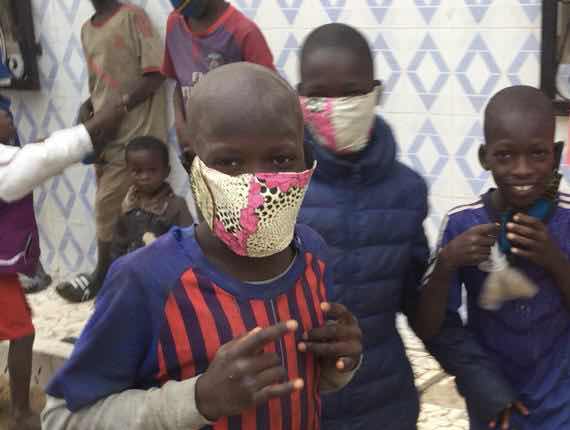
to the daaras where the boys lived. Starvation for many talibés was avoided after all. Apprentices in the Maison de la Gare couture program sewed massive quantities of masks. Maison de la Gare teams delivered cleaning supplies and masks to the talibés in their darras and taught them to protect themselves from the Covid virus.


As time passed, Covid did make its way more dangerously into Senegal.  After months of experiencing  few cases, economic activity began to  resume in Saint Louis. people returned to their daily business, even if at a diminished rate. Talibés went back to begging, the Center was able to open again. But, as vaccinations became widely available in the Global North, travel began to resume. And with it, Covid began to spread and take hold.


Now in Senegal, hospitals are full. So many people are sick, and everyone seems to know someone who has died of Covid. But, unlike in the North, the hope offered by vaccines is not available to most in Senegal. The supply of vaccines only trickles in, and Covid continues to spread.


But now, knowing how to better manage the risks of Covid, life at Maison de la Gare continues. Masked, and distanced, but it continues. Food and water and cleaning supply costs are higher than ever at Maison de la Gare. But, talibé children are able to tumble through the gates each day in twos and threes, or alone. They wash their clothes and themselves.  They enjoy a meal they do not need to beg for. They visit the infirmary, sometimes to have serious conditions treated, sometimes just for some much needed tender loving care from the health care workers. The put on clean, white uniforms and practice karate. They play soccer. They attend classes and learn French and math. They play, relax, and just get to be children for a few minutes or hours. 


Some of the Maison de la Gare team have managed to get vaccinated. Others are registered to get their jabs, waiting their turn. But, it could be a long wait. People are scared. And vaccines are scarce. Nevertheless, Maison de la Gare staff are doing all they can for the vulnerable talibés, most of who are too young to be vaccinated, even if the supply were available. We have often described Maison de la Gare as an oasis for the talibés. During the Covid-19 pandemic, the oasis provided by Maison de la Gare has proven to be more important than ever, offering more than hope…helping to sustain life itself.


Sunday, December 1, 2019

Alkaline

Sulayman with Abdou Soumaré

I have known Sulayman for over five years. He has always been a quiet, positive boy with a gentle spirit and a smile. He began with the karate program early. Robbie presented him with his yellow belt at a cérémonie de passage about three years ago. As he is originally from The Gambia, Sulayman speaks some English, and we always enjoyed conversations while hanging around the Maison de la Gare center.

Robbie Hughes presenting Sulayman with his yellow belt in karate


Sulayman remembers that when he was a young boy he lived happily with three brothers and two sisters and his mother and father in the Village of Welingarau in The Gambia, until the age of six. 

Everything changed when his father died. Sulayman does not remember his father at all, just photos of him. Apparently Sulayman had once told his father when very young that he wanted to be a marabout. and his brother said he wanted to be a teacher. Sulayman has no memory of having said this, or of ever having wanted to be a marabout. But, Because it had been his father's wish that he become a marabout, upon his father's death his mother sent him to an Arabic school in a nearby Gambian village. His brother was sent to school in hopes of becoming a teacher. Sulaymane remained in the daara for nearly eight years.

Then, at the age of fourteen, Sulayman's mother wanted him to go to Saint Louis to be a talibé to better learn the Quran. So, he was sent by his Marabout to a daara in Saint Louis. Saint Louis has a reputation as a place to send one's sons to learn the Quran, among poorer villages, anyway. Perhaps many parents are unaware of the miserable conditions to which they are sending their children.

a daara Saint Louis, taken by talibé in transition, Elhage Diallo
a daara in Saint Louis, taken by talibé in transition, Elhage Diallo 

  Sulayman noted that all of the younger children were forced to beg for daily quotas of money. He only needed to beg or work for his own food.  None of the children, including himself were fed or offered any type of health care when needed. No one was sent to school. Sulayman did not like what he saw of how the children were treated.  He was taught the Quran during the day, but there was no place for him to sleep at night at the daara.  Sulayman spent the first three months sleeping on the street, in doorways of homes, getting little sleep as he needed to quickly move away when anyone entered or left the house where he was sheltering. He learned to ask for food from door to door to feed himself. Sulayman arrived from The Gambia with good clothes, but everything except what he was wearing was soon stolen in the daara.

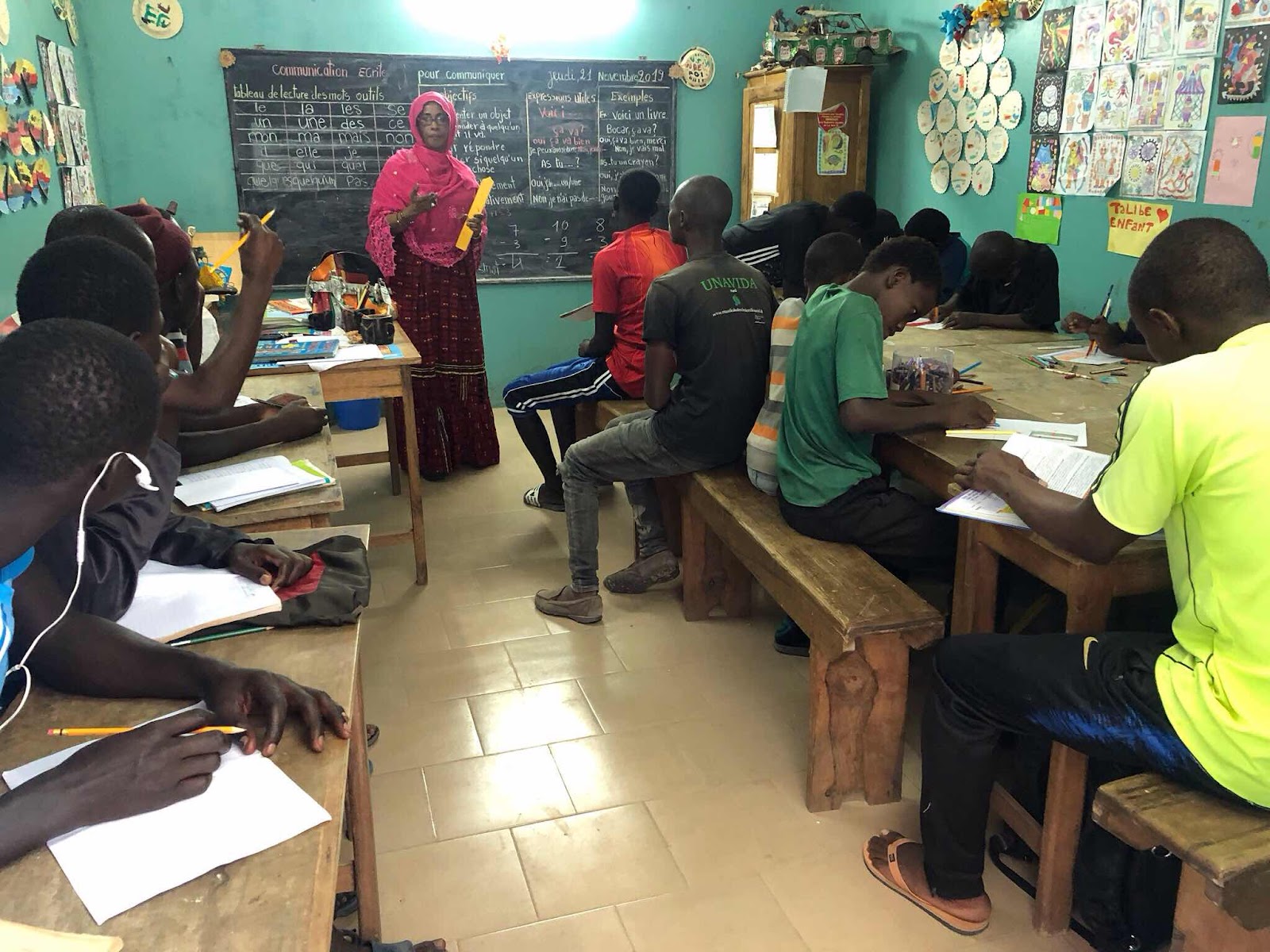
Not too long after arriving in Saint Louis, Sulayman heard about Maison de la Gare and he made his way there. He saw the Maison de la Gare classes in session and he realized education could be the key for him. He spent as much time as he could at the centre, as life was much better there than on the streets or in the daara. He joined the karate program and earned his yellow belt.
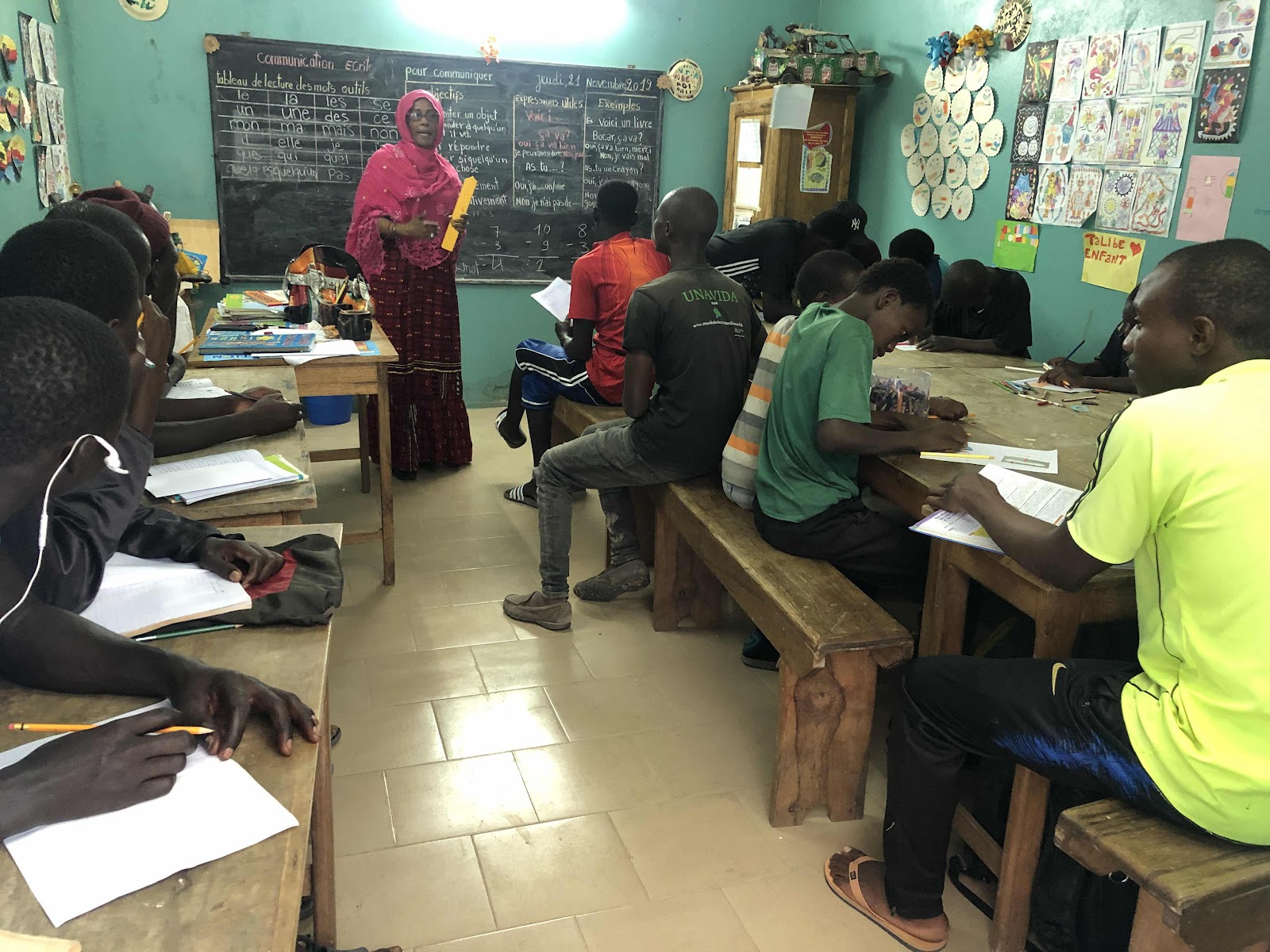
A Maison de la Gare classroom

After his first three months his marabout left for Casamance in the south of Senegal and Sulayman was able to sleep in the daara now, with more than 50 other boys. 

Sulayman was able to return to The Gambia to visit his family twice in 2015. After two and a half years living in the daara in Saint Louis Sulayman had had enough. He left, and from that time on has existed in Saint Louis by couch surfing with friends. Sometimes he would sleep at Maison de la Gare's emergency shelter. He spent as much of his time as he could improving his English and learning math, in Maison de la Gare's classes and in others offered by other associations. His goal was to learn enough that he would be able to someday be able to integrate into school in The Gambia. He supports himself working in the market helping to make cooking pots, operating the grinder to finish them. Sulayman earns enough money working to buy food. 

Some of the older talibés have given themselves knick names, which is how the international volunteers have come to know and address them. Sulayman has been going by the name of Alkaline. He is not quite sure why that particular name, but he likes it. Sometimes the names are chosen by a friend, sometimes they select them themselves. Perhaps in a world where the talibé are nearly invisible to society, this is one more way they can feel they are individual and in control.
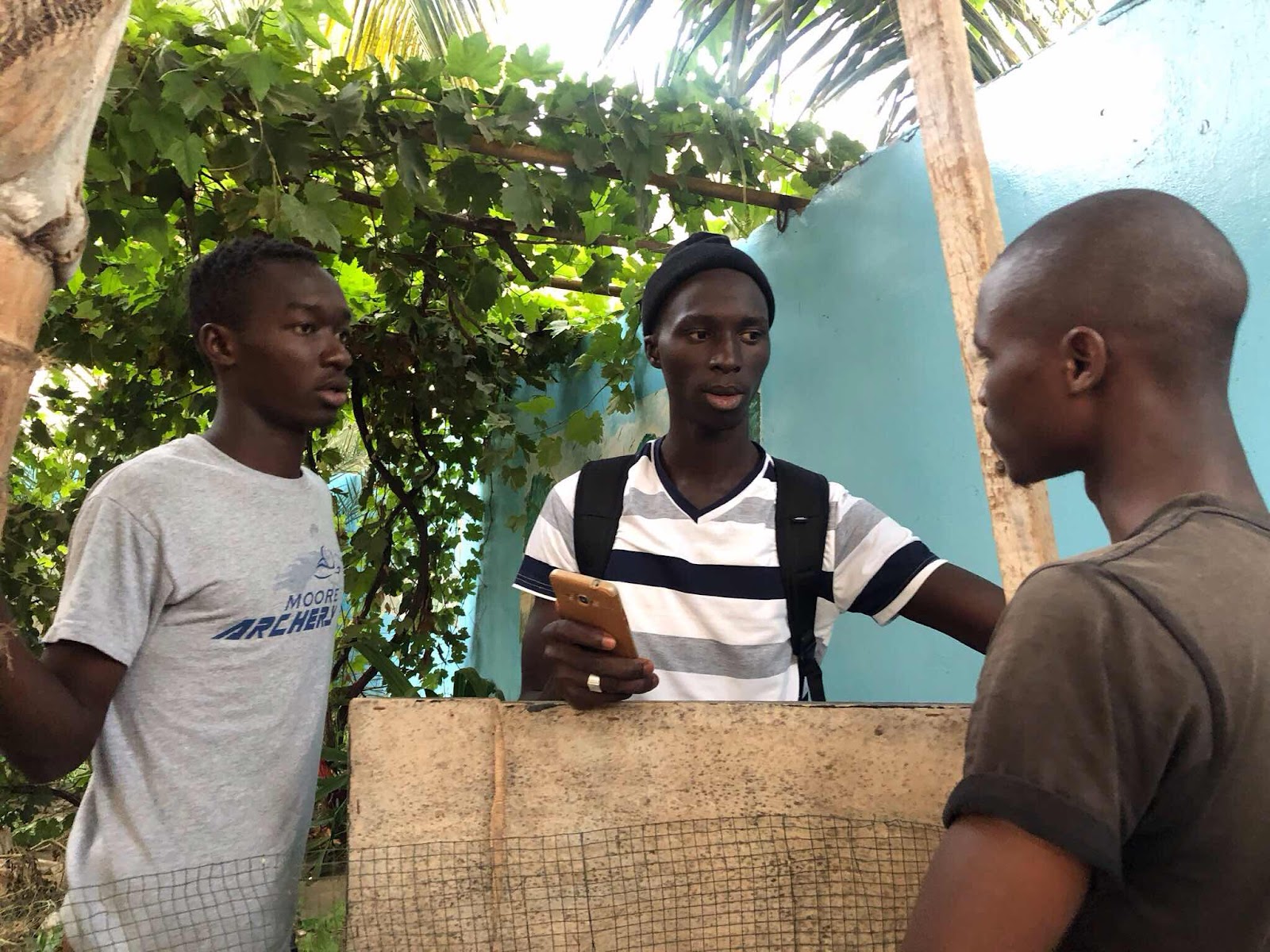
Tijan and Sulayman

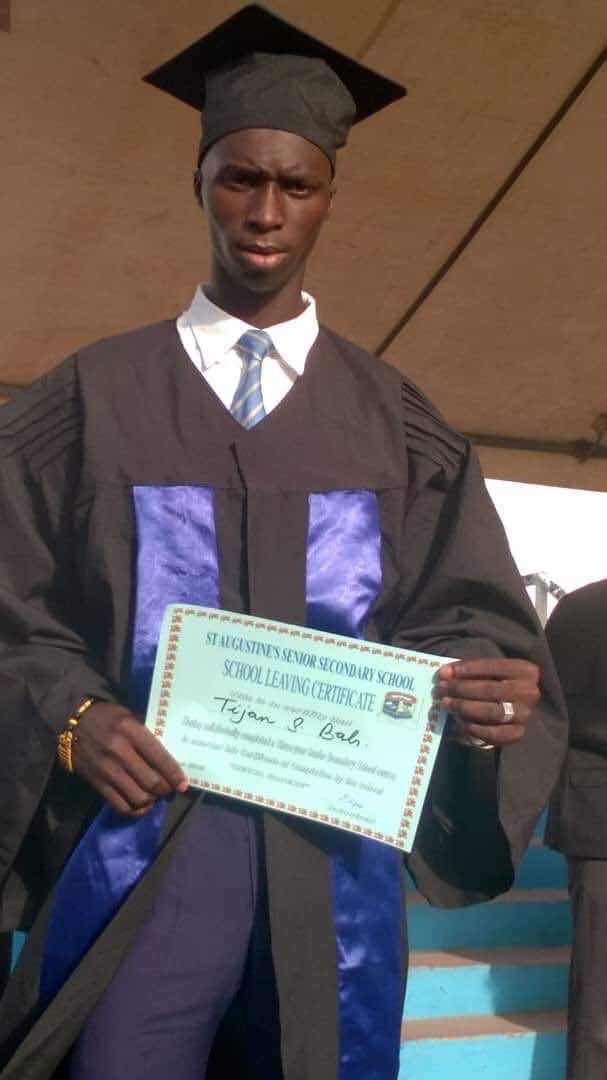
Since this summer Sulayman has been seriously considering the idea of returning to The Gambia to go to school. The lack of resources to pay school registration fees and the fear of the unknown has held him back. This week things changed when Tijan arrived in Saint Louis. Tijan had been a talibé who I first met about six years ago at Maison de la Gare, also from The Gambia. Tijan also had wanted nothing more than to become educated. About three years ago when I was in Saint Louis, Tijan confided that had been considering attempting to find his way to Europe, as he heard that minors who arrived there would be enrolled in school. We figured out how he could instead return to The Gambia where he had the right to go to school, but no practical means to do so. That was three years ago. This June Tijan graduated from high school and is now preparing to begin university, studying business and economics, in January. This week he had come to Saint Louis to see me and Robbie before starting university.
Tijan with his high school diploma

Sulayman, seeing Tijan's successful example, made up his mind that perhaps the seemingly impossible may be possible after all. The school he thinks he could go to is near his cousin's house. He is hoping to be able to stay with his cousin, eating two meals a day there. And, Tijan lives just 20 minutes away in case he needs help. A friend in Ottawa had given me some money for a person I perceived to be in need. I gave it to Sulayman to help him on his way. I gave him a school bag and some school supplies and set up an email account for him to ensure we could stay in touch.

The ongoing school fees will be a challenge. And, he is not sure his plan for living arrangements will be workable. But, he is full of hope and optimism. Sulayman is determined that his time is now. Before Tijan and Sulayman left, Issa, the President of Maison de la Gare, spoke with the two boys, offering advice. Sulayman also received much appreciated life advice and encouragement from Abdou, the head teacher at Maison de la Gare.
Issa Kouyate, President of MDG offering advise to Tijan and Sulayman

Tijan and Sulayman left Maison de la Gare together, excited about the future and we said goodbye.  Two days later I learned they had arrived in The Gambia. Sulayman has had a meeting with the director of his hoped for school. He can begin high school at the start of the next term, at the end of December despite his age of 21 years.  And, he has already found a math study group to join now to help prepare him for what lies ahead. And Tijan begins his university adventure in January. The future is looking bright.