Followers

Tuesday, November 27, 2018

Time to Get to Work - Can All of this Really be Happening?


So many importamt things happened Monday, my mind is having trouble sorting them out after the fact. It is always like this the morning after a Ronde de Nuit.

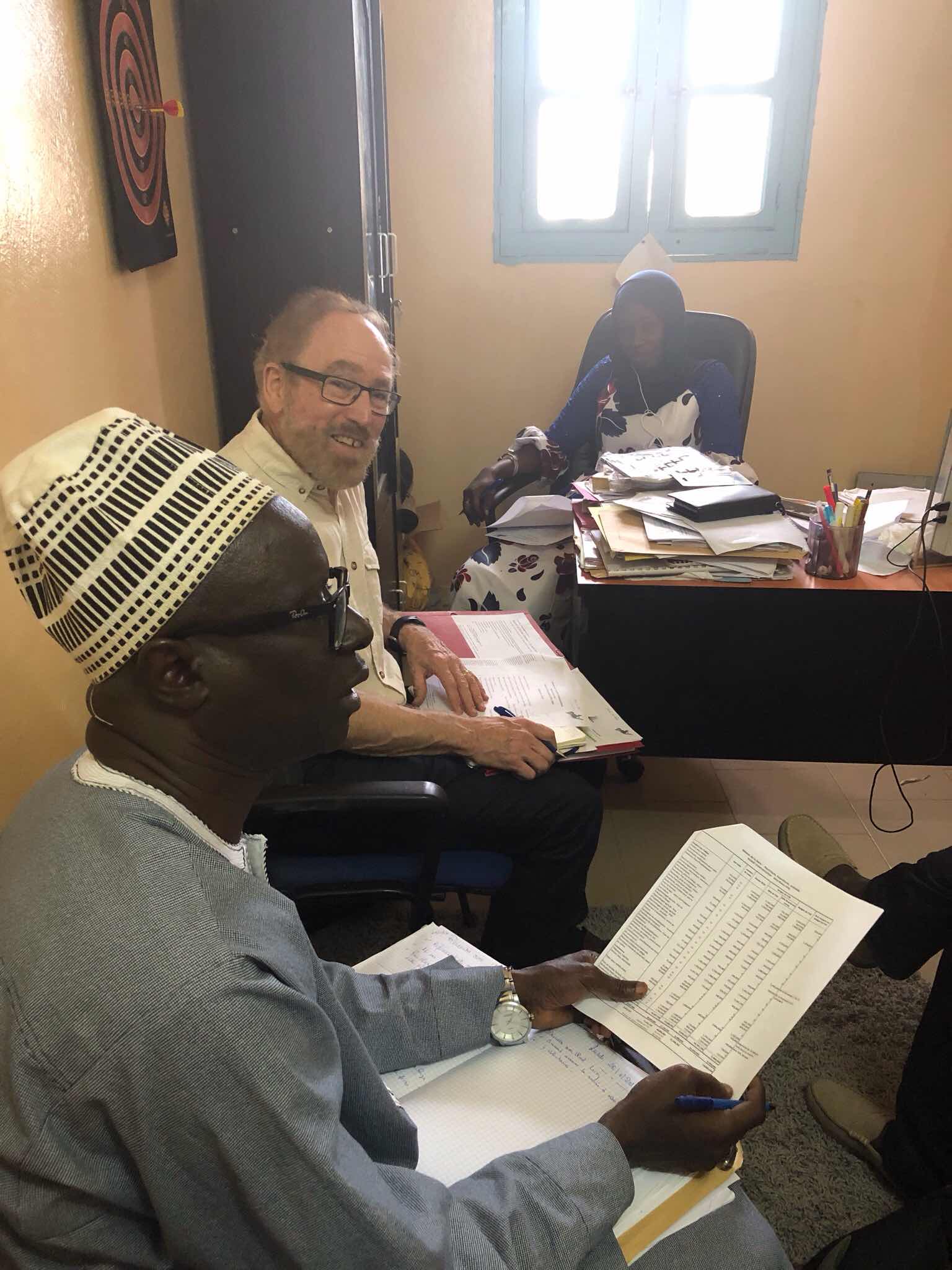
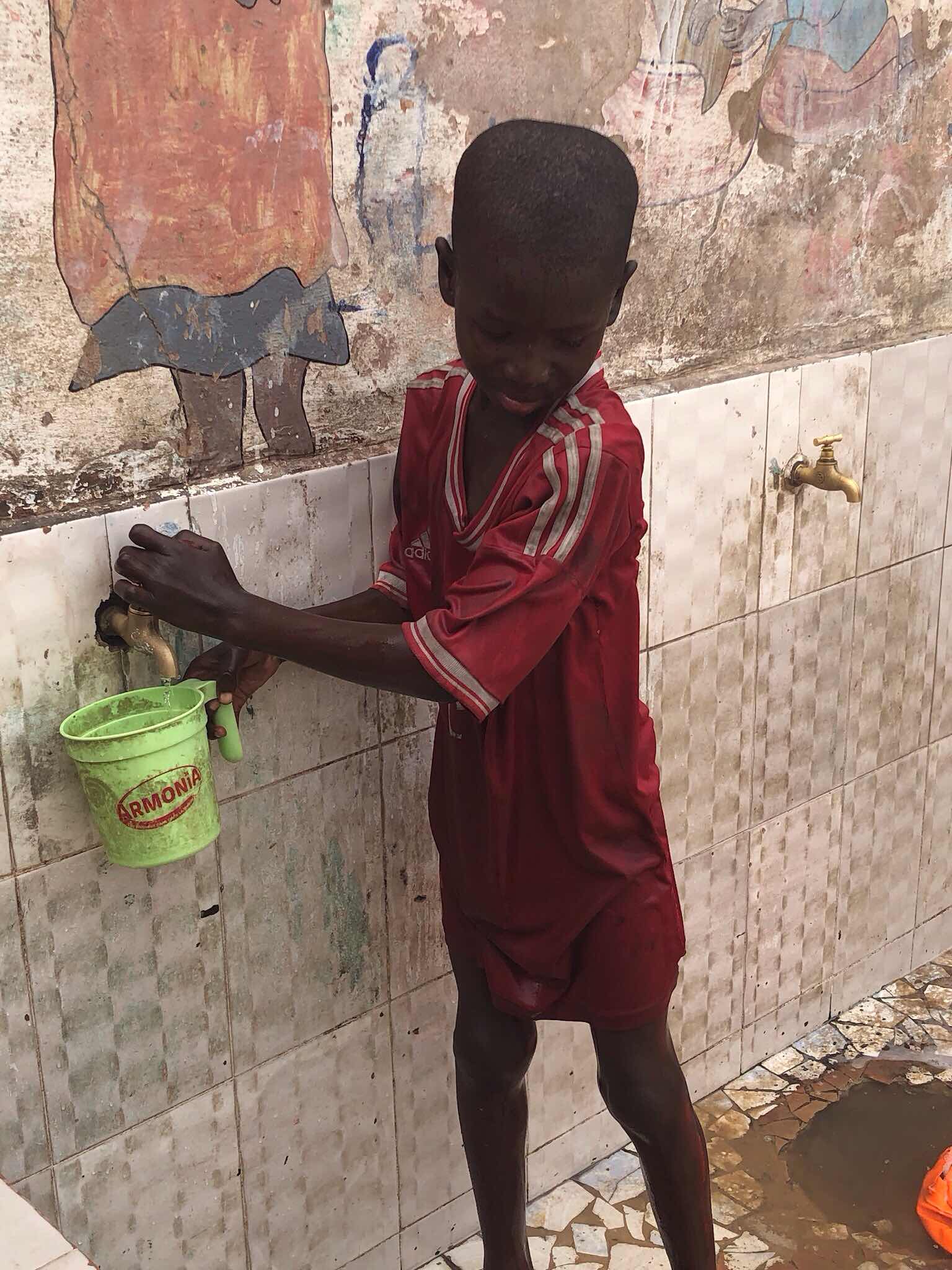
As Dad and I stepped through the familiar gates of Maison de la Gare it felt like coming home. Familiar faces appeared to welcome us. Kalidou. Elhaje. Soon followed by Issa, Awa, Adama, Abdou, so many more.  Small changes surrounded us too, like always. The bank of five toilets and showers for the talibés was gone. A pile of sand and shovels in its place. They had backed up completely, the rags worn by the kids sometimes get stuffed into the drains, so the boys can come out, clean and naked, pointing out that since they have no clothes, they need new ones. The faucets, used by many dozens of boys each day, were loose, and some of the doors, slammed beyond their capacity to endure, had been falling off. life happens. Some boys now have a bath in the laundry and drinking water area.wers


Unfortunately, the cost of the repairs will be $1800 that Maison de la Gare does not have.  Since the showers have been missing the number of talibes with more serious skin disorders has been increasing in the infirmary. There are many generous donors out there who will want to help the talibes. We'll find it. So, knowing this, we authorized the work to continue and the repairs to be made. 


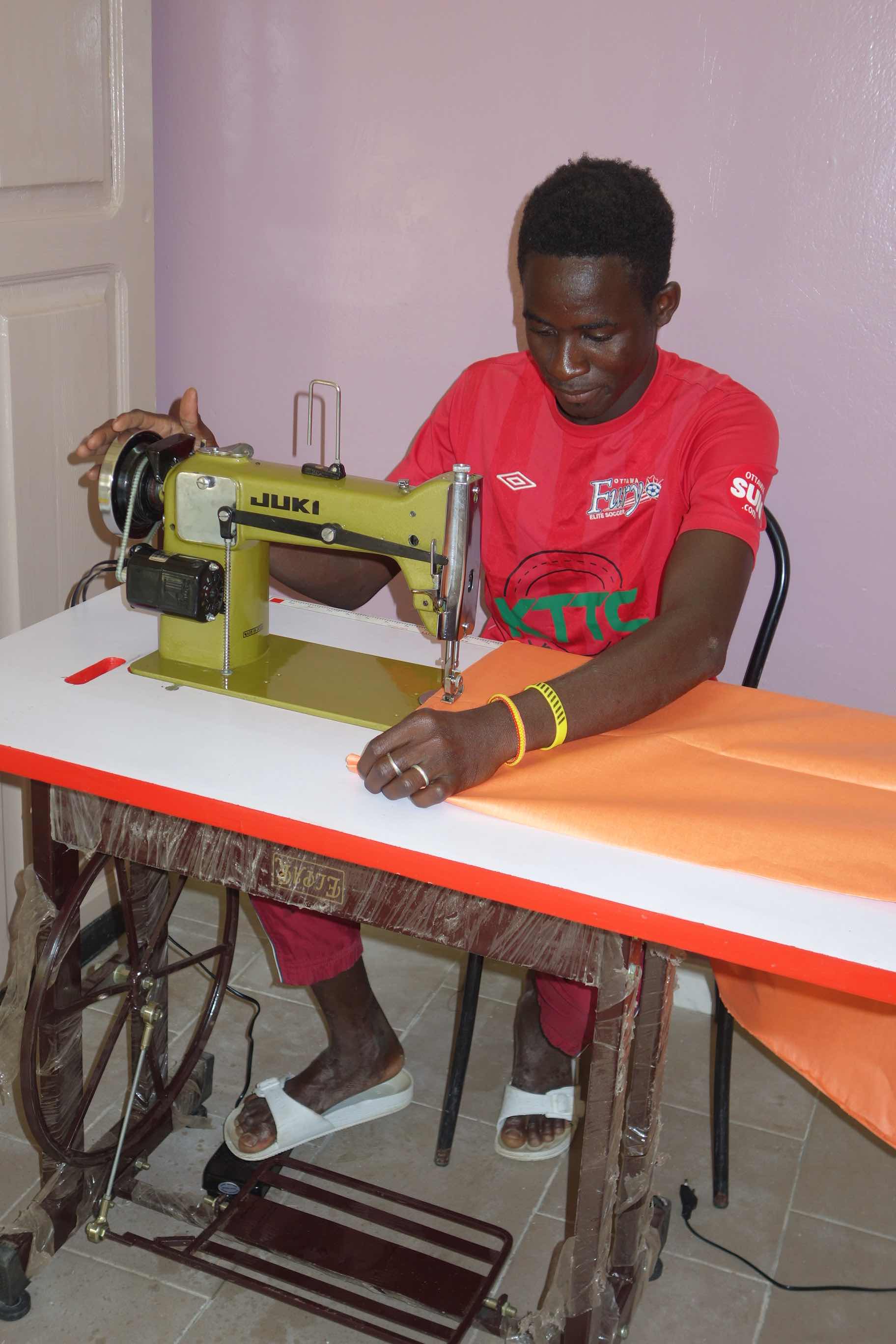
Kalidou, Elhage and Soulaymane were diligently at work in the Atellier, filling clothing orders and working on new products as part of their tailoring apprenticeship. The number of boys enrolled in this apprenticeship program has diminished, unfortunately. Kalidou says many more want to participate, as they see the possibilities for independance thanks to a reliable trade in the future. But, they still need to live now, and many of them still need to submit begging quotas to the marabouts who still control their lives. So, it seems Maison de la Gare must find a way to help the apprenticeship program become a commercial enterprise, or another source of funding must be found, generating enough revenue to allow the boys time to learn before their productivity gets to a self sustaining point - which could take years. 
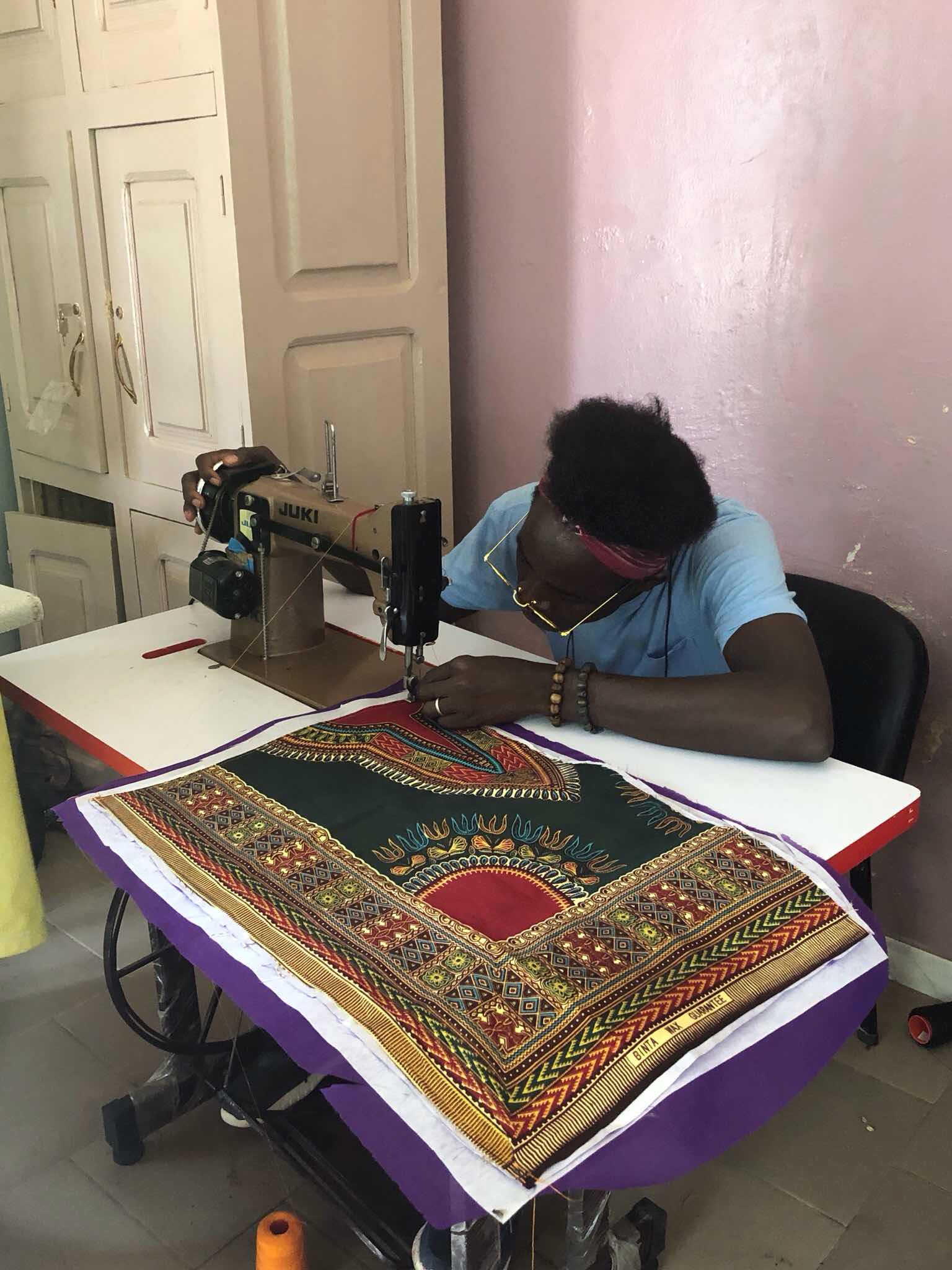

I met with Kalidou, who assists Baka (his mentor) with the tailoring program, to discuss the possibility of the boys making grocery and shopping bags that we could take back to Canada and sell to raise funds for the program. I am hoping that we could pay for the bags from Maison de la Gare and them make a profit selling them to raise money to support another Senegalese family who needs our help and whom some of us in Canada have been trying to help since last year. I sketched out three patterns of three different sizes, and Kalidou is going to work on it over the next few days. I look forward to seeing his results.


I also met with Sensei Ignety Ba, who runs the dojo where about 20 talibes are registered as members, and he supervises the karate program at Maison de la Gare, thanks to donors, mainly from my own karate family back in Ottawa at Douvris Martial Arts.  We disscussed the details for the karate tournament I have planned for Maison de la Gare. It will be Friday, all day! The mats have been ordered, five referees have been called, I brought the prizes from Ottawa and they are now here, ready to award to the winners. The morning will be devoted to a tournament with two divisions for the younger kids, featuring Keons and Kata. Then, after a break for lunch and the mosque, the tournament will resume in the afternoon featuring Kumite and Kata for the older boys. Then, a special black belt ceremony to award Boiro, the lead Sempai at Maison de la Gare, his long awaited, and well earned black belt. Sensei at last.

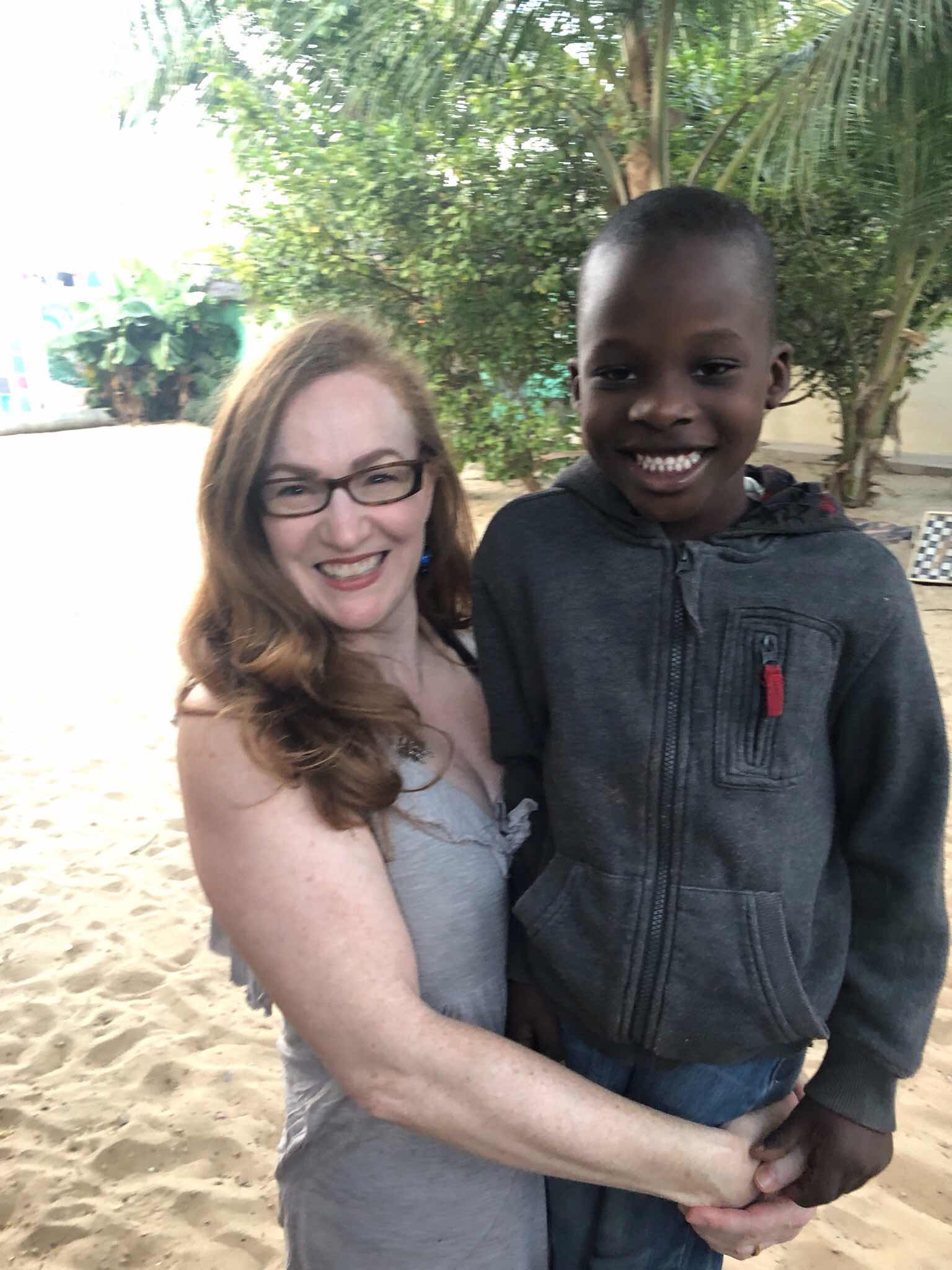
I met with my Godson, Mohammed, the son of a Maison de la Gare teacher. It was a lovely reunion. Dad and I later had dinner at the restaurent where the father of my other Godson, Djiby, works. Of course, we were welcomed as family, as always. 


Then, after midnight, when Dad was asleep, exhausted from spending the day pouring over the accounts with our Maison de la Gare partners, I went out to meet the Ronde de Nuit Team. I met Abou, who took me to pick up two volunteers, Mari from Norway, and Graciella from California, We made our way to the Gare Routiere by taxi where we met the rest of the Ronde de Nuit Team, including Idy and Mamadou Gaye. Then, dividing into two groups, armed with flashlights (and my black belt) we ventured into the back alleys and dark places in search of runaway talibe boys. 


After about 15 minutes of searching under cars, in buses, behind boxes and in dark corners, our flashlights shone on a lumpy small bundle in a back seat of a broken down bus with no glass in its windows. Idy woke the little boy, speaking to him in Wolof. He lifted the boy out through the bus window and we walked to a bench where we sat and talked with the boy. His name is Khaly, 12 years old, and he has been on the run for 2 months.  Then, the other team joined us, accompanied by two more little boys, Ousmane, age 13, and Djiby, age 7, we think. Idy spoke with them all for a while, jotting notes down in the dark, getting a piece of each of their stories.  Mamadou Gaye later told me that it is important to ask questions immediatley, and to pay close attention to how they answer. If they come out with their name, daara, home village right away, it is often the truth. If they take time to consider, it can often be a story, whereby the truth needs to be ferrited out later. 


Now it was about 1:00am, a  taxi was hailed  and I bundled the three tired little boys into the back seat of the car and then climbed in after them. Idy jumped in the front. The rest of the team follwed in another car. The boys had not heard of Maison de la Gare. and had no idea who we were, despite our explanation that we were there to help. Khaly fell asleep beside me, exhausted, Djiby sat slumped morosely, as if accepting his terrible fate, and Ousemane sat rigid by the door, seeming ready to bolt.We soon arrived back at Maison de la Gare and brought the boys to the Dortoir d'Urgence. Each was registered with the guard, they were brought some food, and then shown


 to the beds. They all seemed to relax a bit, anxiety receding. Ousemane scrambled up the ladder to a top bunk and hunkered under his blanket. When I climbed up to tuck him in, he rewarded me with the faintest smile. Khaly and Djiby took bottom bunks and were soon asleep, despite the anxiety and fear they surely must have felt about the strange surroundings and the uncertainty that faced them in the morning. After a final pat on each boy's sleeping back, we left them. I returned to the hotel to be greeted by the night guard. He wished me a good sleep. But, this night sleep would alude me.


Sunday, November 25, 2018

A Reminder - How Karate Got Started at Maison de la Gare


We are here again. Africa.  We will see the boys of Maison de la Gare soon.  

Our driver took us on a questionable short cut to the highway on the way to Saint Louis. After passing a burnt-out truck stuck in the sand, Dad and I wondered if we had slid back in time, to before we secured the reliability of SenegalLib Tours' drivers; to when we never knew if the driver had out of the way personal stops and pick ups to make along the way, or if he would take a short cut through the dessert to avoid "shake down" checkpoints, or if the brakes might fail.  But, we were soon back on the familiar road again. 

Friendly, familiar faces greeted us at Maison de la Gare. Our friend, Cheikh, the cobbler up the street, could not wait to tell us how many talibés has been newly repatriated to his village since our last visit - 56 - due to the schools he was instrumental in building. Vendors on the street called out hopefully, "Hey, les Canadiens!" and politely accepted our assertion that I would not be shopping on this trip. They welcomed us warmly anyway.  Allioune, the guard at the front doors, greeted us excitedly, updating us on his family's health.  N'Deye, the host of the restaurent at our hotel, brought us citronella tea to help us relax after our journey. We were welcomed like family at Maison Rose.


The karate tournament we have planned will be a highlight of this trip, Insha'Allah. Ignety Ba, upon confirming my arrival (word gets around) put the wheels in motion to arrange for judges and mats. And there will be more, so much more.   I came across an early picture from Robbie's first trip, when he chose Ignety Ba to hire for the karate program here, and another more recent picture of the two of them. so much has happened in three years! But first, I thought it would be a good idea to remind readers how the karate program at Maison de la Gare came to be. So here, reproduced, is the article my son, Robbie wrote last year, recently published on www.mdgsl.com and www.globalgiving.org.:


By Robbie Hughes, international volunteer, martial artist, high school student

This year's WKC World Karate Championship was all about karate, but it was also about so much more than karate. It was about choosing to be positive in the face of tough challenges and how helping each other makes everyone feel better. I was in Orlando, Florida competing with Team Canada at the WKC Worlds. I am a second degree black belt, and this was my fourth time competing at the Worlds for my country. I was also there to try and raise some money and spread awareness about the situation of the forced begging talibe street kids in Saint Louis, Senegal and how karate is changing their lives for the better. 

A few years ago when I was 13 years old, I visited Africa for the first time to volunteer at Maison de la Gare with my family. I wanted to help, to have something to offer the kids I would be meeting in Senegal. At home in Canada I train and help teach karate. So I thought, what better than to share what I love and what I am good at? I had to convince my Family and Maison de la Gare that starting to teach karate to the talibe kids would be a good idea. They had enough imagination to decide to give it a chance.  So I got busy and gathered over 75 donated karate uniforms from families and dojos in my home town, packed them up, and took them to Senegal. Once at Maison de la Gare, I just started doing karate and the kids were naturally interested. by the end of the first week, all the uniforms we brought were being worn in my daily overflowing classes by kids who wanted to learn karate. Imagine as a forced begging, barefoot street kid how good it must feel being able to wear a clean white Gi, and to be the centre of attention while you learn to take control in your life! Karate was such a success at Maison de la Gare that we decided to hire a local sensei to carry on giving classes upon my return to Canada. 

I have now been to Senegal three times to work with the boys of Maison de la Gare, register kids who show particular talent and dedication into an advanced program at the local dojo, train with them at the dojo, and coach my students to grade for higher belts. I am so proud of how far they have come, and the dedication and passion many of them show for the sport we both love. I am looking forward to my next trip to Senegal to see my karate kids and to work with them again.

Now, at the World Championships I decided to spread the word beyond my home city, to let people know how karate is so important for the kids at Maison de la Gare. I showed a video of the kids training in Africa, outside, under the sun in 40 degree temperatures, never complaining. In the pictures I showed, the karate kids were happy, and determined, and looked like they were giving karate everything they had. All of us who were competing at the Worlds also give karate everything we have. But, we are never alone in pursuing our dreams. our parents and our senseis support us constantly. Parents drive us to hundreds of training practices and dozens of tournaments each year. They cheer us up and convince us to carry on when we are in pain and feel like we have had enough. They do our stinky laundry and pay our coaching fees. They cheer for us at our grading ceremonies, congratulate us when we win, and console us when we do not. And our coaches help us push hard, dig deep to find our best selves, share in our glory and support us in our pain and losses. 

The talibe karate kids have none of this support. They show up to karate classes after 8 to 10 hours of forced begging, having had very little to eat. No parents or coaches encourage them to persevere. They scrub their own gi's by hand and hang them to dry at Maison de la Gare. They feel the same pain and disappointments my teamates and I do, but have only themselves to look to for motivation and determination. When they achieve higher belts and win at tournaments,  parents are never cheering from the sidelines. And yet, they are as passionate about karate and as dedicated as I am. We can learn so much from these amazing kids. I certainly have. The Maison de la Gare karate kids have taught me that no matter how tough lives challenges become, it is always possible to take back some control and choose to be happy. And, there is always room for doing what you love.


Sometimes we can help make a difference for other people who face challenges outside their control, and sometimes we can fight for a little more control in our own lives. And, when things happen outside our control, how we choose to react is always within our control - we can choose to be happy. We can do what we love.


Saturday, November 24, 2018

Helping Hands Across the Ocean


I am on my way to Saint Louis again; this time its me and my Dad. Our luggage is packed, as usual, with many donated karate gi's, and supplies for Maison de la Gare.  Our own belongings are squished into tiny carry-ons - I learn to pack lighter with each trip I take. This time I have had to make space in our baggage allowance for a few extra special items.

There are two large trophies packed safely into my luggage, The Douvris Karate Cup, and The Douvris Young Guns Karate Cup. These will be the Grand Champion prizes for the senior and junior divisions at the Maison de la Gare karate tournament I will be hosting this week. And, Douvris Martial Arts has donated medals for the competitors. The karate kids of Maison de la Gare will be invited to compete, to demonstrate their skills and passion for karate, and to vie for gold, silver and bronze medals. The junior and senior overall champions will have their names engraved on the trophies, their glory permanently displayed. Robbie envisions these trophies having layers added over time as future competitors names are added...The Senegalese Stanley Cup of Karate.  In this case, The Douvris Cup.

The Douvris Young Guns Karate Cup was conceived to honour the efforts of junior members of the Douvris Tournament Team to support the Maison de la Gare karate kids. Robbie Hughes first founded the Maison de la Gare karate program three and a half years ago. Since then, others in our Douvris dojo family have gotten involved, sponsoring kids to enrol at the dojo in Saint Louis, sponsoring tournaments, and contributing to the supplementary nutrition program.  


For the past two years, two young Douvris students, Kaylie and Keagan Goosen, have saved their allowance all year long, saving enough money to sponsor a child to join the dojo each year.  They were inspired by Robbie's dedication to the Maison de la Gare karate kids. The story of the forced begging street kids touched them, calling them to take action themselves. Recently, Kaylie requested donations to Maison de la Gare instead of birthday gifts for herself at her birthday party. As a result, enough money was raised to help sponsor this special karate tournament this week. 


Kaylie, Keagan and Robbie's contributions, and their commitment  to helping the kids of Maison de la Gare benefit from the opportunity to practice karate and do what they love, is continuing to inspire others to give. This week, the three of them together made a presentation to the Douvris Tournament Team to encourage them to request donations for Maison de la Gare in place of some birthday or Christmas gifts. And, Keagan challenged his "Young Guns" teammates to save their allowance to help others, as he and his sister did. Their passion is already spreading; another girl will be asking for donations for the karate kids of Maison de la Gare in place of birthday gifts at her party this week too. 

I am excited to share the story of the commitment and support of the young Douvris karateka with the young Maison de la Gare karateka. I know this peer support will feel as special to the kids of Maison de la Gare as it does to me. Hands reaching out across the ocean, the sharing of a special passion among children from two different worlds. Different, but the same.


Friday, April 27, 2018

Elhage


Elhage grew up in The Gambia, in the village of Diagha, with one brother, six sisters, his parents and his grandfather. When he was ten years old, Elhage's parents sent him to Saint Louis with the head of a daara, a forced begging marabout. There is no school near his village, and a Quranic education with this marabout was the only opportunity Elhage's parents had to educate him.  Elhage says that if 
there had been a school near his village he would have remained at home to go to school. 

His family are farmers, cultivating the land during the rainy season. Elhage says it is a hard life, and his family does not have any money. A few months after the rains, it becomes very difficult to live. And, once the food saved from the harvest runs out, they go hungry. Elhage says he wants to be able to help his family because they have nothing and they do not eat well.


Elhage spent over ten years in the daara in Saint Louis, submitting a forced begging quota to his marabout each day. He says his life was very difficult. The talibes at his daara were worried of severe consequences if they failed to submit their begging quotas. Elhage always was sure to submit his. Although, he says that as he aged it became more and more difficult to make his quota. He convinced his parents not to send his younger brother to the daara, because it was such a difficult life, much more difficult than at home.

o


Spending time at Maison de la Gare made Elhage's life as a forced begging talibe more bearable. He says the activities brought some fun into his life and the lives of his friends. And, he was able to eat better. Elhage has an optimistic spirit and nearly always has a smile on his face despite his challenging life. Seeing the chance for an education, Elhage began taking classes at the Centre. Pular is Elhage's native language. He now speaks four languages. He learned English and French at Maison de la Gare.  And, Wolof on the streets of Saint Louis. Two and a half years ago Elhage joined the karate program and later was sponsored to join the Sor-Karate dojo. He has earned his yellow belt and is close to being ready to test for orange. Elhage  says "Maison de la Gare has brought something good into my life. I feel like I have opportunity".

In 2017 Elhage returned home to the Gambia, having memorized the Quran and been freed from his obligations to his daara. He only spent a few weeks there then returned to Saint Louis. He says there was nothing for him in The Gambia, no opportunity.  Now 23 years old, Elhage more or less lives at Maison de la Gare because there is no work at home, and he felt his education was not complete. He wants to train to have an opportunity for a better life. He has joined the new tailoring training program recently launched at Maison de la Gare, along with some of his friends, other older talibes and recently freed talibes. Elhage knows it will be important to read and write and to do math if he will work in a tailoring business. He is very optimistic about this opportunity to learn a trade. He wants to become fluent in English, since that is the language of work and education in The Gambia, and French, since that is the key in Senegal. So, he continues in classes with the Maison de la Gare teacher, Aida Dieng. And, English classes with Kalidou and international volunteers. Elhage helps out around Maison de la Gare whenever he can. When runaway talibes rescued off the streets are brought to the Dortoir d'Urgence in the night by the Maison de la Gare team, Elhage helps to get them settled in. The younger kids trust him and look up to him.


According to Elhage "education and job training are the key to the future for talibes and for me." He is grateful to Maison de la Gare that he has the opportunity for both.


Tuesday, April 24, 2018

Into the Bush in Search of Education


An amazing trip to the region of M'Baye Awa yesterday. For many years we have known a local cobbler who over the years has become a friend and an inspiration. Cheikh, in turn, claims that we have inspired him. As he learned of and watched our work with Maison de la Gare over the years, he began to save his money toward building a school and supporting teachers in his home village. After many discussions with my Dad (over shoe repairs) about how education can provide hope and change everything for a child such as a forced begging talibe, Cheikh had become a believer. His idea is simple. If education is accessible locally, families will not be tempted to send their boys to cities to become talibes. Indeed, this is precisely one of the levers of change my daughter, Rowan identified in her recent project for the Oxford Global Challenge of mapping the talibe system. And he says when I asked him about the education of girls he was inspired to ensure their education opportunities also. Impressed with Cheikh's dedication to providing opportunity, my Dad and I regularly contributed to his dream, and eventually the first school was built. Then, when the ongoing challenge of funding teachers proved beyond Cheikh's means, we introduced him to Issa to bring this unique project under Maison de la Gare's wing.
Cheikh with his wife and son


We left Saint Louis at 9am. But, it soon became clear that we should have left much earlier. One hour down the well paved highway to Louga,  Then, a left turn inland to the town of Dahra Djolloff, supposedly a 34 km drive on a very badly potholed road. Although we drove carefully so as not to join the other flat tired vehicles along our route, the hours surely amounted to far more distance than was estimated. Along the way were herds of dromedaries and as many donkeys and goats as holes in the road. We were told the roads usually get repaired just before elections. So, it will be a while.


Not long after Darha Diolloff the "paved" road ended. And, not too long after that we cut off the main road onto a dirt track leading through the desert in a North easterly direction (I think). This part of the country is referred to as the bush. The first school we arrived at  was in the village of Dingelli. It had 28 students, including 4 girls. In this particular village, apparently girls marry as young as 12 or 13. So, most do not bother with school. Maison de la Gare has recently become involved  with a long term project here to try to convince parents to send their girls to school, and to help to obtain birth certificates so these kids can get National identity cards and thus someday have the option of continuing past primary school, which is not an option without papers.


About an hour past Dingelli we came to a water well. This well served an area of many square kilometres. Most villages do not have water sources on site and the women walk or drive donkey carts to collect water for their villages. We stopped at one well where two women were collecting water in traditional containers and inner tubes of tires. The ladies at the well we stopped at had babies strapped to their backs, and had travelled six kilometres to arrive at the well.


Collecting water can be nearly a full time job for the women of villages in the bush. Women also collect the firewood and prepared the food, but collecting water can take the most time and effort. I was very grateful to have the opportunity to see for myself how all consuming and difficult the collection of water can be for the people in this area. Particularly given that when I return to Canada at the end of this week I will be leading a local "Walk for Water" to raise awareness of the importance of water management issues and scarcity in places like those I visited while in Africa, and to 
raise money for a We Charities water project.


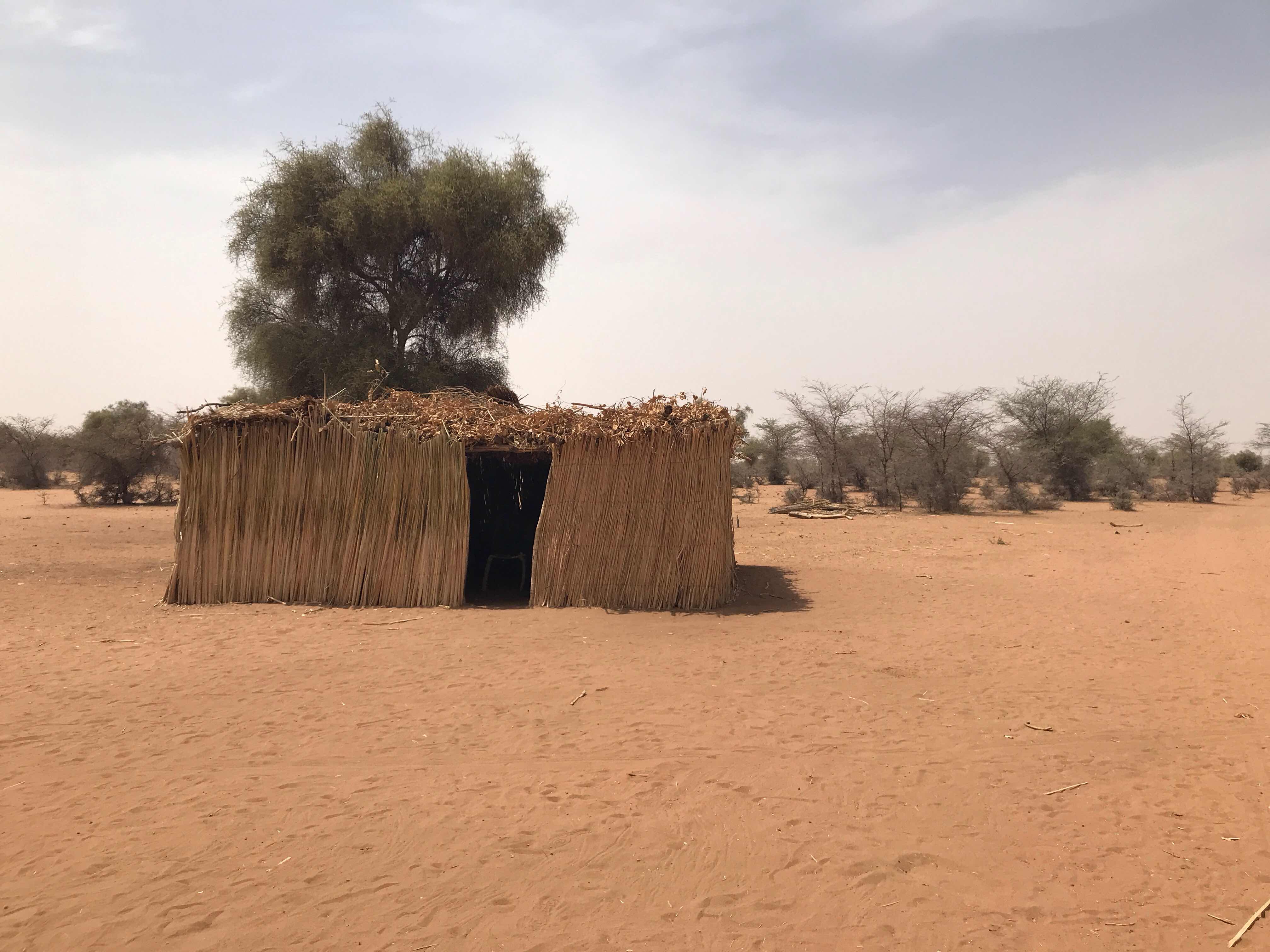
It must have been about half an hour later that we approached the area of M'Baye Awa. We visited three more local schools, built by the locals to provide opportunity for their children, as no public schools existed within many hours drive. And, the fastest mode of transportation around here is donkey cart. Most people walk. Kids were also in class at the second school we visited, at the village of Thiatgale. The buildings were constructed of cut wooden poles and grass walls. Apparently they suffer significant damage during the rainy season and are then repaired or rebuilt. Or not, depending on the means of the villagers at the time. At this school a welcoming committee of all the village mothers awaited us. We were a tremendous curiosity to this very isolated community. Of the 31 students in this school 12 are girls. And only one child in the school has papers, a girl. Many of the students in this school walk for hours to get here. They know education is important, possibly their only hope for something better. The key for any of these kids to continue past primary school will be obtaining birth certificates and papers. Most do not have them because not only is a fee involved in obtaining them, but a very long journey to register the birth. It will be an on-going challenge to convince parents of the future benefits of registering their children at birth, given the cost and effort involved.


Life in these remote villages is hard. Most women give birth at home, or on donkey carts during the long journey to hospitals. The maternal death rate is high. After the rainy season food is more abundant but at this time of the year, at the start of summer food is more scarce, and the signs of malnourishment were apparent. The distance to travel to obtain water contributes to life's many challenges here. When there is no education available, what else is there but to marry young, start a family and continue the cycle. Some boys are sent to daaras in the cities to be talibes, although this practice is diminishing considerably here since the schools were built locally. Our guide, Our friend Cheikh Diallo explained that education will help these kids to expect and to actively seek better for themselves. Education will enable change to happen here.


Another half hour journey and a few wrong turns later we arrived at the village of Medina Alpha. At this school there are 5 boys and 23 girls. This is the first of the four schools that has been planned to be constructed to be a solid walled 


school that will withstand the elements, and the leaders and parents of this village have embraced the hope offered by education. It is run as a modern school, all classes are taught in French. All the children here have papers, as this was the first school that the teachers, Cheikh Diallo, and Maison de la Gare focused on. They are currently working on trying to repatriate the boys of this village back from the cities where they have been sent to be begging talibes, a realistic hope now that true education is available locally. 


The last school we visited, at Belel Douba, sadly, no longer exists. A grass walled school like two of the others, it was soon destroyed when the teacher stopped attending the school. It did not take long for the abandoned building to be reclaimed by the elements. This school required a fee of about $3 per month per child, and when a critical mass of parents could no longer pay, the teacher stopped coming.  Meanwhile the children of this village wait for a new teacher while the parents have begun to cut poles to replace the school building. 43 children have had their education suspended, 19 girls and 24 boys. The villagers here hold out hope that Maison de la Gare can make something happen for their children.  


We finished the tour with a visit to our friend, Cheikhs own village, Oura Souene. As usual, there is no water source here and the women walk 2 kilometres each way daily to collect water. Bt the time we had finished a feast in honour of our visit and had met all of Cheikh's family, we knew we would not make it back to Saint Louis before dark. But, we did reach the "paved" road before the sun set.  As we climbed out of the vehicle after 10 pm we all reflected on our own good fortune to have such ready access to water and the other necessities of life, and above all, to education, and thus to opportunity.


Sunday, April 22, 2018

One Family's Struggle


Since I have been travelling to Senegal I have had the pleasure to know Samir Hamoudy. He was a receptionist at our hotel and had become a good friend. He watched out for me when I went on early morning runs around the island. He encouraged our work at Maison de la Gare. Sympathetic to the plight of talibes his family took the responsibility for feeding a talibe child each morning. Life was not easy for the Hamoudy family, but it was good. Samir believed in the importance of education above all else and paid to have his children educated in the private system, which is really the only realistic choice here if serious about education, due to the frequency of strikes and work stoppages in the public system. Samir regularly walked his children to school and checked up on their progress.
Thanks to Samir's family's focus on the importance of education, and a loving supportive home, his children thrived. Two of them have been consistently top of their class, and another is second. The children regularly receive rewards of merit for the excellence of their academic results, and are the pride of the director of their school.


A few years ago we visited Samir's family at their home, as invited honoured guests. The home was tiny, with one bedroom and a living room, for a family of eight people. But despite a lack of material possessions, they were happy, took great care to dress well, and seemed dedicated to each other. Their strong academic focus  suggests promising futures for the Hamoudy children.


Until one year ago, when the Hamoudy family was struck by tragedy. And, everything changed. Less than one month after we had visited Samir and his family in their home, Samir passed away after a short illness of lung disease. The children have been devastated to lose their loving father. The youngest, three year old Mohammed continues to ask when his papa will come home from the hospital. But this family must deal with so much more than grief and loss. Their life as a family and the future of the children is at terrible risk.

Samir's wife, Oumou cares for her six children at home. She did not work outside the home. The oldest, Fatou is 17, in high school. And, there are 5 more who range in age from 2 to 13: Mohammed, Kader, Lamia, Lala, and Fadel. In December we visited Senegal and learned of the family's loss. When we met with the family we and a generous family in Canada moved by the tragedy offered help to Oumou in the way of a financial contribution. She used that money to begin a small business, buying and re-selling shoes and other goods. Without means the family cannot possibly survive. School fees would not be paid, food could not be purchased, the rent for the tiny house even seems impossible. Now Oumou can usually pay most of the rent with the money she earns from her business. And sometimes some of the school fees. However, the cost of food for seven people, even with them tightening their belts is about double her monthly earnings. And, annual school registration fees will be due in October, an insurmountable amount for six children.


The family had a bit of money left from help received by Samir's employer and friends when he first passed. And, relatives of Samir's have thus far assisted with school fees and some food. But, this cannot last. Thankfully, due to the charm and academic potential of the children the director of their school offered to discount the annual registration and monthly fees for the children until the end of their primary education. But, even with this help, school fees of several hundred dollars annually amount to about a third of what Oumou can hope to earn in a year.  And, food for her family is beyond her means. Her acquaintances and relatives are encouraging her to get a job. But, it is unlikely she could earn more than what she does with her small business. And, it would mean disbanding her family, billeting the children out with various relatives, and withdrawing them from their school. Maybe the older kids would have to work instead of study. The kids would survive, but the the family would be finished, as might be the dreams for a better future for these bright and promising children. This path is what would be expected here. Such personal tragedies are not uncommon. People are sympathetic and likely to remark on how sad it is that such a family, and children with such potential must have it doused by fate. But, what else is there to do, after all. Such turns of fate are accepted by most.


But, Oumou is a fighter. She said to me that her children will only be separated from her and from each other over her dead body. She said she will fight for them as long as her body has breath. So far Oumou seems to have sheltered her children from the fear of what the future might hold for them. They miss their Dad, but they have no idea that their lives as they know them could soon be pulled out from under them.

There must be a way to help this family, to help sustain them until the children advance through school and are in a position to secure their own futures. Maybe crowdfunding? Maybe something else? I do not know. But, I am moved by Oumou's passion and the children's promise  to agree that this is going to be something worth fighting for.


Saturday, April 21, 2018

Talibe Day, a time to celebrate, even in sadness


World Talibe Day is celebrated all over Senegal, and it was certainly well celebrated by the talibes of Maison de la Gare. 

Talibe Day is a holiday for the forced begging street kids of Senegal. Not for profit organizations, including Maison de la Gare, put on special programs for the kids to enjoy, including games to play and food to eat, maybe even new clothes.  A few demonstrations were organized by some associations to raise awareness about the plight of the talibes. But, for the hundreds of talibes at the Centre on this day, it was a chance to relax and enjoy a party.
The day began as most other days. Not long after the doors of Maison de la Gare opened kids started to trickle in. The trickle soon increased to a regular stream. At about ten o'clock karate kids started to arrive and put on their gi's in preparation for the Friday morning class. As the kids and I gathered on the sand with Sensei, board games were beginning under the grape vine arbour in the garden, while other boys climbed the vines as a jungle gym. Some kids made their way over to the infirmary for treatment of their ailments and some TLC from nurses Abibou and Awa.


I had not realized it until this day, but terribly, the little malnourished talibe living in the shelter, Seydou, had disappeared the night before while I was out at the dojo. A frantic search of  several hours around the neighbourhood revealed nothing. A report was made to the police, but there is not much hope of finding him that way. Why would he have run? Seydou was developing a close trust relationship with an international volunteer and seemed happy to be at Maison de la Gare. Could he have been taken? Did something spook him? How can we know, and how can we find him? He could not possibly survive for long on his own given the weakened state he was in. Such a disaster at home would be all consuming, bringing life to a stop. Here, it seems to be another sad but not uncommon African tragedy. Hopefully Seydou will be found and return to this safe place.


Meanwhile, children continued to arrive. Many watched the karate training in action. One adorable little boy on the sidelines practiced his own version of oisuki, a future karateka perhaps. Other talibes began an enthusiastic 

game of soccer. As the soccer ball disappeared over an eight foot wall, soon, too did a tiny little talibe boy hoping to retrieve it, which he did. 


In the afternoon even greater numbers of kids arrived at the centre. Both classrooms were full of students concentrating on their studies while outside the party was ramping up. Maison de la Gare educator, Abdou Soumare  organized music broadcast through loudspeakers while he and older talibe-in-transition leaders took turns with the microphone acting as Em Cee to the joyful crowd. Amazingly, the students in the classrooms continued to devote themselves to their studies throughout the commotion and excitement happening just outside the window. 


Lala Sene, a regular volunteer at the centre, and a member of the National womens soccer team led a soccer tournament while a dance party started up in the sand nearby. Whenever a team scored, everyone erupted into wild cheers and applause. Then the game and the dancing would resume. As the classes and games progressed, Oumou the Maison de la Gare cook prepared the sandwich filling/  to feed the crowd. Older talibes assisted in chopping peppers and other ingredients to add to her pot.

Abdou took over the microphone, leading the kids like the pied piper around the Maison de la Gare compound while the Maison de la Gare staff and older talibes helped out frantically preparing sandwiches for hundreds of hungry celebrants.

Eventually the soccer winners were declared, the grand trophy was awarded and circulated around the centre in a victory lap, the winners were properly adored and celebrated by the crowd, then the dinner line formed. It seemed impossible that there could be room for everyone, or that the meal could be handed out in any kind of calm or order. But, the seasoned Maison de la Gare staff had done this before, and all were fed. As the last sandwiches were served, Abdou ramped up the music once more and dancing resumed despite the late hour and the dark. Even my Dad went a little crazy, dancing like a teenager. This was a time to let some of that pent up emotion out. Understandably, no one wanted this magical party to end and volunteers, staff, and talibes alike set aside their worries for a momment and joined together to just celebrate life for a little longer.