Followers

Showing posts with label #Senegal. Show all posts

Saturday, June 25, 2022

A travesty Against Humanity


On this day that the U.S. Supreme Court threw woman's rights back nearly a century in the United States, I feel ready to write about this other assault upon human rights in general, and women in particular. Another form of modern slavery in Senegal. Learning about this at the same time as the terrifying SCOTUS mistake feels unbearably too much.


“My name is Sokhna. I live in the village. I am  11 years old. I am a student going to school and I live with my mother, my father and my sister. I am the first one in my family to go to school. My sister married very young. In my village parents give the girls in marriage when they are 12 years old. I am becoming afraid that I will be forced to be married and not allowed to continue going to school.”


- name and details changed to protect her identity


I have been reeling since I opened the envelope our friend handed us the night before last. stuffed full of written testimonies of young girls. Children testifying about their forced early marriages, and their fear of being forced to marry far too young and forced to end their education and dashing their hopes for the future. This was just one of them. It is too much.


Okay…I was not ready. It is now the next day. I am trying again. 


Where do I begin?


Several years ago our friend, Cheikh let us know he was trying to build a school in his village. He said he was inspired by watching us year after year helping Maison de la Gare help the talibés. Many talibés come from his village and region. There are no schools there. So parents felt their only hope of education for their children at all was to send their sons to to the city to daaras to learn the Quran. So… building a school can change things, he thought. And he started saving from his long days working as a street-corner cobbler. When we found out about it we started helping him. The first school was built. Then, this became a Maison de la Gare-associated program.  More years of savings and the villagers “bought in” and more schools were built. Then one special donor in Canada found out about it and that has enabled hiring more teachers.  
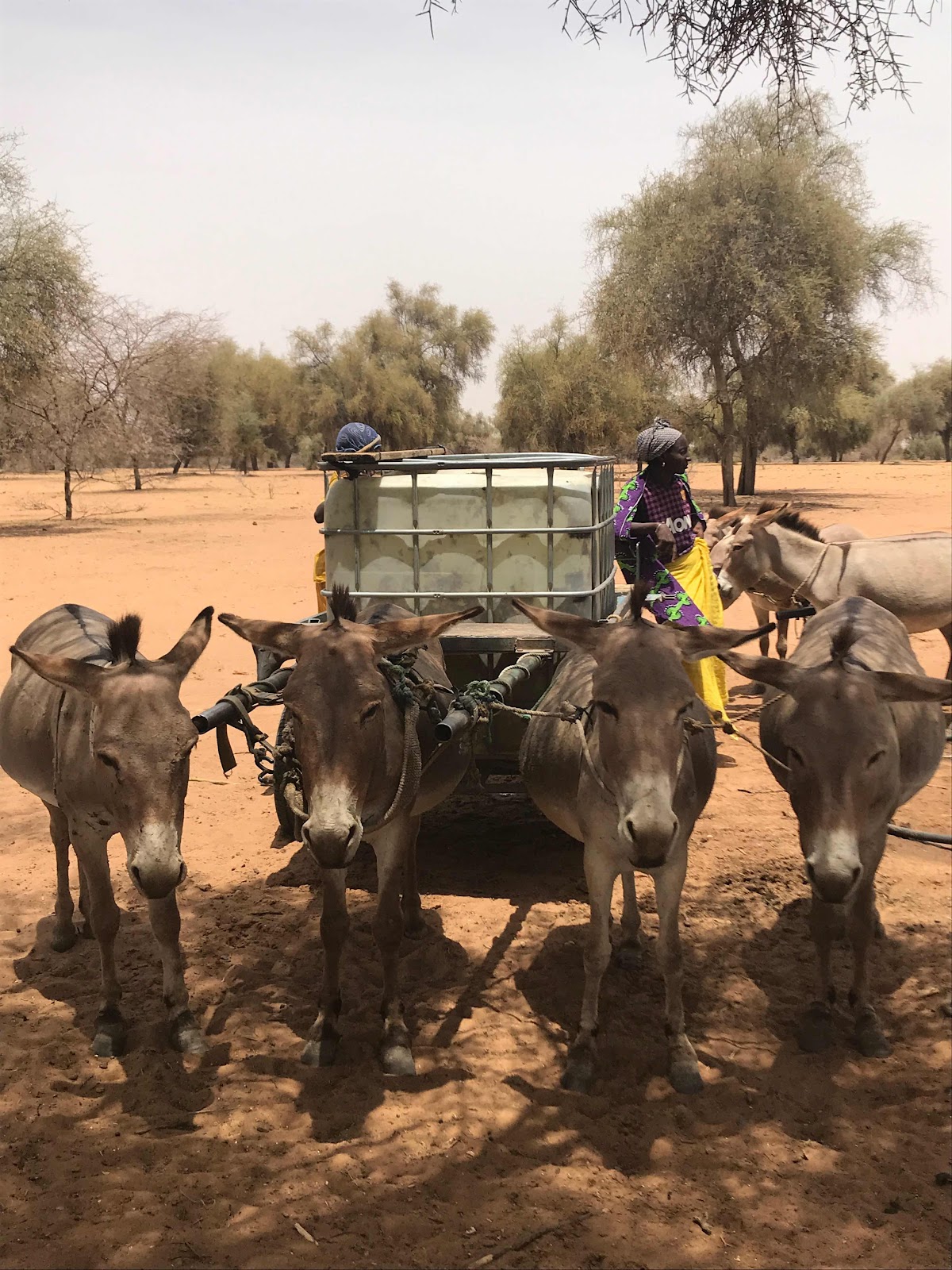


a scene on route to the village region


When we visited several years ago we saw the schools in action, met the talibés who had returned from forced begging on the streets, met the girls who were attending school for the first time ever, because now that is a possibility for them. Turns out they were all beyond hungry for it, and are the most dedicated students. Here is a version of an earlier blog post published for Maison de la Gare about the project: 


Into the Bush in Search of Education


Now, after years of a campaign to obtain documentation for the children, a lengthy process attempted one by one that enables them to write state exams, annual trips to the nearest city to write the exams are becoming normalized. This year, 65 students are writing their exams at various levels. 31 boys and 34 girls. 12 of the boys used to be forced begging talibés. This is an incredible achievement. Almost an impossible one! Hundreds of children, including girls are being educated and documented, and many dozens of talibés are being repatriated. This Senegalese, grass-roots project has sown dramatically more success for dramatically less investment of money, than any international development project I have ever read about.


But of course, each success opens another pandora’s box, and then leads to much more to do.


When my daughter Rowan researched and wrote about the forced begging talibé system, she noted the history, the various actors, and the possible levers for change. She also speculated based on observations and conversations from our trip to visit the schools the the talibé system likely contributes to the practice of early forced marriage and polygamy. When boys disappear from the villages at an early age and rarely return, and there are no schools, marrying the girls left behind to older men, multiple girls to each man, may have seemed a logical, perhaps even the only choice to the villagers. We did not really know how widespread child forced marriages were. It was just talk. But it seemed a logical conclusion to assume it happened regularly. Here is a much abbreviated version of Rowan’s report that was published for Maison de la Gare: 


Who are the Talibés and why do they Beg.


Rowan and I speculated that by building schools in the villages, not only would talibés be repatriated, but girls would also begin to study, to discover, to learn about human rights. Ideas would spread. And, there would be boys their age to marry, in equal numbers once more. Perhaps pressures for forced early polygamous marriages would eventually also diminish. Change could come for girls as well as for talibés. Schools in the villages could be the key to ending two forms of modern slavery.


With the envelope of testimonies we received this week, the theory about forced early marriages ceased to be talk. And our speculation that education would bring awareness and opportunity and could lead to change has been proven out! This feels very important. 


But, we are now in the time between awareness and opportunity, and the change to come. This is surely the hardest time. The traditions of child forced marriage remain. But the reasons for it do not, thanks to the schools built in the villages. Change is being called for, but it has not yet happened. I have no doubt that it will come. But, in the mean time the testimonies in this envelope I am holding in my hand, and the pictures of the hopeful, newly educated young faces looking as if into my eyes, what of them? 


Do we console ourselves that they are bringing the change that will benefit their daughters? While I know that to be true, it is also hard to swallow. 


It will be harder yet to wait for the change surely to come when next weekend we travel to meet the students writing exams and to the village, and the eyes we are looking into are real, and not photographs.


“My name is Aïssa. I live in the village and I am 12 years old. I am a student at the school. I live with my father and mother and my brothers. My father wants to give me in marriage but I refused, as I want to continue with my studies. I have even spoken with the old man he wants to give me to and explained I want to study at school. It will not be easy, but I am determined to fight to continue to study. I am also determined to fight against forced child marriage. But I can’t do it alone.”


- name and details changed to protect her identity


In the desert and bush regions there are camels and sheep but no schools


Monday, February 21, 2022

Opportunity Knocks


2021 has been such a difficult year for the talibés, forced begging street boys, of Saint Louis and the staff of Maison de la Gare who strive to make their lives better and help them find hope for a better future. Again.


Covid 19 initially closed the Maison de la Gare centre and dramatically affected the talibés ability to find enough even to eat. Eventually with the help of donors, Maison de la Gare was able to help feed the hungry boys during periods of lock-down. Later, the Center was able to reopen and talibé could return to spend a few hours a day playing, learning, seeking solace or health care, and just be children.


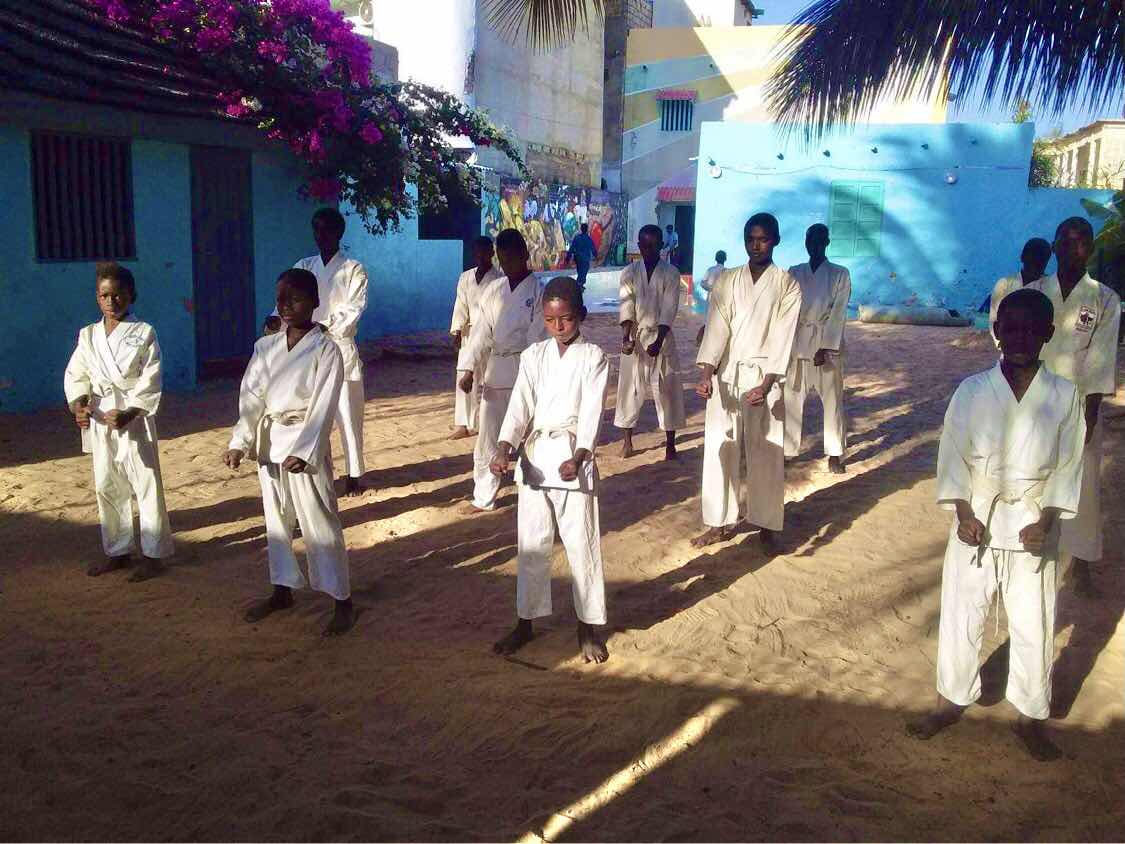
Best of all for the young martial artists of Maison de la Gare, karate could resume. the clean, white gi’s came out of storage, white and coloured belts were wrapped around torsos once, the sand was raked and swept of shells, pebbles and twigs, and the karateka lined up under the African sun once more. Yoi. Ready in anticipation for the instruction of their Sensei.


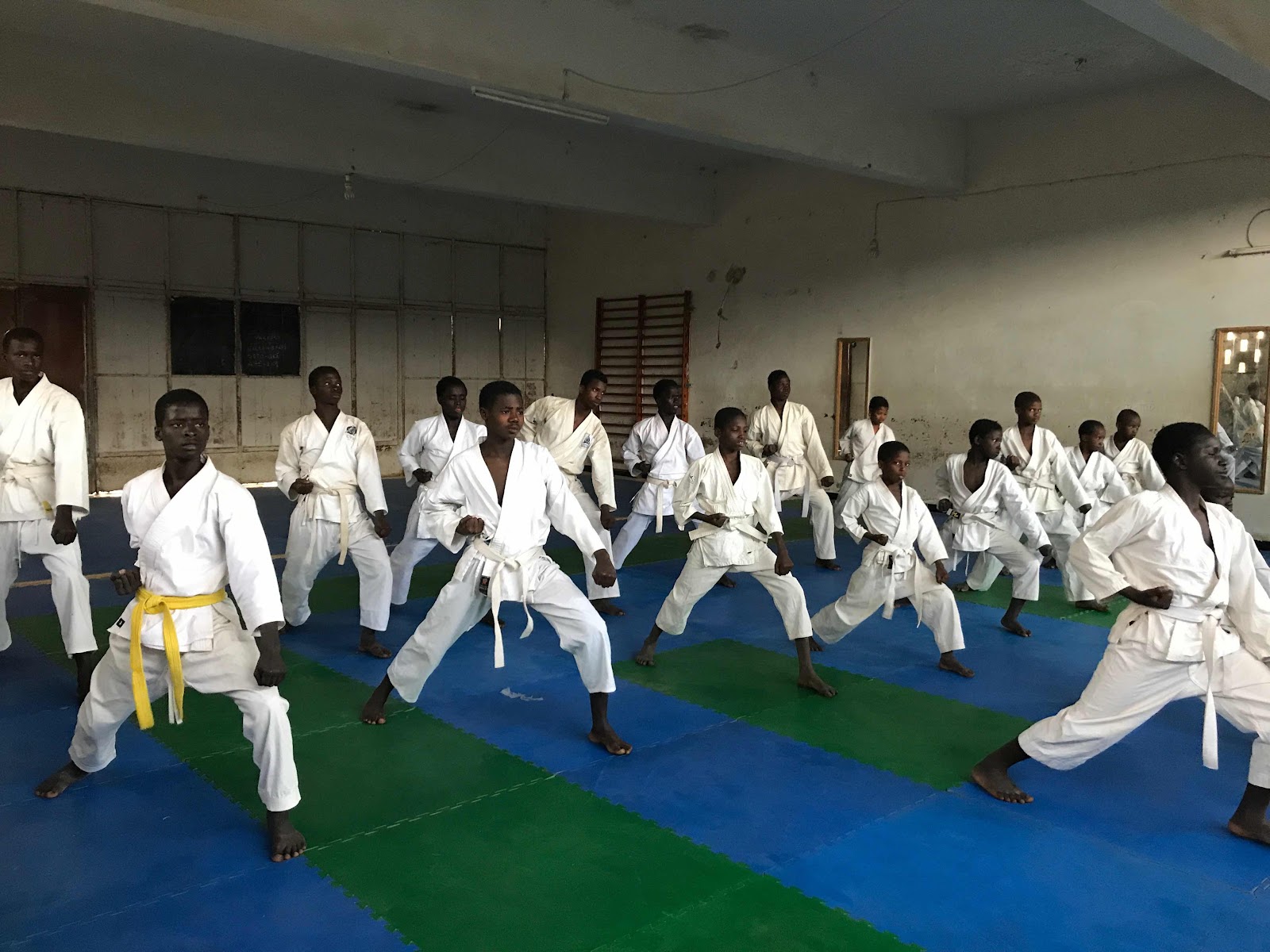
This December, excitement about karate was heightened as a few of Maison de la Gare’s long time karate students, Ahmadou and Adama, and the Center’s instructor, Bouaro were invited to compete at a rare International Karate Tournament being hosted in Saint Louis on boxing Day, December 26. Ahmadou and Bouaro competed in kata divisions, while Adama competed in kumité. For any martial artist, a karate competition is an exciting opportunity. For talibés, it is an absolute life highlight. More than an opportunity to excel at their sport and test their skill, competition tests a karateka’s perseverance, courage, determination, and offers incredible opportunity for personal growth. It is also an opportunity to shine on the mat. To be applauded as a hero, win or lose. For talibés who live most of their lives neglected, overlooked or pitied by much of society, the positive impact of applause and admiration, let opportunity to be in the spotlight can hardly be understood.


Bouaro, Adama, and Ahmadou enjoyed their glorious day of competition. Cheered on by Maison de la Gare supporters and their fellow karatekas, the day of competition will not soon be forgotten by the competitors.  And it will be remembered by the spectators who watched these young people putting everything they had on the mat, demonstrating their skill with unusual passion and determination, inspiring other talibés that it is possible to rise out of the invisible crowd and shine, that glory is possible if one is willing to work for it. 


There are over 40 of the talibés who are more advanced and particularly committed to elevating their karate skills, who are registered in the local dojo, Sor-Karate. They are anxious to renew their memberships at the dojo and be able to continuing to practice the martial art they have come to love, that offers them a sense of self worth, confidence, self respect, and belonging. January each year the karate licensing and dojo membership renewal fees are due. Continuation with the program depends on the generosity of international donors. A gift of $100 Canadian will renew a child’s karate membership for a year, enabling them to test for higher belts, and participate in a supplementary food program while training. More kids who have been participating in the morning karate classes at the Maison de la Gare center are ready to join the dojo as well. Their hopes being fulfilled will depend upon the generosity of donors. 


Thank you to our generous donors for helping to bring the opportunity that participation in martial arts offers, to the talibés of Maison de la Gare.


An Oasis During the Pandemic


In March of 2020 Covid-19 hit Maison de la Gare like a freight train. Our planned visit was cancelled at the last moment. International volunteers evacuated the country. Other planned volunteer visits and the revenue they bring were cancelled. Travel between regions was prohibited, trapping vulnerable talibés children in the cities in their darras. And, the cities locked down, instantly eliminating the source of food for tens of thousands of forced begging street children.


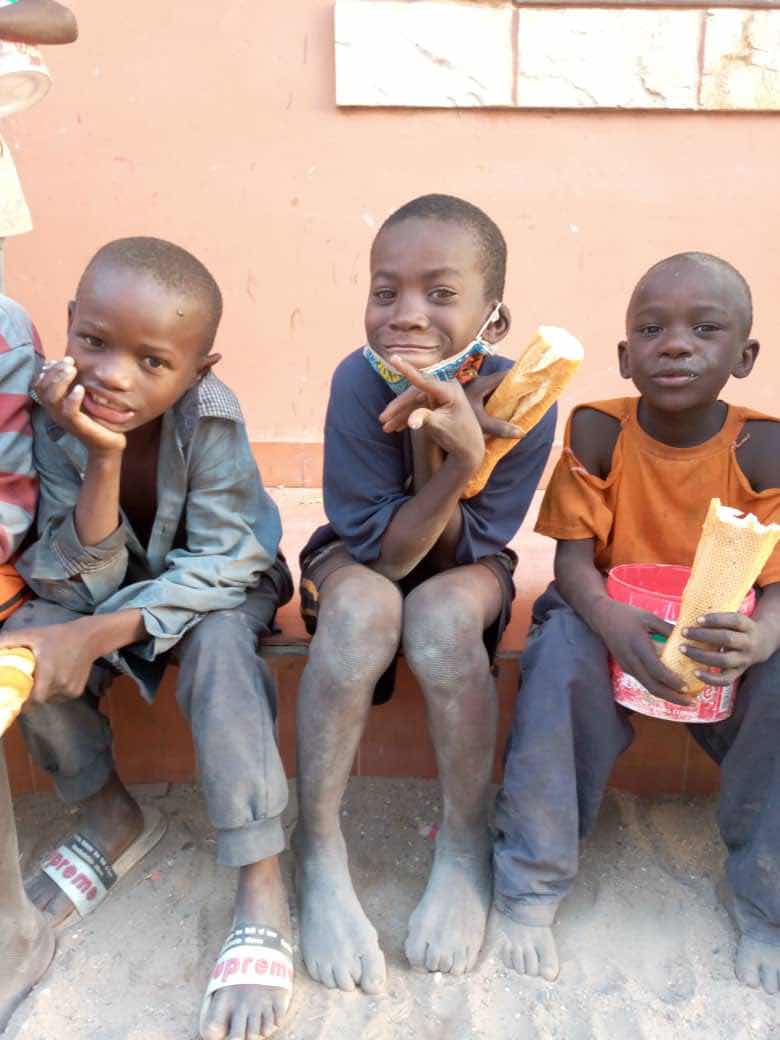
Early in the Pandemic, Covid-19 was not the primary danger in Saint Louis.  With travel and all activity stopped in its tracks, cases were few. But, the economic devastation was swift and deep. Many Senegalese lost their work and income. Many could no longer house or sufficiently feed their families. For the vulnerable talibés, already victims of abuse, neglect and modern slavery, things became so much worse. Within days of the first lock downs, the streets of Saint Louis were empty of all but hungry talibés, desperately sorting through garbage heaps for anything at all to eat. With the help of generous donors, Maison de la Gare was able to continue to pay its staff, but the Center had to close. The only refuge for thousands of talibés was lost to them. 


Maison de la Gare soon was able to pivot and respond to the new dangers to talibés. Neighbourhood cooks were rallied, international donors responded, and first hundreds, and then thousands of meals each day were cooked and delivered by Maison de la Gare staff and older talibés 


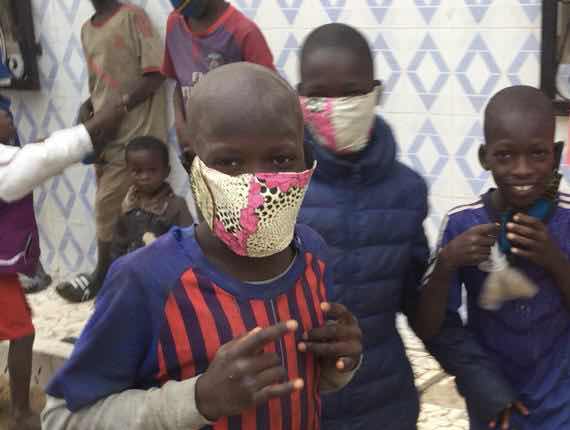
to the daaras where the boys lived. Starvation for many talibés was avoided after all. Apprentices in the Maison de la Gare couture program sewed massive quantities of masks. Maison de la Gare teams delivered cleaning supplies and masks to the talibés in their darras and taught them to protect themselves from the Covid virus.


As time passed, Covid did make its way more dangerously into Senegal.  After months of experiencing  few cases, economic activity began to  resume in Saint Louis. people returned to their daily business, even if at a diminished rate. Talibés went back to begging, the Center was able to open again. But, as vaccinations became widely available in the Global North, travel began to resume. And with it, Covid began to spread and take hold.


Now in Senegal, hospitals are full. So many people are sick, and everyone seems to know someone who has died of Covid. But, unlike in the North, the hope offered by vaccines is not available to most in Senegal. The supply of vaccines only trickles in, and Covid continues to spread.


But now, knowing how to better manage the risks of Covid, life at Maison de la Gare continues. Masked, and distanced, but it continues. Food and water and cleaning supply costs are higher than ever at Maison de la Gare. But, talibé children are able to tumble through the gates each day in twos and threes, or alone. They wash their clothes and themselves.  They enjoy a meal they do not need to beg for. They visit the infirmary, sometimes to have serious conditions treated, sometimes just for some much needed tender loving care from the health care workers. The put on clean, white uniforms and practice karate. They play soccer. They attend classes and learn French and math. They play, relax, and just get to be children for a few minutes or hours. 


Some of the Maison de la Gare team have managed to get vaccinated. Others are registered to get their jabs, waiting their turn. But, it could be a long wait. People are scared. And vaccines are scarce. Nevertheless, Maison de la Gare staff are doing all they can for the vulnerable talibés, most of who are too young to be vaccinated, even if the supply were available. We have often described Maison de la Gare as an oasis for the talibés. During the Covid-19 pandemic, the oasis provided by Maison de la Gare has proven to be more important than ever, offering more than hope…helping to sustain life itself.