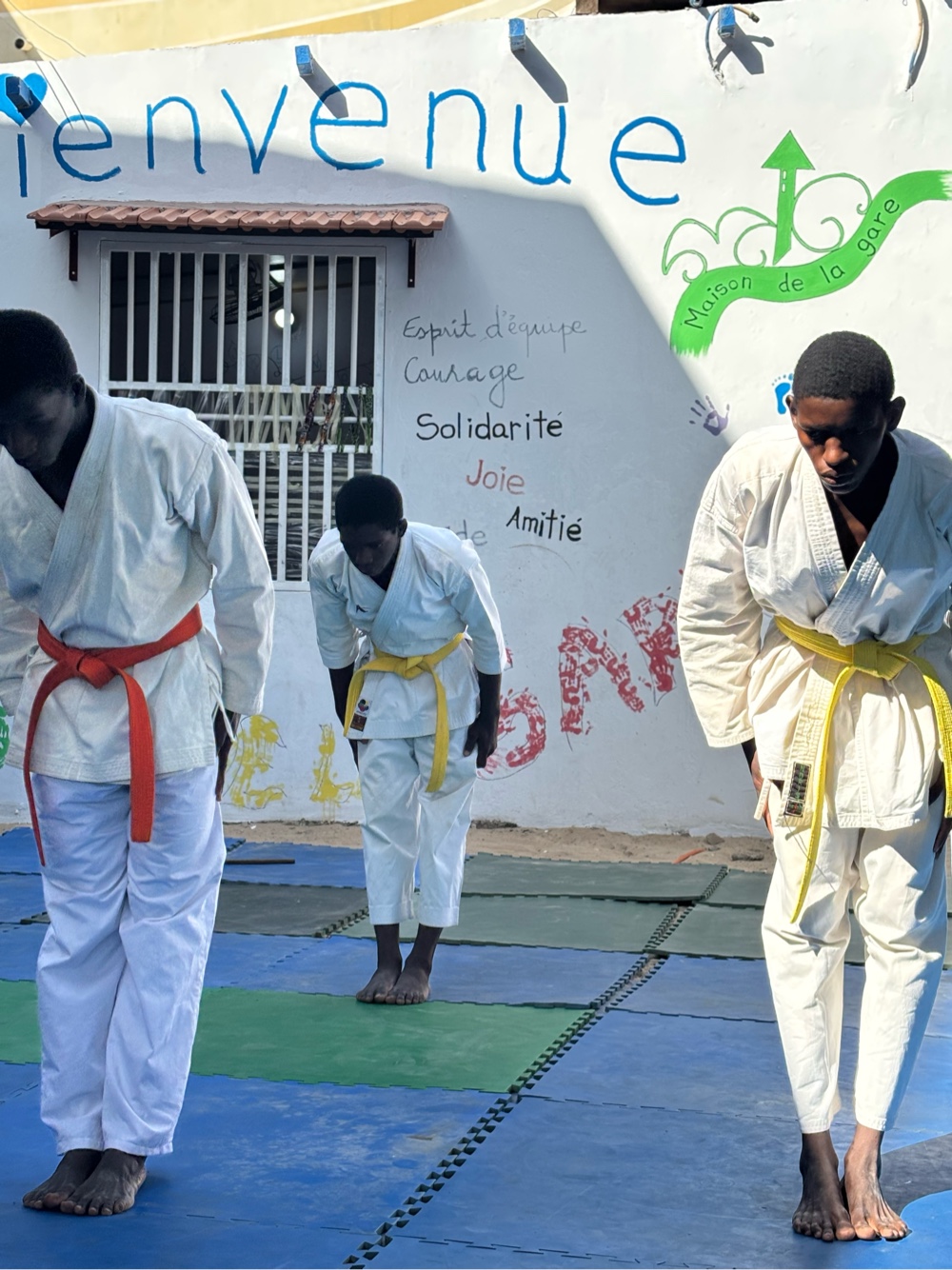
Karate is an important part of my work in Saint Louis, in partnership with my son, Robbie Hughes. Its a passion project for both of us. Robbie established the Karate program at Maison de la Gare over a decade ago, soon after he had earned his own first black belt, during his first visit to Saint Louis. Since then, many challenges and triumphs later, many hundreds of talibés have donned clean, white gi’s, and grown into a strong sense of discipline, self respect, and confidence. Not to mention they have learned skills to protect themselves on the sometimes unforgiving streets.
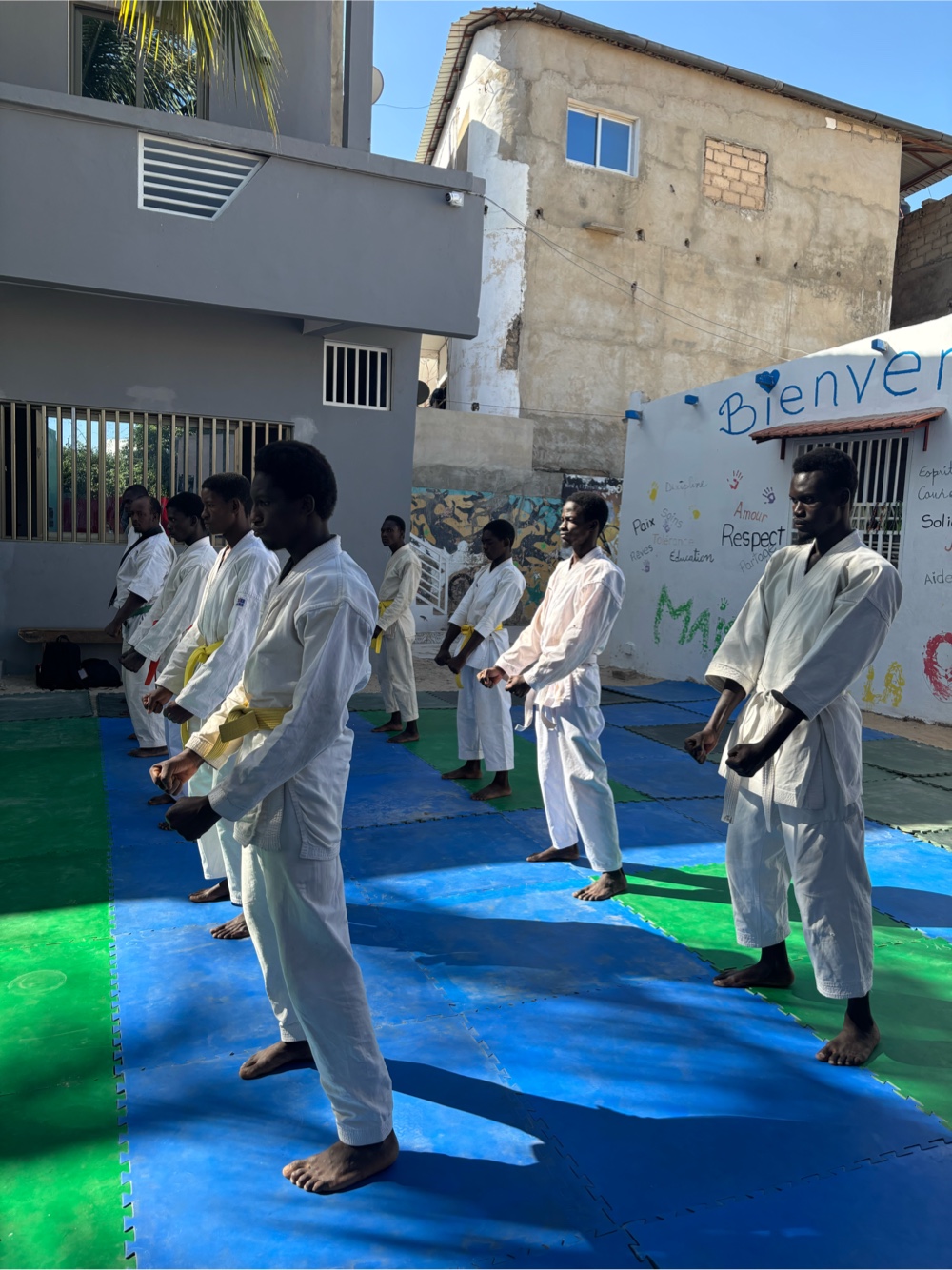
As Robbie was not with me, and we had limited time, we did not host our usual full day martial arts tournament on this trip. Instead, we held a grading ceremony for the karatekas who had recently successfully completed their passage to higher belts.
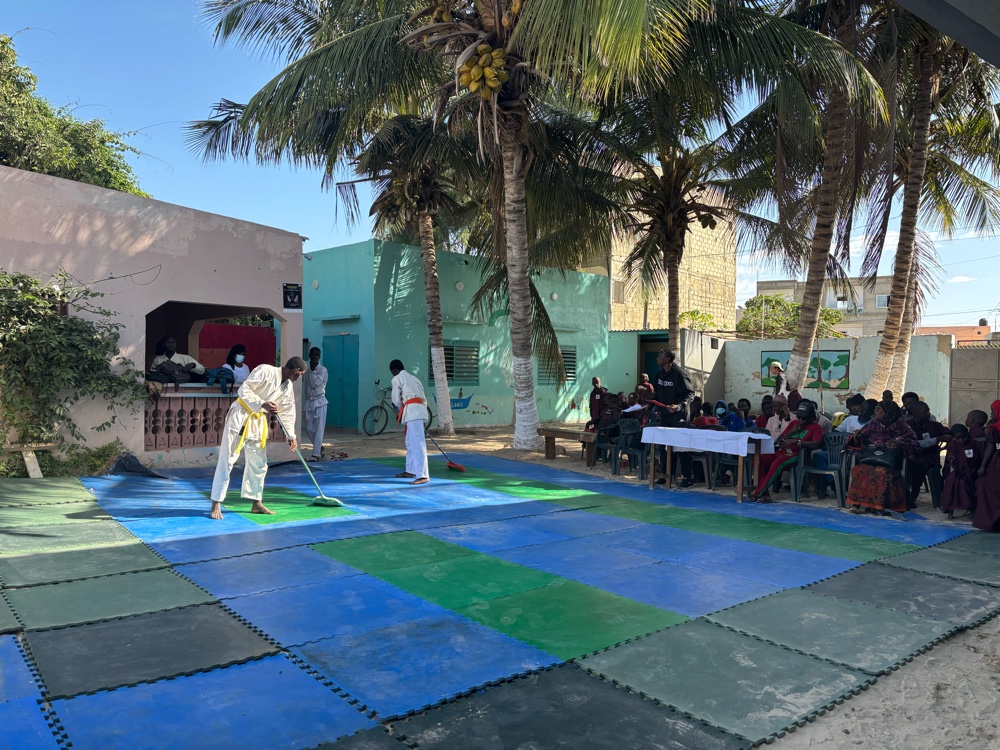
The night before, the mats were delivered, so as to be ready first thing the morning of the ceremony. Horse cart is the method of delivery we had always used in the passed, which never fails to fascinate me. But unfortunately I had missed the delivery the night before. In the morning the karatekas and others arrived at the centre early, working together to help organize the mats and arrange chairs.
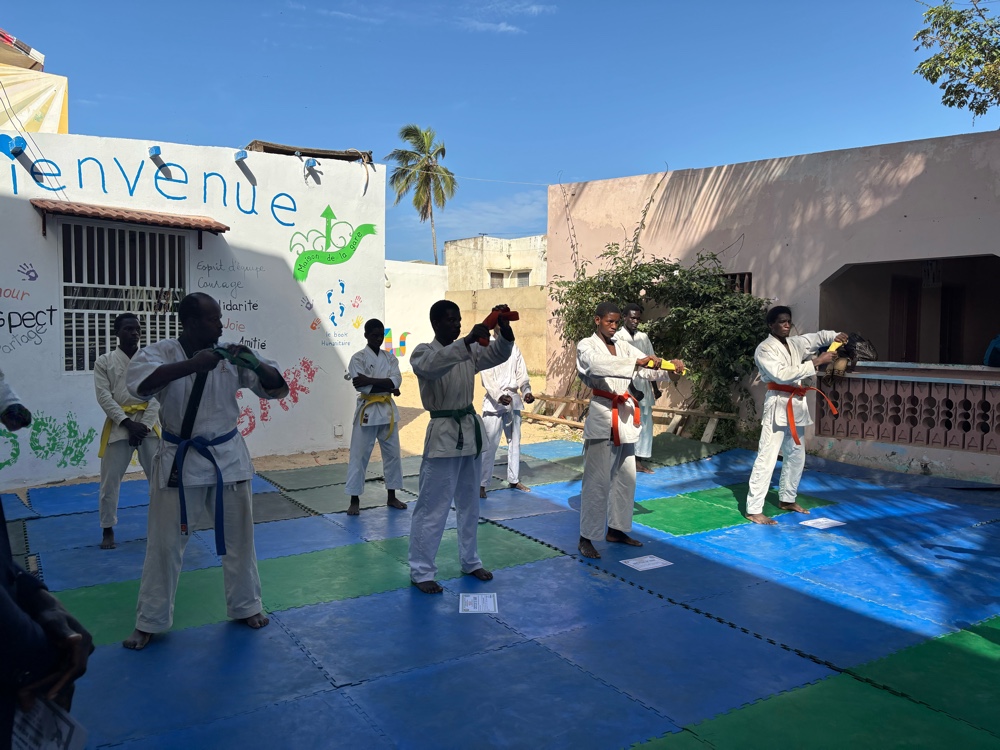
The time for the demonstration arrived. The karatekas who would be granted their new belts, along with the others who had not succeeded in their grading or had not graded, lined up on the mat. The chairs filled up with spectators, including the staff of Maison de la Gare, students from the Yaakar school program, and many talibés.
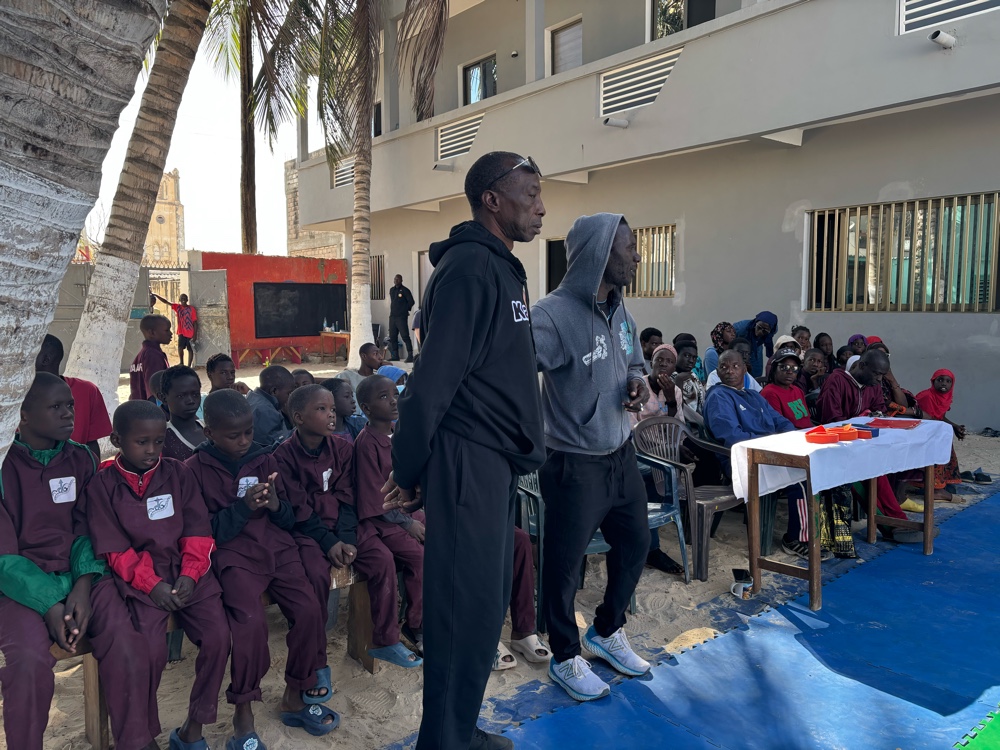
Sensei Ignéty Ba welcomed everyone, and congratulated the successful karatekas on their achievements. He spoke of the importance of karate not only for health and self defence, but as a way of living and as a philosophy for life. Issa was introduced as the president of Maison de la Gare, and mostly in Wolof he talked about the advantages karate offers vulnerable and exploited talibés. Issa also spoke of the importance of our long partnership and of karate, and congratulated the kids on their achievements. Then, I was introduced and I thanked them all for providing Robbie and I the extraordinary opportunity of being long term partners in this project. I also congratulated all of the karatekas and each of the successful graders, in turn, from Robbie, and I passed on how proud he is of each of them, and how sorry he is that he could not be with them.
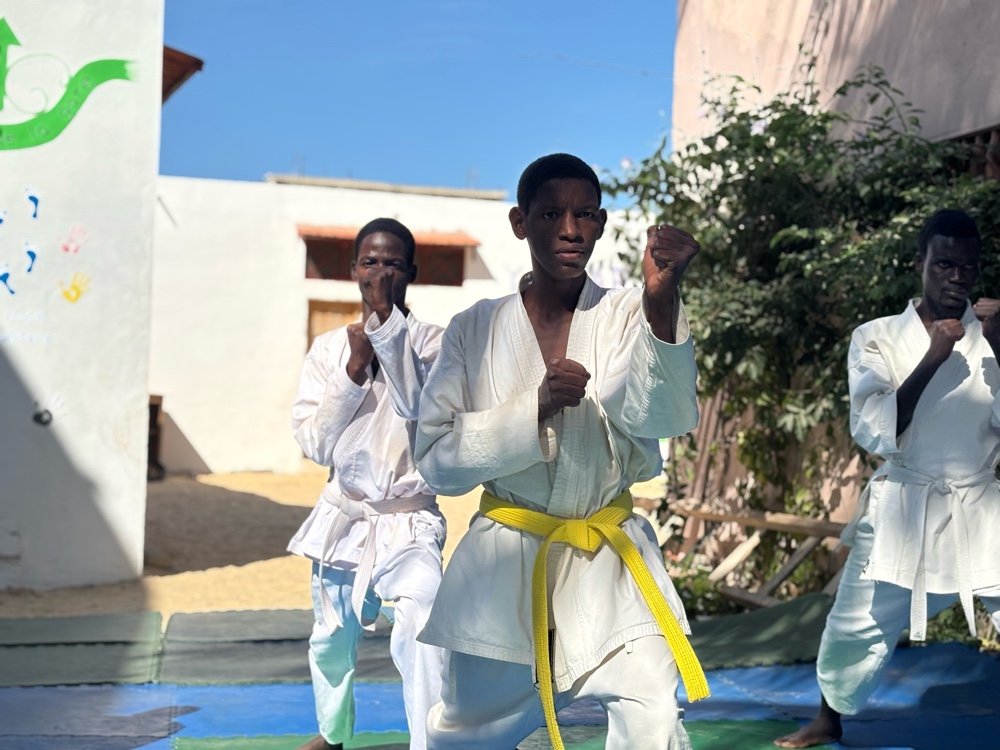
Then Sensei and the attending WKF judges invited the karatekas to begin the demonstration. The audience silenced. The force, skill, focus and kime demonstrated was truly impressive, I could feel the astonishment in the air. The audience watched keenly, surprised by the obvious skill demonstrated by talibés. After kata, they switched to bunkai applications, demonstrating various self defence techniques. The mood lightened as mock attackers swaggered threateningly with batons and wooden knives, only to be thrown to the ground as they succumbed to their wood-be victims. The karatekas leaned into their moment, break-falling skillfully then groaning and rolling on the ground, and playing dead. The crowd ate it up.
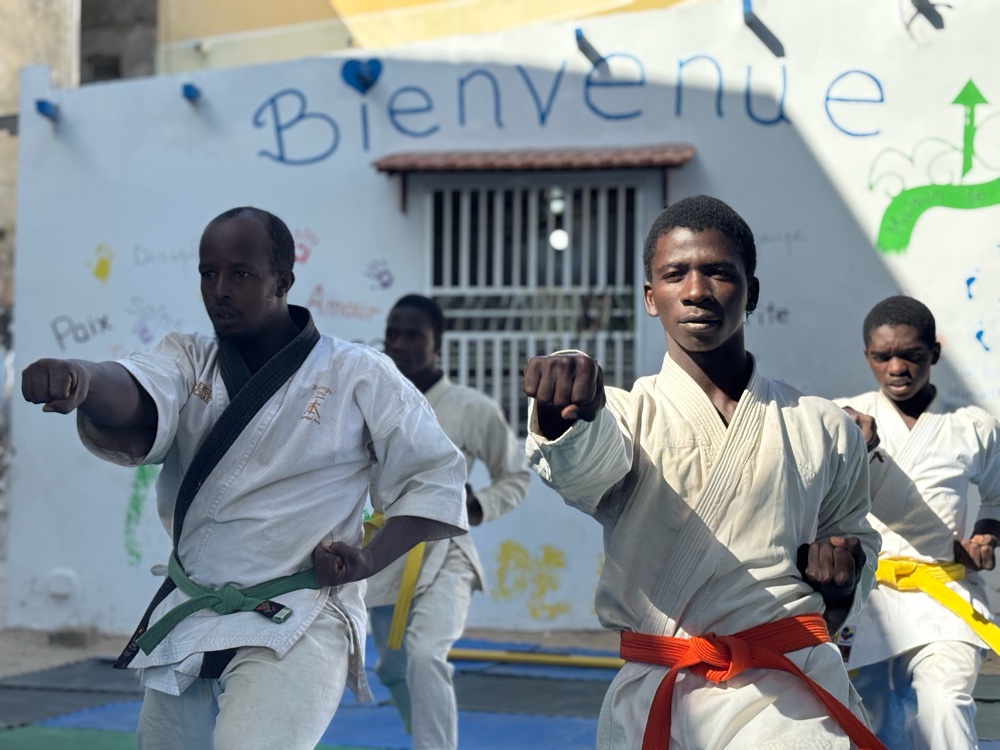
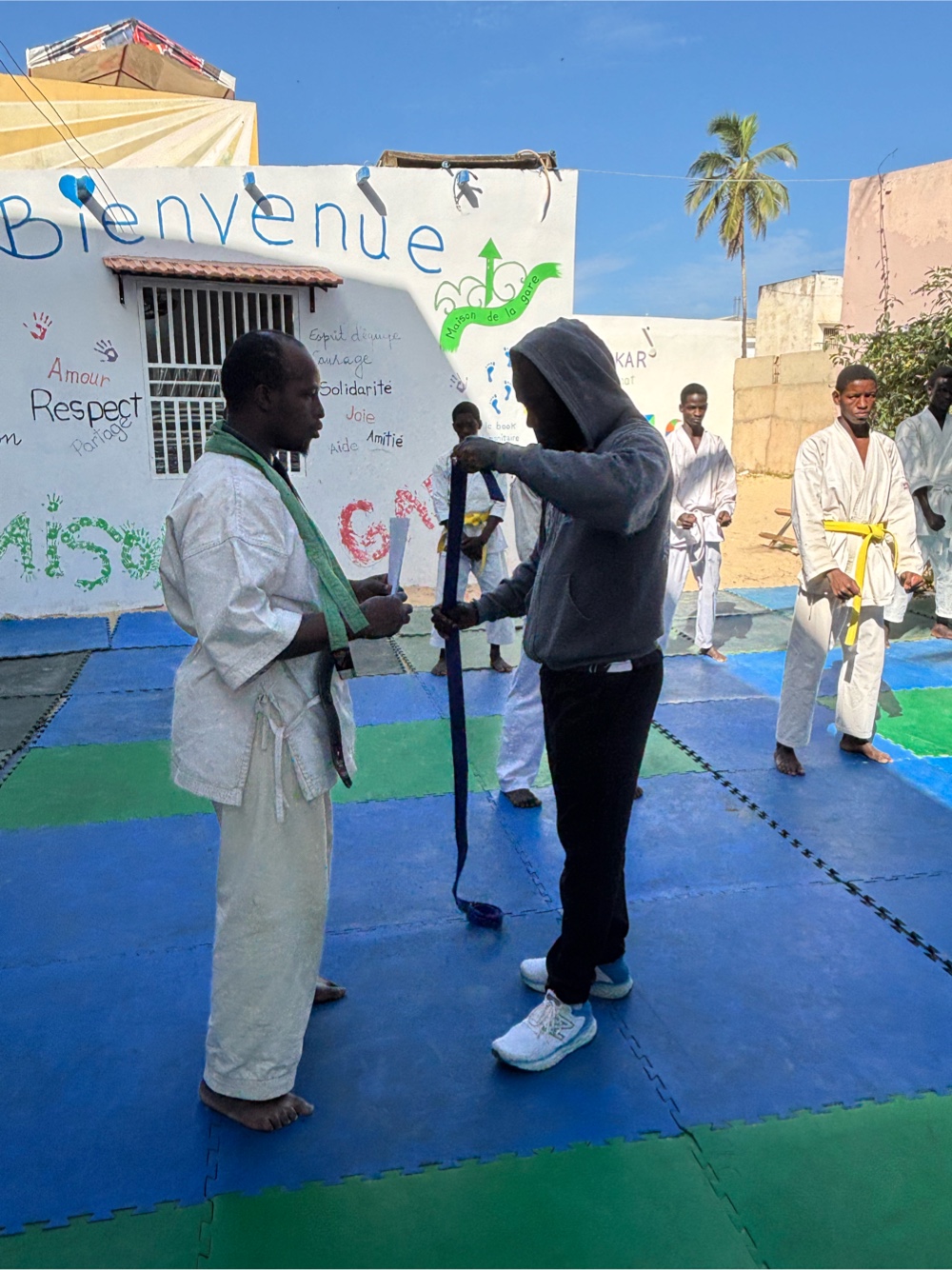
When the demonstration was complete it was time to present the six new belts to those who had succeeded with passage. The challenges these kids have faced to get to this point cannot possibly be underestimated. I was offered the first certificate and Orange belt to present. We bowed, I removed the old
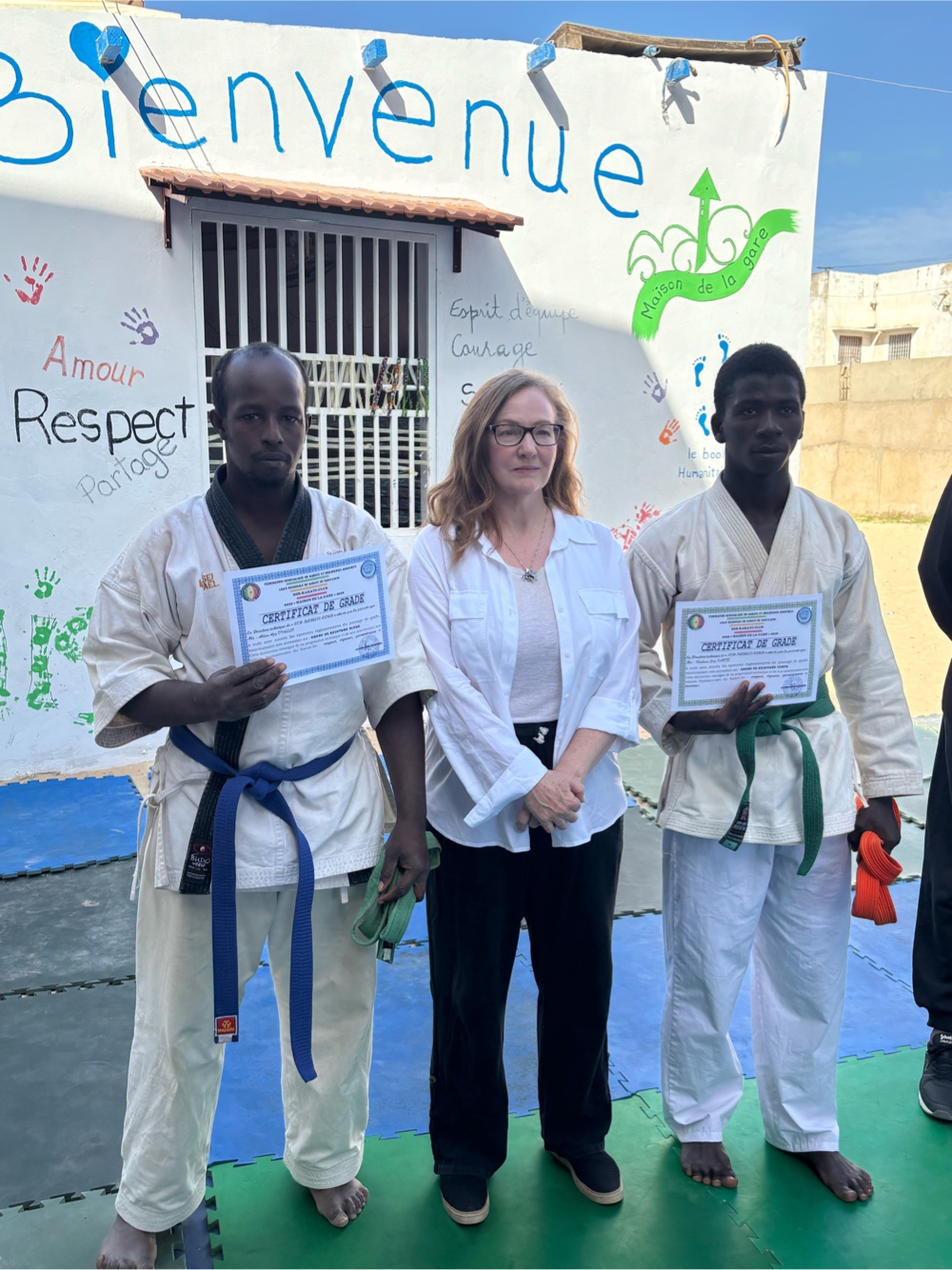
belt, tied on the new one, placed the yellow belt around his shoulders. Issa was handed the second orange belt to confer. Although not a karateka himself, he had observed my method and copied it exactly, tying the new belt perfectly around the waist of the successful grader. Each youth was presented his new belt in turn. Together, we all felt the triumph of passage.
It was time for The Breaking of the Belts. I described the tradition we follow in Canada that when we earn new belts, though hard work, dedication to the principles of karate, and a successful passage, the Breaking of the Belts symbolizes this important transition, and that they no longer would have need of their old belts. Together they all solemnly removed their old belts from around their shoulders, folded them carefully, and held the belts out in front of themselves, curious about what was next. I asked them to twist the belts first one way and then the next, symbolizing the breaking of the belts they no longer had need of. It was done. The pride was palpable, mine in them, and theirs in themselves. The audience erupted in applause.
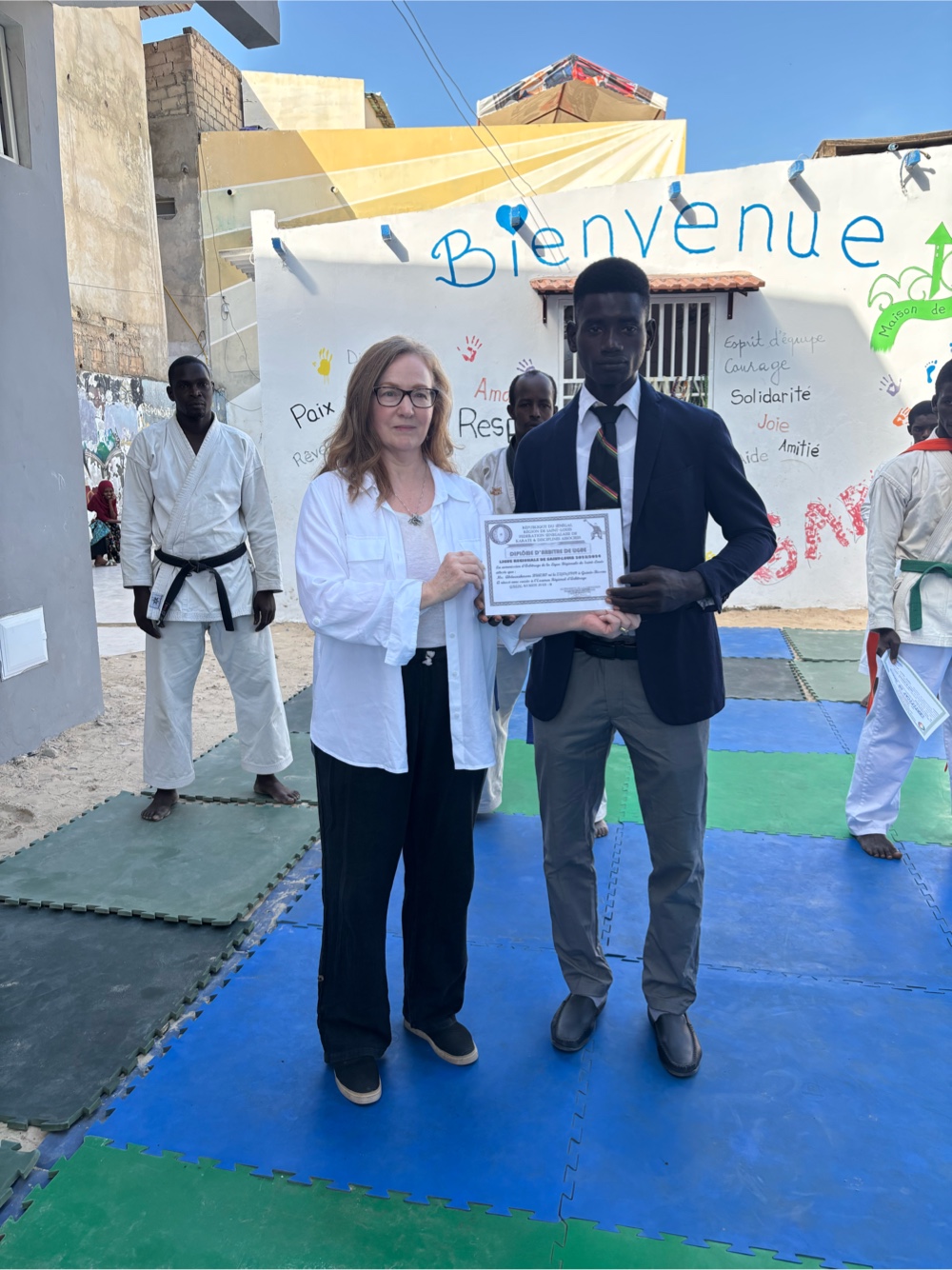
Finally, Sensei Bouaro, once a begging talibé himself, and now a second dan black belt, was invited to the mat. Bouaro has had the longest and most difficult road imaginable in reaching this point. Exploited in a daara for years, far from his family in Guinea Bissau, karate has been his refuge. He has devoted his life to karate, it is his love and his hope. Sensei Ignéty awarded Buaro the certificate of his recently earned level B kumité as an accredited judge, and it felt to me as if Bouaro had summited Mount Everest.
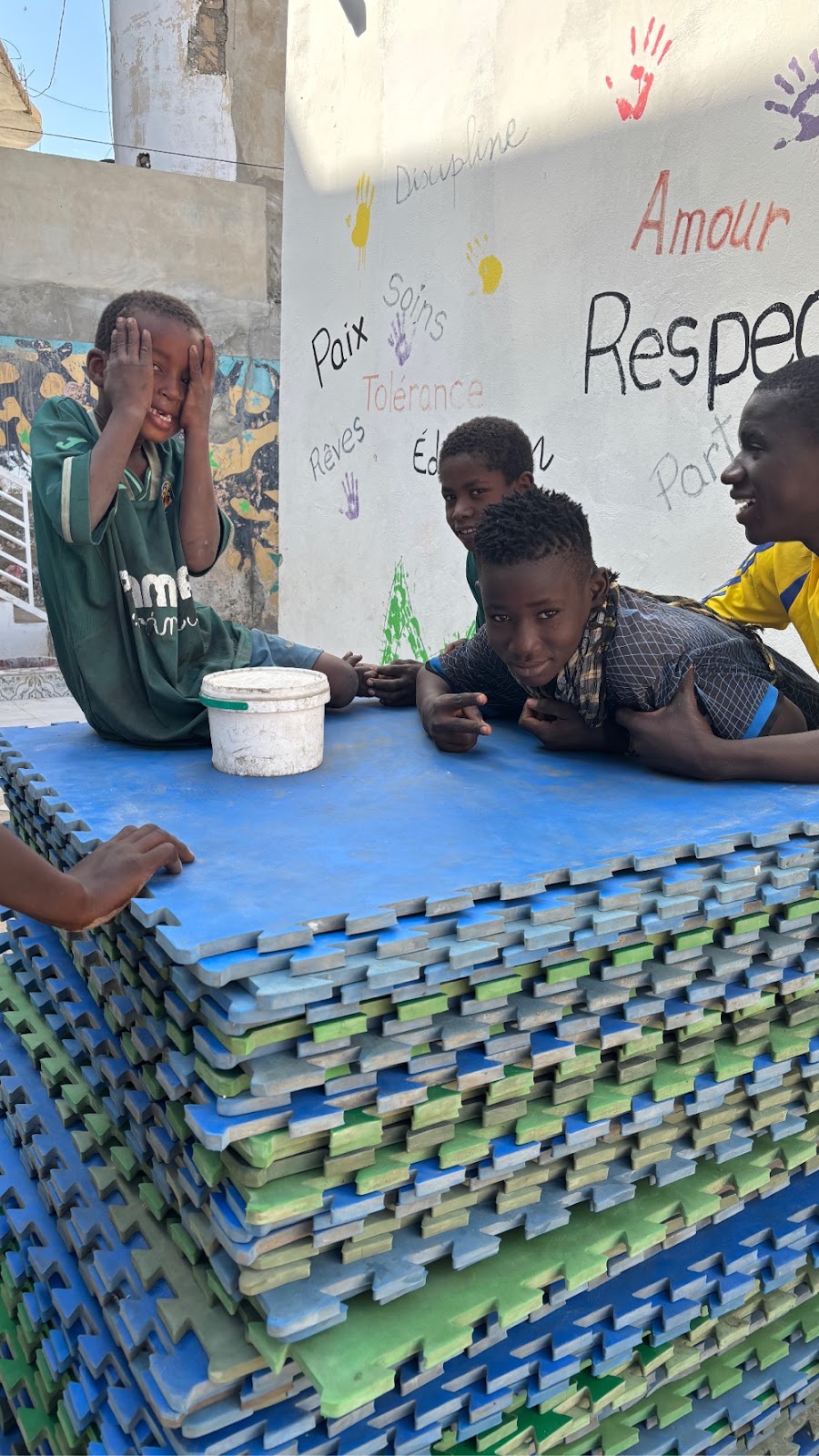
The crowed clearly had been impressed and several kids approached Sensei afterward asking about joining the karate program. The karatekas removed the mats, stacking them to the side, and they collected the chairs. Just as at tournaments back home, the stack of mats soon attracted the attention of many young kids, who discussed the wonders they had seen as they played - begging bowls forgotten for the time being.

No comments:
Post a Comment